

The common murre or common guillemot is a large auk. It has a circumpolar distribution, occurring in low-Arctic and boreal waters in the North Atlantic and North Pacific. It spends most of its time at sea, only coming to land to breed on rocky cliff shores or islands.
Region
North Atlantic and North Pacific
Typical Environment
Breeds on rocky sea cliffs and offshore islands across low-Arctic and boreal coasts of the North Atlantic and North Pacific. Outside the breeding season it disperses widely over continental shelf waters, often far from land. Prefers cool, productive seas with abundant schooling fish. Colonies are typically on narrow ledges with minimal vegetation and sheer drop-offs to the ocean.
Altitude Range
Sea level to 500 m
Climate Zone
Temperate
Ease of Keeping
Beginner friendly: 1/5
The common murre (common guillemot) is a sleek, black-and-white auk that spends most of its life at sea, coming to land only to breed on crowded cliff ledges. It lays a single, highly pointed egg that resists rolling off narrow ledges. Exceptional divers, murres use their wings to 'fly' underwater in pursuit of fish, reaching impressive depths. A distinctive 'bridled' morph shows a white eye ring with a thin line behind the eye.


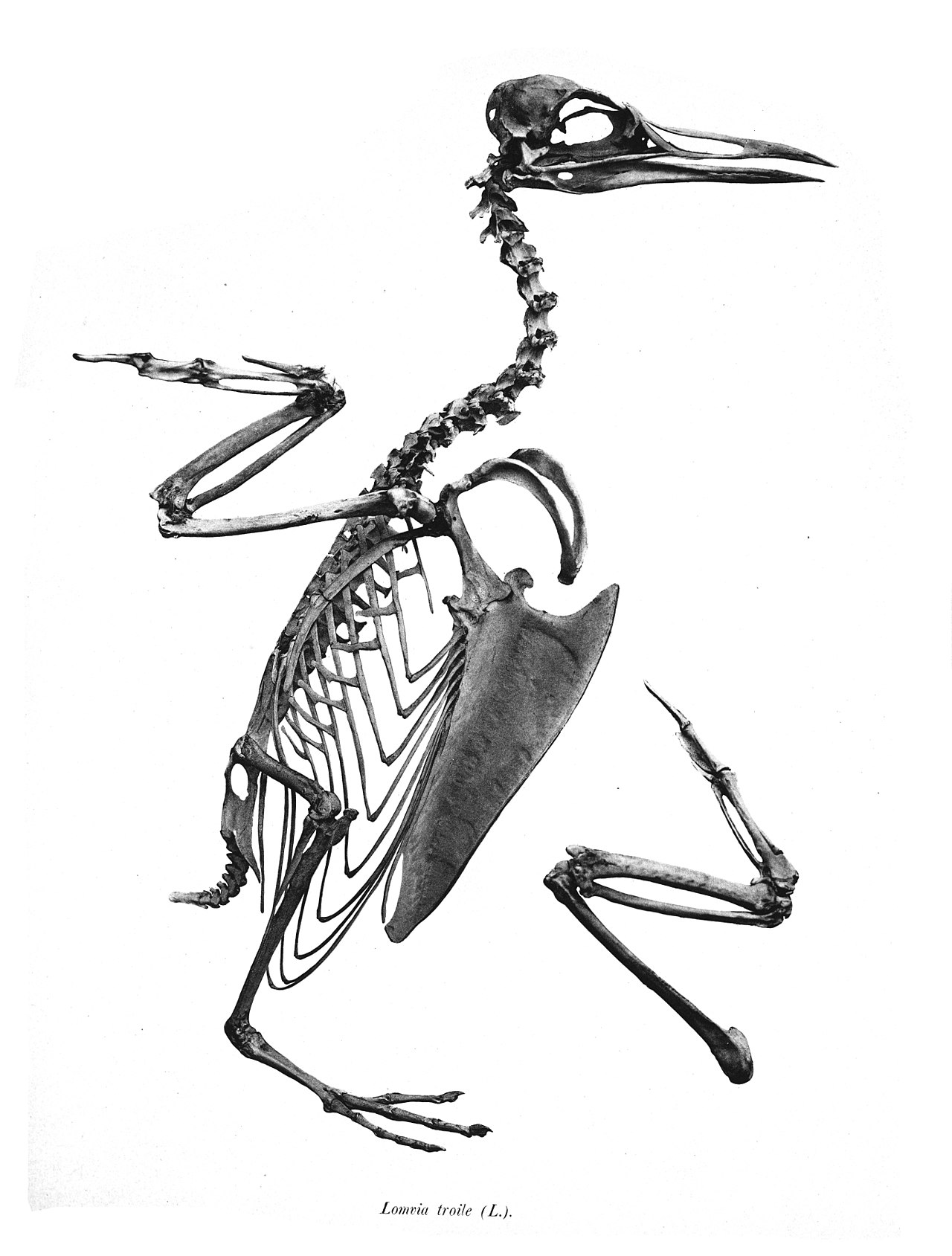
Skeleton

Part of a U. a. californica colony, Farallon Islands, California

Murre eggs

Chick, Alaska


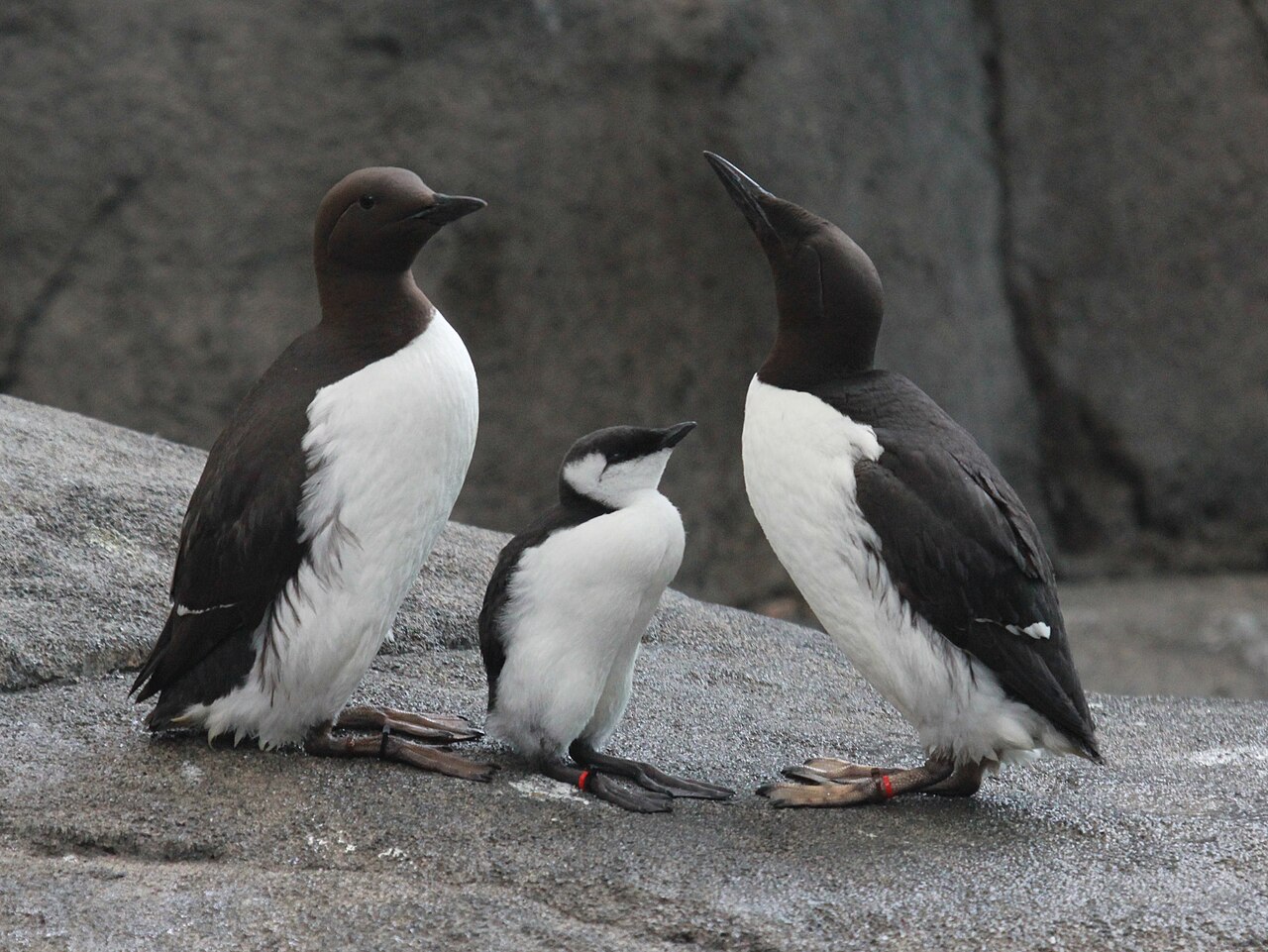
Temperament
social and colonial
Flight Pattern
short rapid wingbeats, low over water
Social Behavior
Breeds in dense colonies on cliff ledges, with adults packed shoulder to shoulder. Lays a single pyriform egg directly on bare rock; both parents incubate and feed the chick. Chicks leave the ledge before fully flighted, leaping to the sea and accompanying the male parent.
Migratory Pattern
Partial migrant
Song Description
Vocal at colonies with harsh growls, croaks, and cackling chatter rather than melodious song. At sea it is mostly quiet, giving occasional gruff contact calls.
Plumage
Smooth, dark chocolate-brown to black upperparts with clean white underparts; breeding birds have a dark head, while nonbreeding birds show a white face and throat with a dark ear-to-eye line.
Diet
Primarily small schooling fish such as sand lance, capelin, herring, and sprat. Also takes squid and marine crustaceans, especially when fish are scarce. Pursuit-dives using wings, commonly to 30–60 m and capable of much deeper dives. Delivers whole fish crosswise to chicks at the colony.
Preferred Environment
Forages over continental shelf waters, tidal fronts, and upwelling zones where prey is concentrated. Often feeds near colonies during breeding, moving farther offshore in the nonbreeding season.


