The common ostrich, or simply ostrich, is a species of flightless bird native to certain areas of Africa. It is one of two extant species of ostriches, the only living members of the genus Struthio in the ratite group of birds. The other is the Somali ostrich, which has been recognized as a distinct species by BirdLife International since 2014, having been previously considered a distinctive subspecies of ostrich.
Region
Sub-Saharan Africa
Typical Environment
Found across open savannas, semi-arid plains, and lightly wooded grasslands, especially in eastern and southern Africa. They favor wide, open landscapes with sparse cover that allow early predator detection. Populations also occur in semi-desert regions and the edges of true desert where shrubs and hardy grasses grow. They avoid dense forests and steep, rocky terrain. Human-managed populations exist on farms within and outside their native range.
Altitude Range
Sea level to 2000 m
Climate Zone
Arid
Ease of Keeping
Beginner friendly: 2/5
The common ostrich is the world’s largest living bird and a swift runner, capable of reaching speeds over 70 km/h. Males and females share incubation duties, with males incubating at night using their darker plumage for camouflage. Ostriches swallow pebbles to help grind tough plant material in their gizzards and can go long periods without drinking, obtaining moisture from food. They use powerful legs for defense, delivering formidable kicks when threatened.


Two birds "dancing"
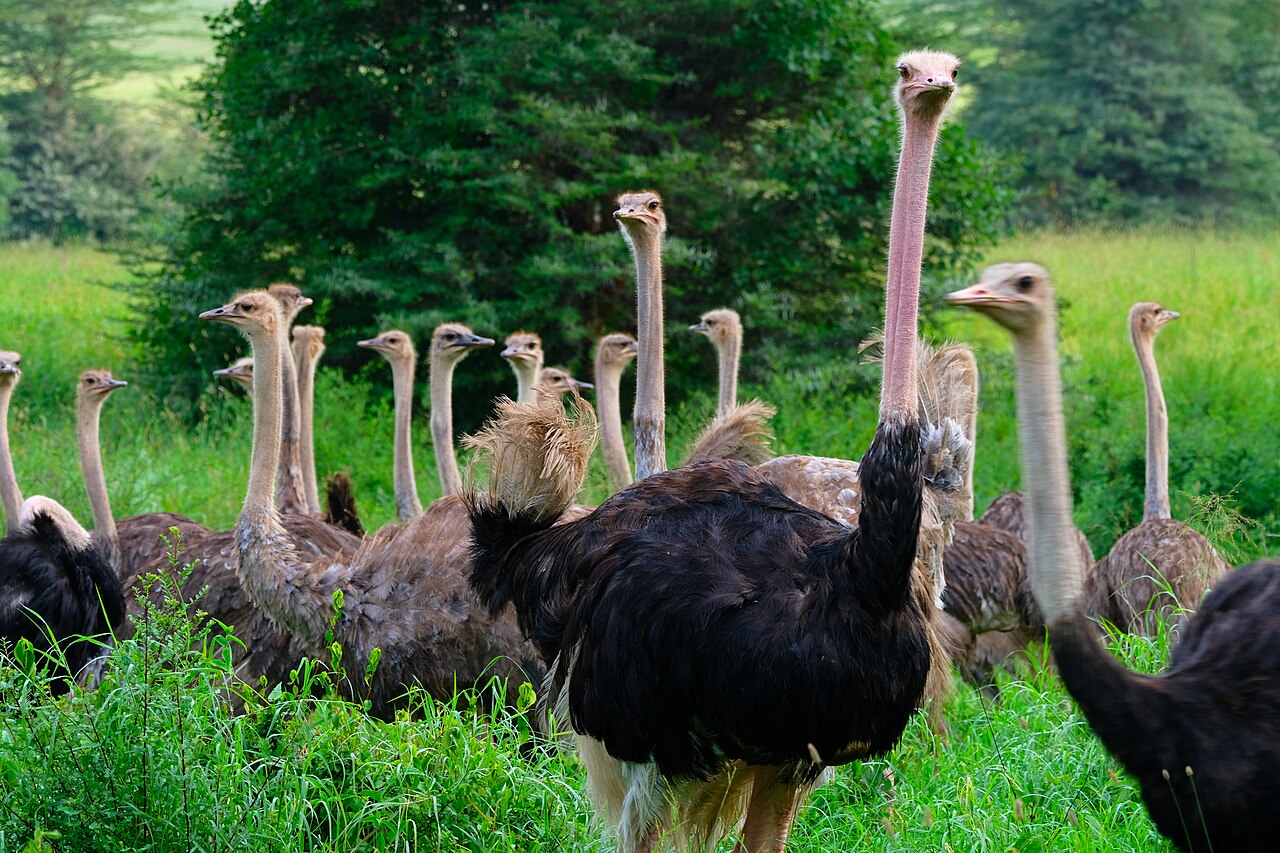
A large group of around 30 ostriches gathered in Nairobi National Park, Kenya.

Mating in Ngorongoro Conservation Area
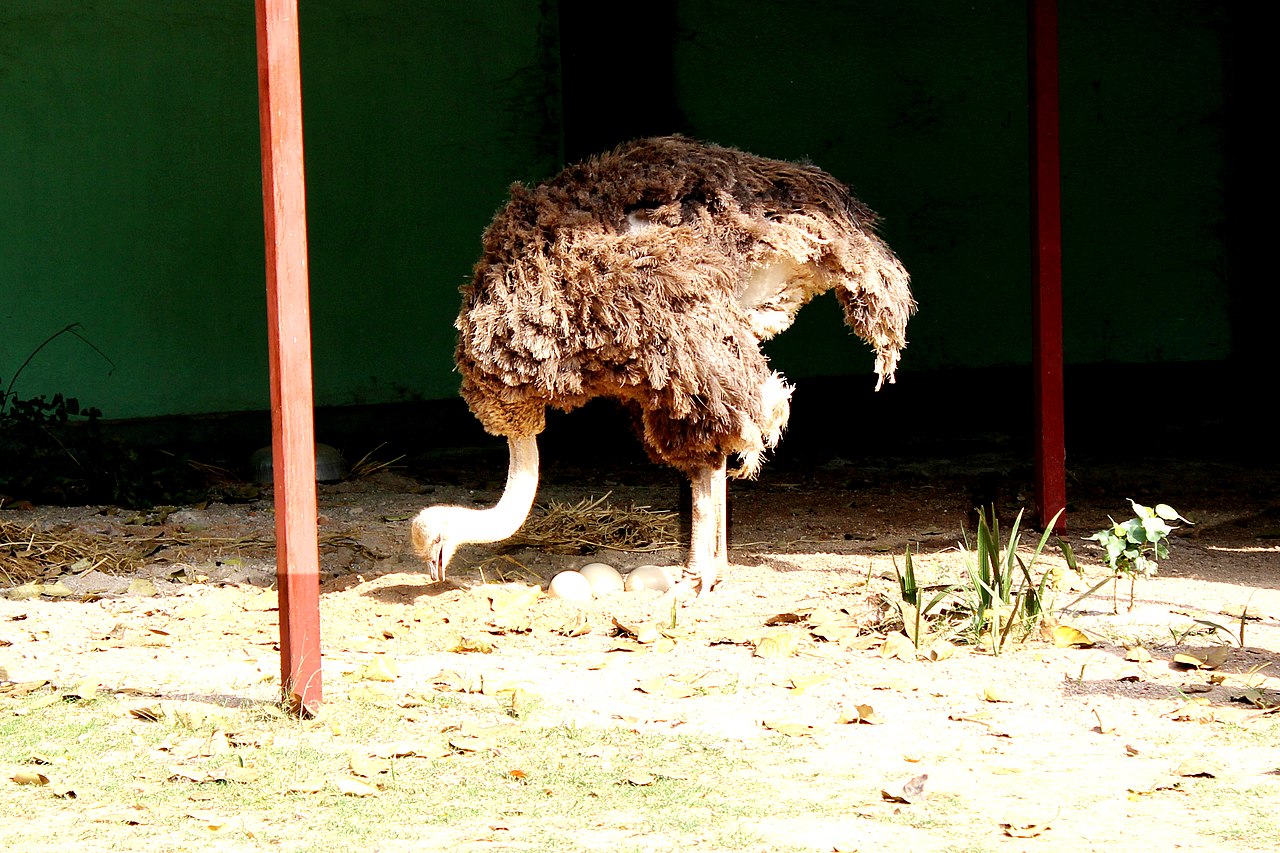
With eggs


Young female chased by a cheetah

Diagrammatic location of the air sacs

The syrinx has simple muscles. The only sounds that can be produced are roars and hisses.

![The Ketola Ostrich Farm in Nurmijärvi, Finland[109][110]](https://upload.wikimedia.org/wikipedia/commons/thumb/a/ae/Nurmij%C3%A4rvi_ostrich_farm.jpg/1280px-Nurmij%C3%A4rvi_ostrich_farm.jpg)
The Ketola Ostrich Farm in Nurmijärvi, Finland[109][110]

Roman mosaic, 2nd century AD

Eggs on the oil lamps of the Church of Saint Lazarus, Larnaca, Cyprus

Fashion accessories, Amsterdam, 1919
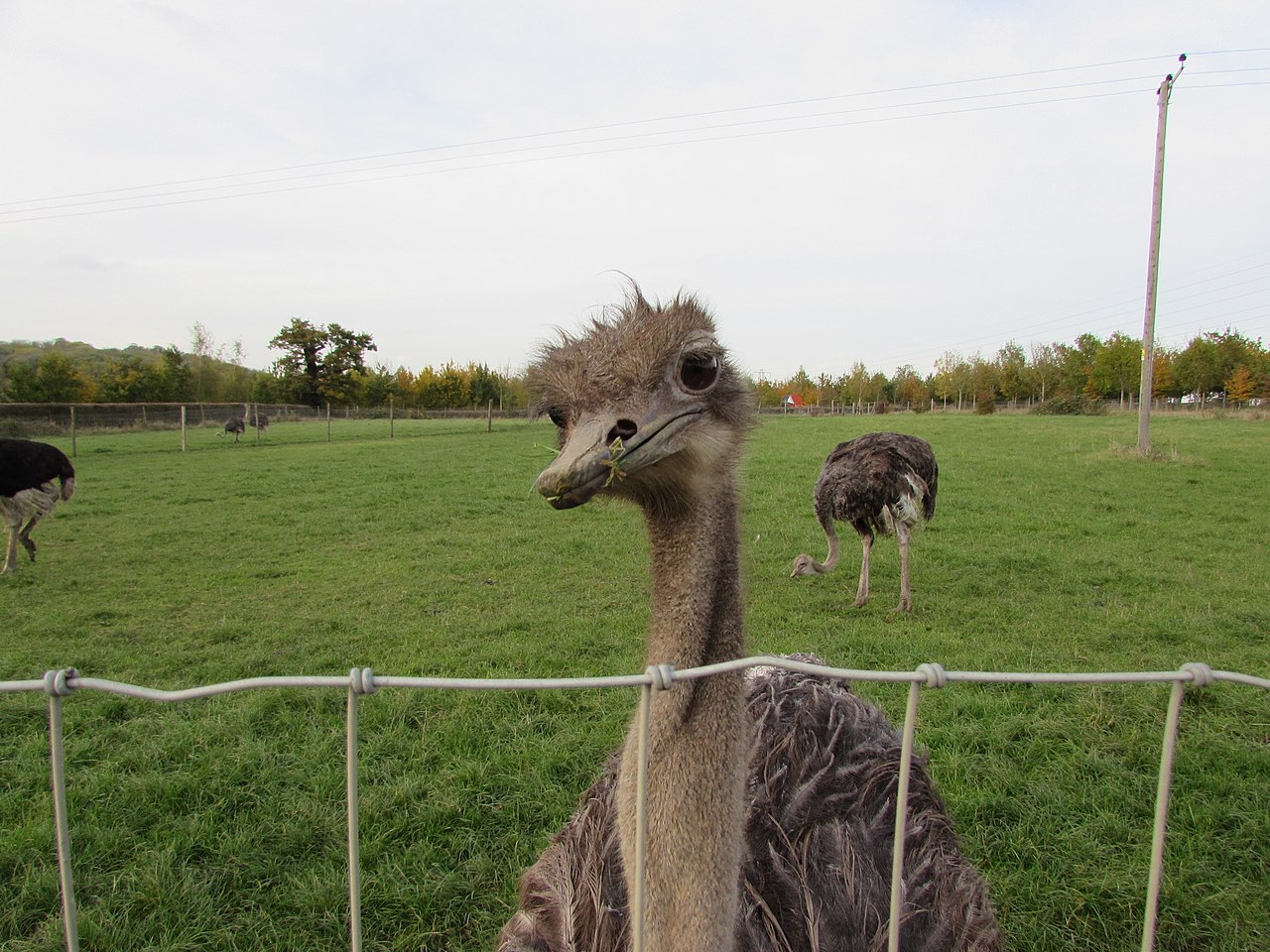
An ostrich in captivity in a farm park in Gloucestershire, England.

A platter of ostrich meat in Oudtshoorn, South Africa

Jacksonville, Florida, c. 1911
Temperament
social and wary
Flight Pattern
flightless; powerful runner
Social Behavior
Typically forms small to medium groups that may associate with grazing mammals to improve predator detection. Breeding is polygynous, with a dominant male and one major female plus additional minor females. Several females lay in a communal nest scraped in the ground, and both the male and the major female incubate. Chicks are precocial and form crèches guarded by adults.
Migratory Pattern
Resident
Song Description
Vocalizations include deep, booming calls from males during display that carry over long distances. Both sexes also hiss, grunt, and snort in alarm or threat contexts.
Plumage
Males are glossy black with bold white primaries and tail, while females and immatures are gray-brown and more uniformly mottled. Feathers are loose and hair-like, lacking the interlocking barbs typical of flying birds.
Diet
Primarily consumes grasses, seeds, leaves, flowers, and succulent plants. Also takes insects, small vertebrates, and carrion opportunistically, making the diet broadly omnivorous. Swallows grit and small stones to aid mechanical digestion in the gizzard. Can meet much of its water needs from moist vegetation.
Preferred Environment
Feeds in open grasslands, shrub-steppe, and semi-desert plains where visibility is high. Often forages alongside herbivorous mammals, benefiting from shared vigilance and disturbed insects.