

The common myna or Indian myna, sometimes spelled mynah, is a bird in the family Sturnidae, native to Asia. An omnivorous open woodland bird with a strong territorial instinct, the common myna has adapted extremely well to urban environments.
Region
South Asia and Southeast Asia
Typical Environment
Common mynas inhabit open woodlands, farmlands, grasslands, and especially towns and cities. They favor edges and clearings, often foraging on the ground in parks, markets, and roadsides. They readily exploit human food waste and agricultural by-products and nest in cavities in trees, buildings, and street structures. Outside their native range they have been widely introduced, becoming established in parts of the Middle East, Australia, Pacific islands, and southern Africa.
Altitude Range
Sea level to 2500 m
Climate Zone
Tropical
Ease of Keeping
Beginner friendly: 4/5
Also called the Indian myna, it thrives in human-dominated landscapes and is one of the world’s most successful urban birds. It is a fierce competitor for nest cavities and can displace native species, which has led to control programs in some countries. Mynas are accomplished vocal mimics and produce a wide range of calls and chatter.


Common myna in a cage

Fighting, Madagascar

A common myna as an invasive species in Gülhane Park, Turkey

Visiting a home garden in Colombo, Sri Lanka
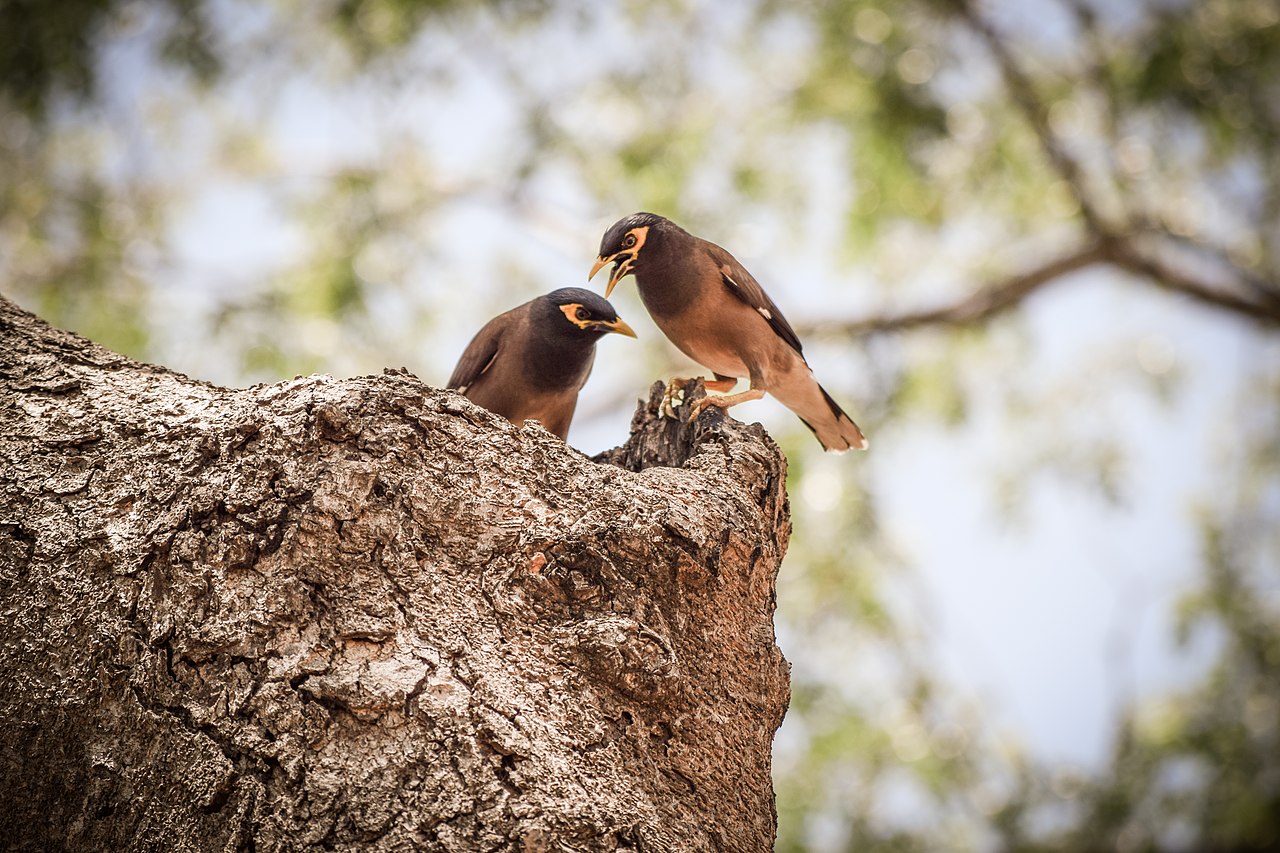
In Guntur, India


Evicting a nest of jungle babblers by breaking their eggs

In Chandigarh

on Upolu, Samoa

In Sydney
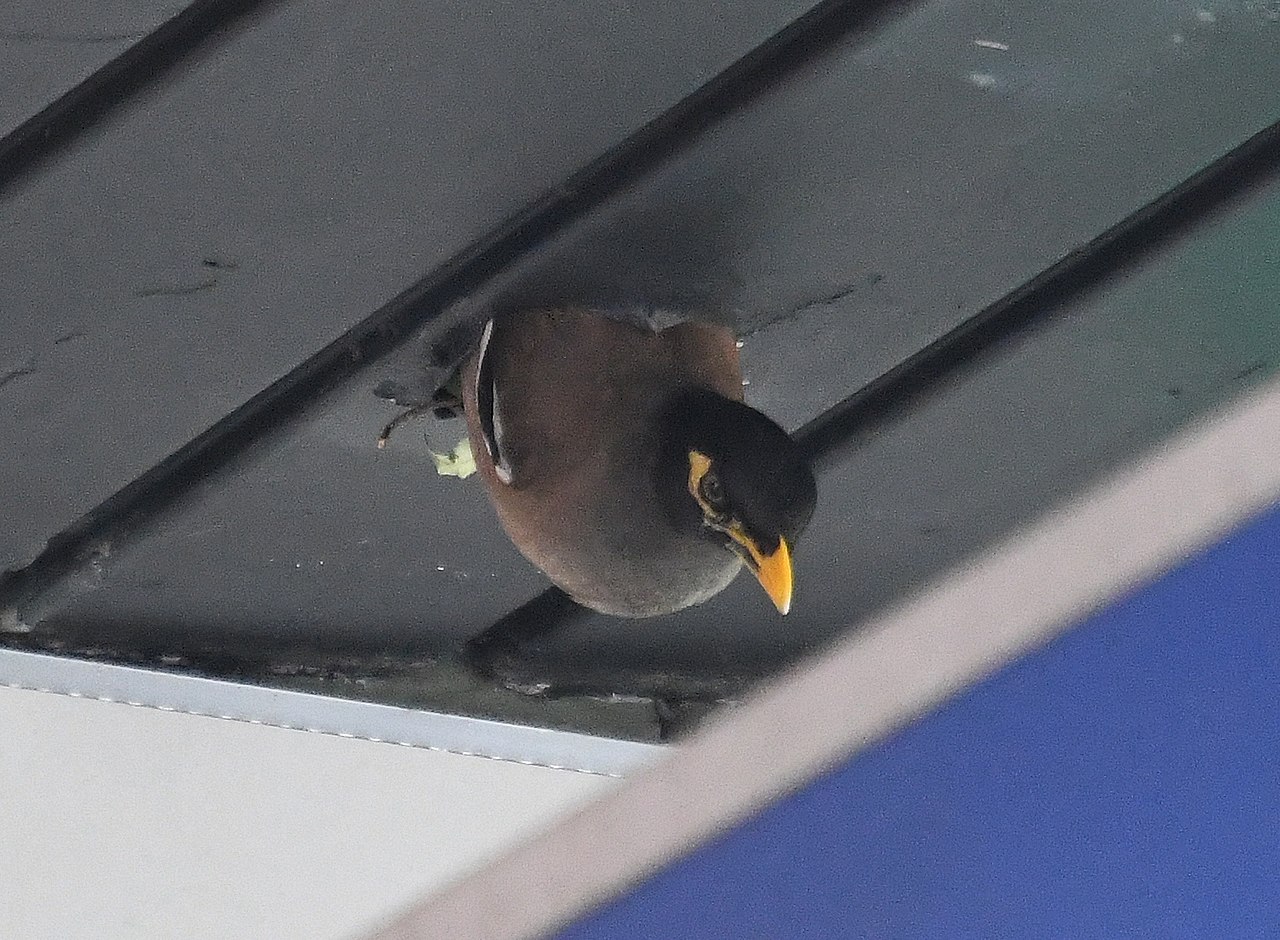
Nesting in a shop awning, Sydney


Temperament
bold and territorial
Flight Pattern
strong, direct flight with rapid wingbeats
Social Behavior
Often seen in pairs or small groups and forms large communal roosts outside the breeding season. It nests in cavities in trees, buildings, and nest boxes, using grass and assorted debris. Pairs are monogamous during the breeding period and vigorously defend territories around nest sites.
Migratory Pattern
Resident
Song Description
A varied series of chatters, whistles, croaks, and squeaks, often delivered in rapid sequences. Skilled at mimicry, it can imitate other bird calls and human-made sounds.
Plumage
Chocolate-brown body with a glossy black head and upper breast, contrasting white wing patches visible in flight, and white tips to the tail. Feathers are sleek and smooth with a clean, sharply defined pattern.
Diet
Omnivorous, taking insects, grubs, and other invertebrates, along with fruits, berries, grains, and seeds. It also scavenges human food scraps and will take small reptiles or eggs opportunistically. Forages mostly on the ground by walking and probing, occasionally hawking insects in short flights.
Preferred Environment
Frequently feeds in open, short-grass areas such as lawns, parks, sports fields, and agricultural lands. It is commonly found near livestock, markets, and outdoor eating areas where food waste is available.


