The common greenshank is a wader in the large family Scolopacidae, the typical waders. The genus name Tringa is the Neo-Latin name given to the green sandpiper by Aldrovandus in 1599 based on Ancient Greek trungas, a thrush-sized, white-rumped, tail-bobbing wading bird mentioned by Aristotle. The specific nebularia is from Latin nebula "mist". Like the Norwegian Skoddefoll, this refers to the greenshank's damp marshy habitat.
Region
Palearctic (breeding) to Afro‑Australasia (wintering)
Typical Environment
Breeds across northern Europe into Siberia in taiga wetlands, boggy clearings, and lake margins. Outside the breeding season it occupies tidal mudflats, estuaries, saltmarshes, mangroves, river mouths, and coastal lagoons. Inland it uses reservoirs, rice paddies, fish ponds, and flooded fields. It favors shallow waters with open sightlines and gently sloping shores for foraging.
Altitude Range
Sea level to 1500 m
Climate Zone
Temperate
Ease of Keeping
Beginner friendly: 1/5
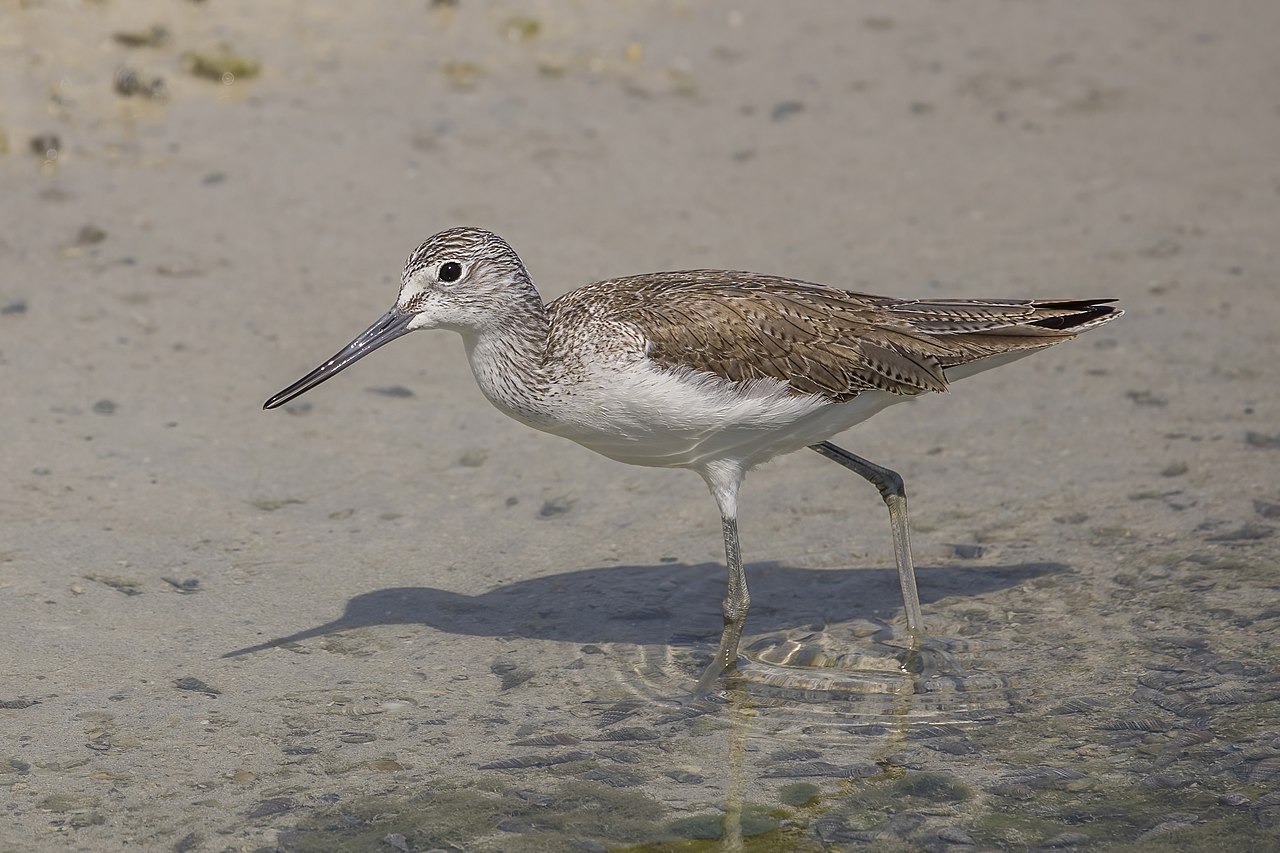
A large Tringa sandpiper with long greenish legs and a slightly upcurved bill, the common greenshank is a familiar wader across the Old World. Its ringing three-note call carries far, often given in flight over estuaries and marshes. It frequently uses a foot-trembling technique to flush prey in shallow water.




Temperament
wary and alert
Flight Pattern
strong flier with swift, purposeful wingbeats; often calls in flight
Social Behavior
Usually solitary or in small groups when feeding, but forms larger loose flocks at high-tide roosts and on migration. Breeding pairs are mostly monogamous, nesting on the ground among heather, moss, or sparse woodland near water. Both sexes incubate and tend the young.
Migratory Pattern
Seasonal migrant
Song Description
Primarily a series of clear, ringing notes, most often a three-note 'teu-teu-teu' given in flight. Alarm calls are sharp and insistent; display flights include repetitive ringing calls rather than a complex song.
Plumage
Grey-brown upperparts and clean white underparts, more streaked and mottled in breeding plumage and plainer grey in winter. White rump with a white wedge extending up the back visible in flight.
Diet
Takes small fish, aquatic insects and larvae, crustaceans, worms, and molluscs. Forages by picking from the surface, probing soft substrates, and sweeping the bill side-to-side in shallow water. Often uses foot-trembling to disturb prey and may chase small fish in brief dashes.
Preferred Environment
Shallow edges of estuaries, tidal flats, and coastal lagoons; also freshwater lakes, reservoirs, and flooded fields. Frequently feeds along gently sloping shores and in brackish creeks and mangroves.