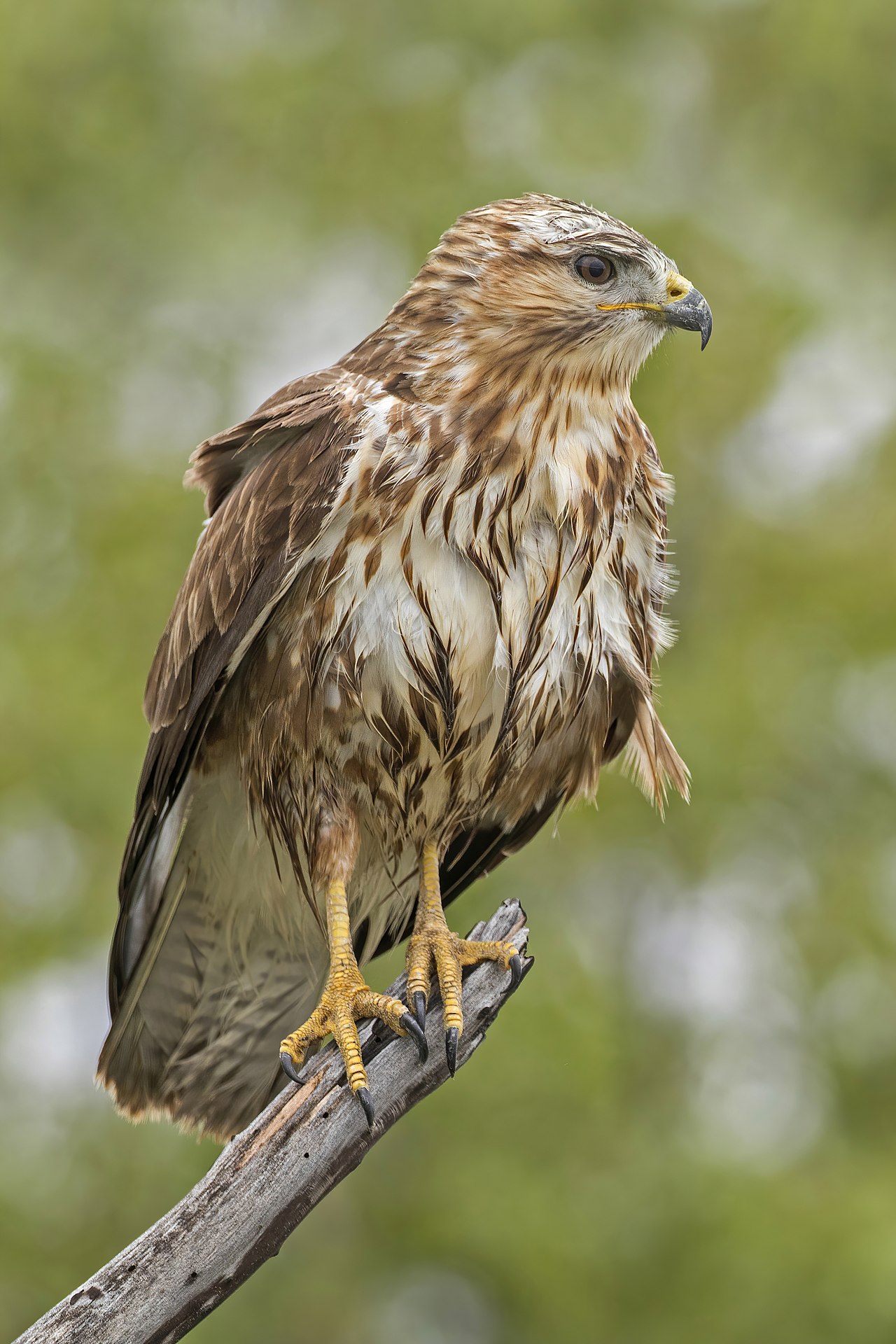
The common black hawk is a bird of prey in the family Accipitridae, which also includes the eagles, hawks, and vultures.
Region
Middle America and Caribbean
Typical Environment
Occurs from the southwestern United States south through Mexico and Central America into northern South America, with populations on some Caribbean islands. Strongly associated with water, it frequents mangroves, estuaries, marshes, and riverine forests. It also uses coastal lagoons and flooded pastures, often perching conspicuously on snags near shorelines. Nests are typically placed in tall trees close to water.
Altitude Range
Sea level to 1500 m
Climate Zone
Tropical
Ease of Keeping
Beginner friendly: 1/5
The common black hawk is a broad-winged raptor strongly tied to water, especially mangroves, river edges, and coastal lagoons. It feeds heavily on crabs and other aquatic prey and is known to drop hard-shelled crustaceans from height to crack them open. Its bold single white tail band is a key field mark in flight. Northern populations may shift seasonally, while tropical birds are mostly year-round residents.


Common Black Hawk, near Punta Uva Beach, Costa Rica
Temperament
solitary and territorial
Flight Pattern
soaring glider with slow, deep wingbeats; often quarters along shorelines and rivers.
Social Behavior
Typically seen alone or in pairs, maintaining territories along waterways. Pairs build large stick nests high in trees near water and often reuse and enlarge them annually. Courtship includes soaring displays and calling. Both adults attend the nest and feed young.
Migratory Pattern
Partial migrant
Song Description
Gives clear, whistled calls, often a piercing, descending kleee or keee-yeee. Calls carry over water and are used frequently during territory defense and breeding. Vocalizations are less elaborate than many forest hawks but can be persistent.
Plumage
Mostly uniform blackish plumage with broad wings and a short tail; underwings show paler flight feathers contrasting with dark coverts.
Diet
Specializes on crabs and crayfish, but also takes fish, frogs, small reptiles, birds, and carrion. Hunts from exposed perches, dropping onto prey along shorelines or shallow water. Often carries crabs to a perch to dismember them and may drop hard-shelled prey to break them open. Opportunistic around tidal flats and flooded areas after rains.
Preferred Environment
Feeds along mangrove edges, riverbanks, estuaries, and coastal lagoons where crustaceans are abundant. Uses perches with clear views of water margins and mudflats, and occasionally hunts over marshes and wet pastures.