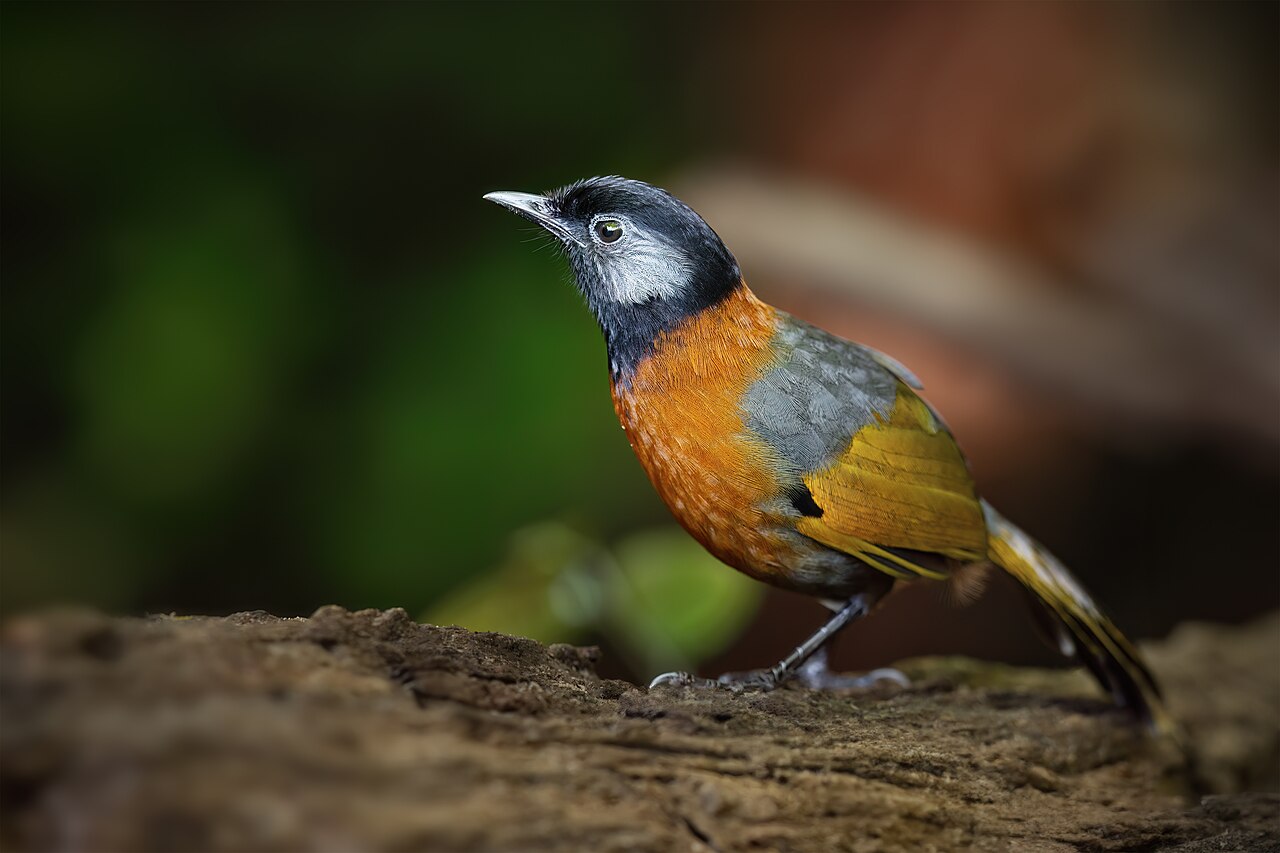
The collared grosbeak is a species of finch in the family Fringillidae. Its range encompasses the northern regions of the Indian Subcontinent, mainly the Himalayas, along with some adjoining regions. It is found in Bhutan, India, Myanmar, Nepal and Thailand. Its natural habitat is mountainous deciduous or mixed forests.
Region
Himalayas and northern Indochina
Typical Environment
Occurs from the Himalayan range through adjoining uplands, recorded in Bhutan, India, Nepal, Myanmar, and Thailand. Prefers montane mixed and deciduous forests with oak, pine, and rhododendron, as well as forest edges and second-growth. Often forages in the upper and mid-canopy, visiting fruiting trees and seeding conifers. In winter it may descend to lower slopes and foothill woodlands.
Altitude Range
1800–3600 m
Climate Zone
Highland
Ease of Keeping
Beginner friendly: 1/5
The collared grosbeak is a large-billed finch of the Himalayan forests, using its powerful conical beak to crack hard seeds and nuts. It often moves in small flocks outside the breeding season and makes altitudinal movements in winter. Males show a striking collar that gives the species its name, while females are duller and more cryptic. It frequents fruiting trees and can be surprisingly quiet for its size, blending into the canopy.


John Gould's illustration.
Temperament
social and active
Flight Pattern
undulating flight with rapid wingbeats
Social Behavior
Outside the breeding season it forms small flocks that move through the canopy, often accompanying mixed-species parties. Breeding pairs are territorial, nesting high in trees where they build a neat cup. Both parents are believed to share in feeding duties, and family groups may remain together for a time after fledging.
Migratory Pattern
Partial migrant
Song Description
Song consists of mellow whistles and short, sweet phrases delivered from canopy perches. Calls include clear, metallic notes and soft chirps used to keep contact within flocks.
Plumage
Male shows a contrasting pattern with a dark head and throat, olive-yellow upperparts, and a distinct pale yellow collar around the nape; wings and tail are darker with pale edging. Female is duller olive-brown to olive-yellow with less contrast, faint or partial collar, and more subdued wing patterning.
Diet
Feeds on a variety of hard seeds, conifer cones, buds, and fruits, using its robust bill to crack husks. It also takes berries and tender shoots, and supplements its diet with insects and caterpillars during the breeding season. Foraging is often deliberate, picking items from clusters or gleaning along branches.
Preferred Environment
Primarily forages in the mid to upper canopy of montane broadleaf and mixed forests, especially where oaks, pines, and rhododendrons are abundant. Common at forest edges, along ridgelines, and at fruiting or seeding trees; occasionally ventures into clearings and orchards.