
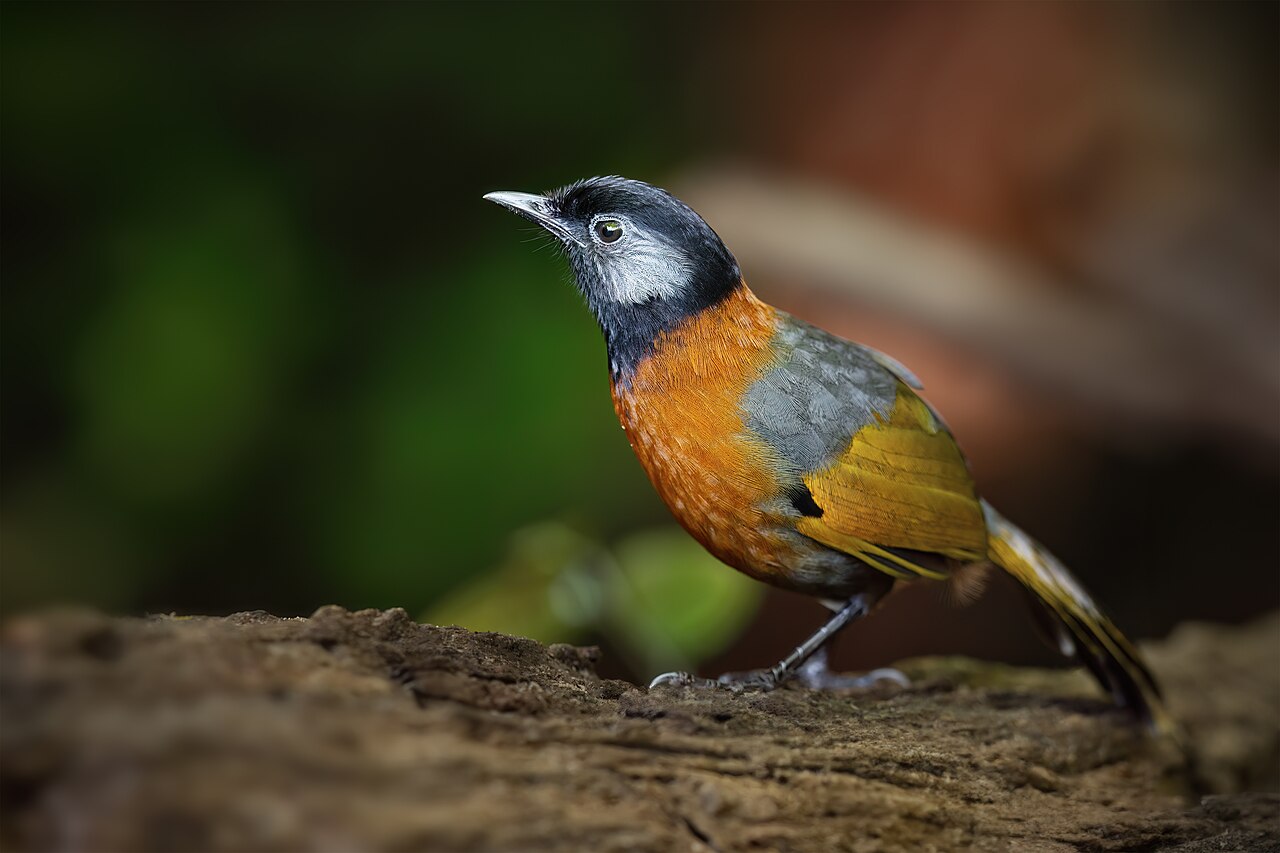
The collared laughingthrush is a species of bird in the family Leiothrichidae. It is endemic to Vietnam.
Region
Central Highlands of Vietnam
Typical Environment
Occurs in evergreen and mixed montane forests with dense understory, including bamboo and rhododendron thickets. It favors mature forest but will use secondary growth and forest edges where cover is ample. Birds typically remain within a few meters of the ground, moving through tangles and along mossy logs. Streamsides and sheltered gullies are frequently used for foraging and cover.
Altitude Range
1500–2400 m
Climate Zone
Highland
Ease of Keeping
Beginner friendly: 2/5
The Collared Laughingthrush is restricted to Vietnam’s Da Lat Plateau, where it skulkily forages in dense montane understory. It is prized by birders as a local specialty and is sensitive to habitat disturbance. Habitat loss and trapping for the cage-bird trade contribute to its decline. It often joins mixed-species flocks but remains elusive and low in vegetation.

Temperament
shy and skulking
Flight Pattern
short rapid wingbeats
Social Behavior
Usually found in pairs or small family groups, keeping close to cover. It forages low, hopping through leaf litter and dense shrubs, and may join mixed-species flocks. Nests are typically concealed in low vegetation, with both parents participating in care.
Migratory Pattern
Resident
Song Description
Song is a rich series of mellow whistles, chuckles, and bubbling phrases typical of laughingthrushes. Calls include sharp chips and scolds given from cover, often revealing its presence before the bird is seen.
Plumage
Bold, contrasting bird with a rich rufous-orange breast and belly, olive-brown to gray upperparts, and a dark head offset by a pale collar. Fine mottling may be present on the flanks, with rufous edging on the wings and tail. Feathers appear soft and dense, aiding its furtive, understory lifestyle.
Diet
Eats a mix of insects and other small invertebrates such as beetles, caterpillars, and spiders, plus seasonal fruits and berries. It gleans from foliage, probes moss and bark, and picks prey from leaf litter. Opportunistic feeding on fallen fruit occurs along trails and edges.
Preferred Environment
Forages within dense understory of montane forest, especially in shady gullies and along stream margins. Frequently uses bamboo thickets and tangled shrubs that offer cover while feeding.


