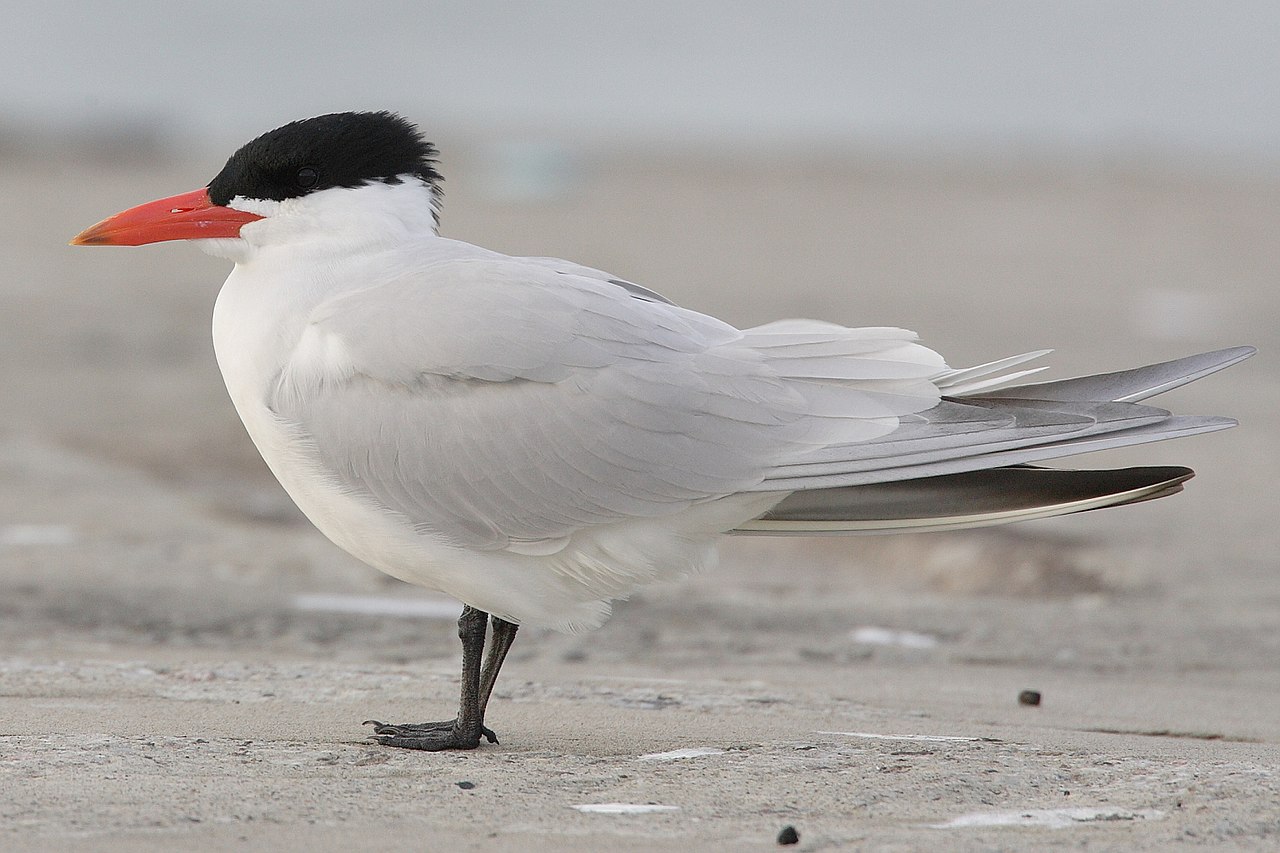
The Caspian gull is a large gull and a member of the herring and lesser black-backed gull complex. The scientific name is from Latin. Larus appears to have referred to a gull or other large seabird, and cachinnans means 'laughing', from cachinnare 'to laugh'.
Region
Eurasia (Black Sea and Caspian regions into Central Europe and the Middle East)
Typical Environment
Breeds around the Caspian and Black Seas, with colonies on islands, sandspits, deltas, and along large inland lakes and reservoirs. It also uses broad river valleys and steppe lakes, and has spread into urban and industrial waterfronts. In winter it disperses widely to coastal shorelines, estuaries, and inland water bodies, often gathering at landfills and harbors. It is frequently seen following fishing vessels and foraging at river mouths. Occasional vagrants reach western Europe, the Arabian Peninsula, and South Asia.
Altitude Range
Sea level to 2000 m
Climate Zone
Temperate
Ease of Keeping
Beginner friendly: 1/5
The Caspian gull is a large, pale-mantled gull closely related to herring and lesser black-backed gulls, and is notorious among birders for its subtle identification features. It has expanded its range westward in recent decades, now occurring widely from the Caspian and Black Seas into parts of central and western Europe. The species often forms mixed colonies with other large gulls and readily exploits human-altered habitats such as ports and landfills.


Eggs, collection Museum Wiesbaden


Temperament
social and assertive
Flight Pattern
strong flier with buoyant, long-winged flight and deep, steady wingbeats
Social Behavior
Typically breeds colonially on islands, sandbars, and remote shorelines, often in mixed colonies with other large gulls. Pairs are generally monogamous within a season and nest on the ground, laying 2–3 eggs. Outside the breeding season it forms large roosting and feeding flocks, especially at landfills and fisheries.
Migratory Pattern
Partial migrant
Song Description
Vocalizations include loud, laughing series of calls and harsh yelps typical of large gulls. It also gives barked alarm notes and softer mewing contact calls within colonies.
Plumage
Adult shows a clean white head (often with faint streaking on the nape in non-breeding season), pale grey mantle, and black primaries with large white mirrors. Juveniles and immatures are mottled brown with a relatively plain, pale-looking underwing and a smooth, stepwise progression to adult plumage over several years.
Diet
An opportunistic omnivore that takes fish (caught or scavenged), aquatic invertebrates, insects, and carrion. It steals prey from other birds and readily consumes refuse at dumps and harbors. During breeding it may take eggs and chicks of other species and small rodents when available.
Preferred Environment
Forages along coastlines, estuaries, river mouths, reservoirs, and large inland lakes. Common around fishing ports, beaches, agricultural fields, and landfills, often following trawlers or feeding on ploughed ground.