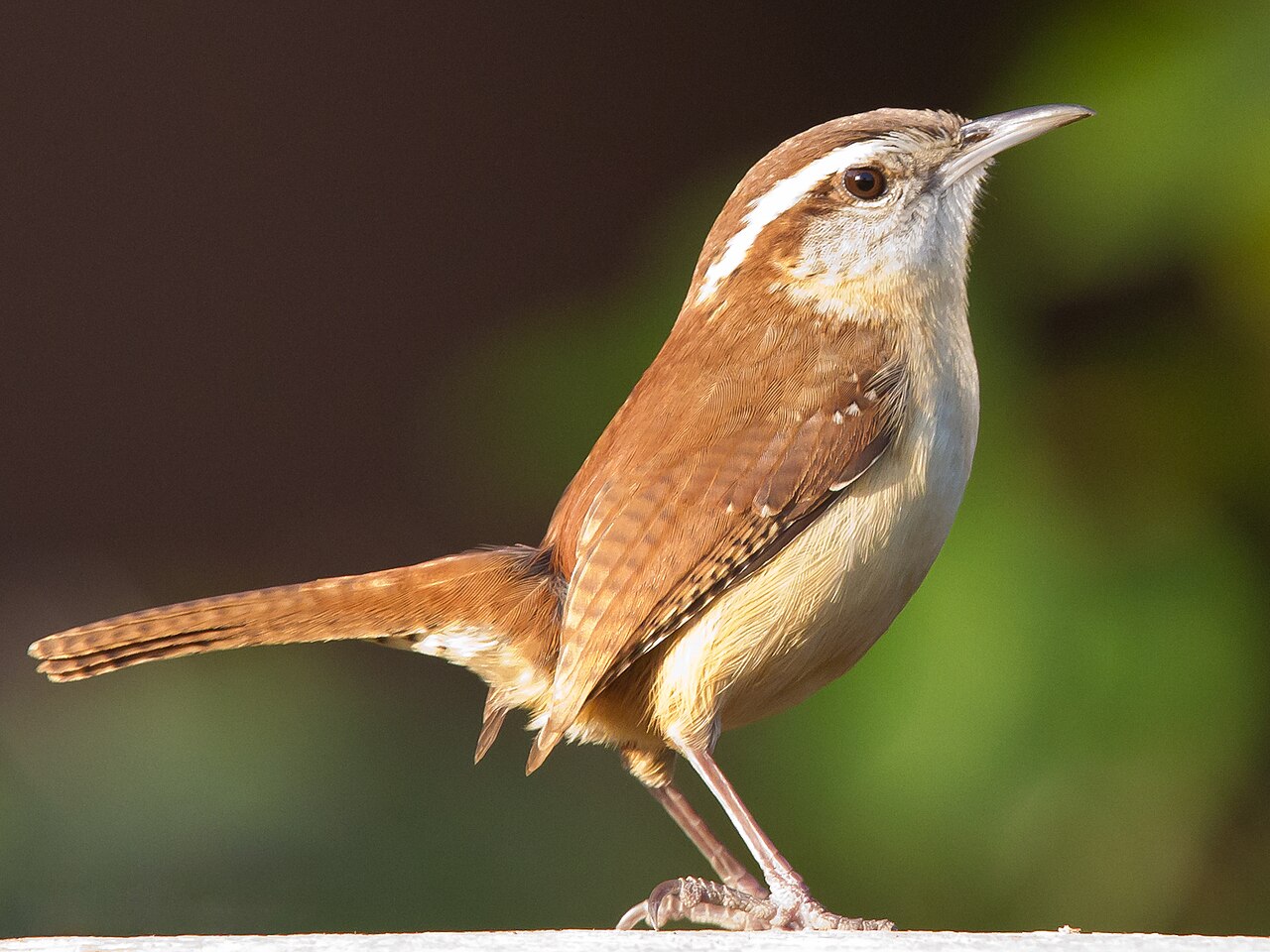
The Carolina wren is a species of wren that is common in the Eastern United States, the extreme south of Ontario, Canada, and the extreme northeast of Mexico. Severe winters restrict the northern limits of their range, while favorable weather conditions lead to a northward extension of their breeding range. Their preferred habitat is in dense cover in forest, farm edges, and suburban areas. This wren is the state bird of South Carolina.
Region
Eastern North America
Typical Environment
Found from the eastern Great Plains through the southeastern and mid-Atlantic United States, extending into the extreme south of Ontario and the northeast of Mexico. It favors dense understory, thickets, brush piles, forest edges, and suburban yards with heavy cover. Severe winters can temporarily contract its northern range, while mild winters enable northward expansion. It adapts well to human-altered landscapes if cover and nest sites are available.
Altitude Range
Sea level to 1800 m
Climate Zone
Temperate
Ease of Keeping
Beginner friendly: 1/5
A loud-voiced wren, it delivers a ringing teakettle-like song that carries far for such a small bird. Pairs often remain together year-round and stay on their territories through winter. They readily nest in cavities and odd human-made sites like flowerpots and mailboxes. It is the state bird of South Carolina.


Carolina wren in Greenville, South Carolina
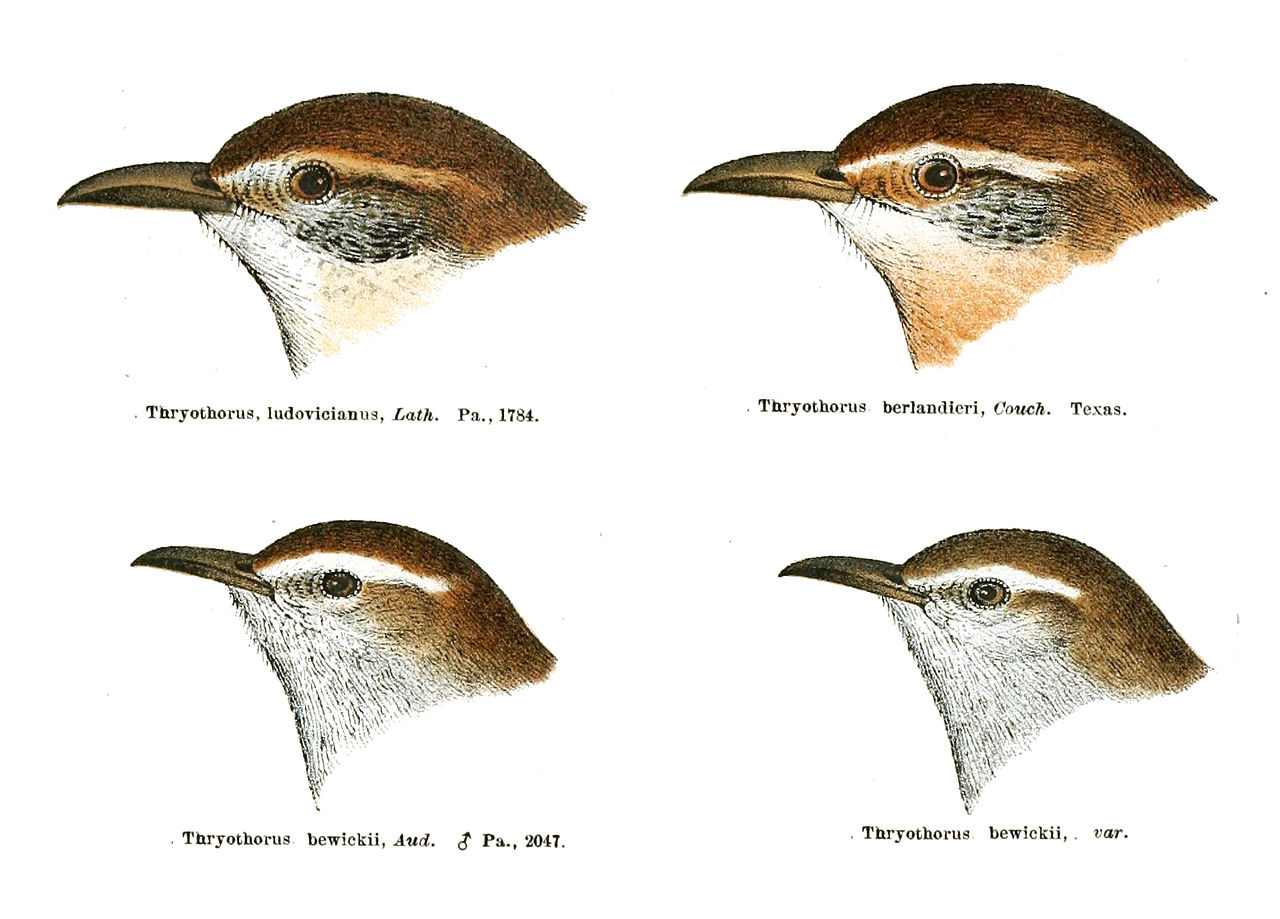
Sketches of Thryothorus ludovicianus, T.l. lomitensis, and Thryomanes bewickii (Bewick's wren) and one of its subspecies

Carolina wren at feeder

A Carolina Wren singing in Forest Park.

Carolina wren on Rutland Township Forest Preserve

Carolina wren nesting in a duck nestbox

South Carolina state quarter
Temperament
territorial and bold within cover
Flight Pattern
short rapid wingbeats, typically low and direct
Social Behavior
Typically seen in pairs that maintain territories year-round. Monogamous pairs often duet and may remain together across seasons. Nests are dome-shaped or use cavities, including human structures, and both sexes contribute to nest defense.
Migratory Pattern
Resident
Song Description
A loud, ringing series of repeated phrases often glossed as 'tea-kettle, tea-kettle, tea-kettle.' Also gives sharp scolds, chatter, and rattling calls when alarmed or excited.
Plumage
Rich rufous-brown upperparts with fine barring on wings and tail; warm buff to cinnamon underparts; prominent white supercilium; slightly rounded tail often cocked.
Diet
Primarily eats insects and other arthropods such as beetles, caterpillars, spiders, and cockroaches. Will also take small snails and occasionally small vertebrates. Supplements diet with seeds, berries, and suet at feeders, especially in winter.
Preferred Environment
Forages in dense vegetation, brush piles, downed logs, and tangled vines, probing crevices and bark. Frequently searches near the ground but will climb trunks, fences, and buildings.