
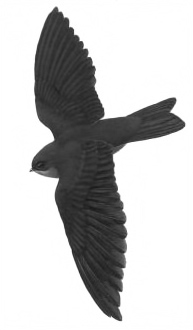
The Caroline swiftlet, also known as the island swiftlet, Micronesian swiftlet, or Caroline Islands swiftlet, is a species of swift in the family Apodidae. Some taxonomists consider it to be a subspecies of the uniform swiftlet. It is endemic to the Caroline Islands, and its natural habitat is subtropical or tropical moist lowland forests.
Region
Micronesia, Western Pacific
Typical Environment
Endemic to the Caroline Islands, where it is most often associated with limestone and volcanic caves in humid lowland forest. It forages over forest edges, clearings, coastal zones, and above streams and lagoons. Breeding colonies occupy caves and occasionally man-made tunnels, returning repeatedly to traditional sites. It may commute several kilometers daily between roosts and feeding areas.
Altitude Range
Sea level to 800 m
Climate Zone
Tropical
Ease of Keeping
Beginner friendly: 1/5
This swiftlet is notable for using simple echolocation clicks to navigate in the dark caves where it roosts and nests. It builds small cup nests from hardened saliva on cave walls or ceilings. Colonies can be sensitive to disturbance, and invasive predators on islands may affect breeding success.

Temperament
social and active
Flight Pattern
short rapid wingbeats with swift, agile coursing and brief glides
Social Behavior
Forms colonies in caves where pairs build saliva nests and raise one to two eggs. Outside the breeding site it often flies in small groups, especially over foraging hotspots. Pairs are thought to be seasonally monogamous, and birds return to traditional nesting ledges. Echolocation clicks are used inside dark roosting and nesting sites.
Migratory Pattern
Resident
Song Description
In flight it gives thin, high-pitched chips and twittering trills. Inside caves it produces dry clicking notes used for echolocation.
Plumage
Mostly uniform sooty-brown to dark grey-brown with slightly paler underparts and a subtle gloss on the upperparts.
Diet
An aerial insectivore that captures small flying insects such as flies, ants, termites, and beetles on the wing. It often tracks insect swarms over forest clearings and water. Feeding is entirely in flight, with quick, agile maneuvers and frequent direction changes.
Preferred Environment
Typically feeds above forest canopies, along ridgelines, over rivers and coastal lagoons, and around village clearings. Proximity to caves or roosts is common, but birds range widely to exploit local insect emergences.


