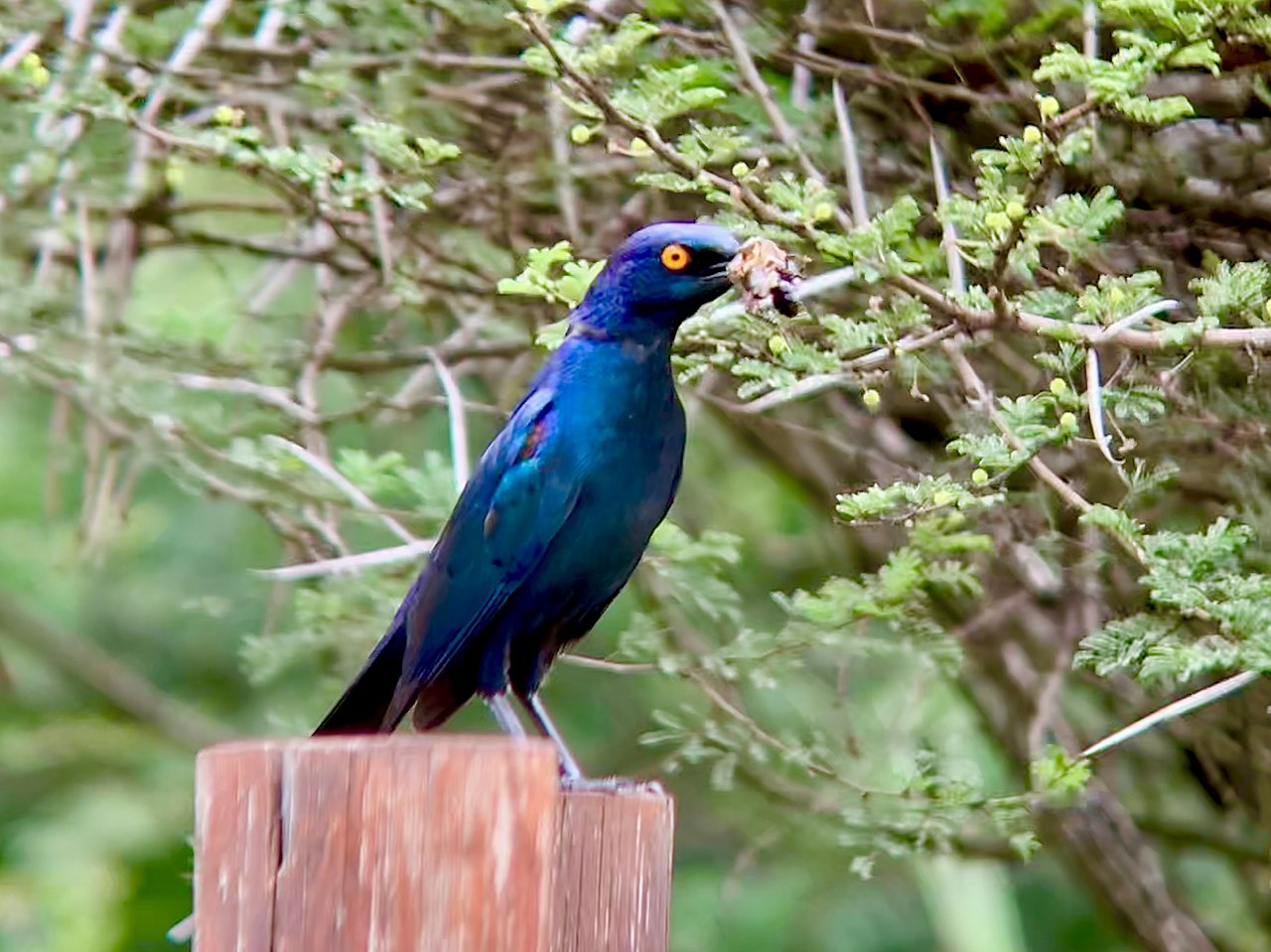
The Cape starling, also known as red-shouldered glossy-starling or Cape glossy starling, is a species of starling in the family Sturnidae. It is found in Southern Africa, where it lives in woodlands, bushveld and in suburbs.
Region
Southern Africa
Typical Environment
Found widely across South Africa, Namibia, Botswana, Zimbabwe, and adjacent regions, the Cape starling favors open woodlands, thornveld, and savanna. It commonly inhabits farm edges, suburban parks, and gardens where scattered trees offer nesting cavities. The species avoids the most treeless deserts but uses bushveld and riparian belts in drier zones. It is largely sedentary with local movements in response to food and water availability.
Altitude Range
Sea level to 2000 m
Climate Zone
Subtropical
Ease of Keeping
Beginner friendly: 2/5
This glossy starling’s brilliant blue‑green sheen comes from structural coloration that reflects light rather than pigment. It readily adapts to human-altered landscapes and often nests in cavities in buildings or tree holes. Flocks can gather at dusk to roost communally, and they help control insect populations in gardens and farms.


Cape starling in Namibia


Temperament
social and active
Flight Pattern
strong flier with rapid, direct wingbeats
Social Behavior
Often seen in pairs or small groups, forming larger flocks outside the breeding season. Nests in cavities in trees, fence posts, or buildings, and will reuse sites. Typically monogamous, with both parents involved in feeding the young.
Migratory Pattern
Resident
Song Description
A varied mix of clear whistles, chatters, and harsh notes delivered from exposed perches. Capable of simple mimicry of other birds and environmental sounds.
Plumage
Uniform, sleek, glossy plumage with strong metallic iridescence that shifts blue to green and purple in changing light.
Diet
Eats insects such as beetles, termites, grasshoppers, and caterpillars, along with spiders and other small invertebrates. Also consumes fruits and berries, and occasionally nectar. In human areas it may take food scraps and forage near livestock for disturbed insects.
Preferred Environment
Forages on lawns, open ground, and short grass, often hopping and probing. Also gleans insects and fruit in trees and shrubs, especially in woodlands and gardens.