
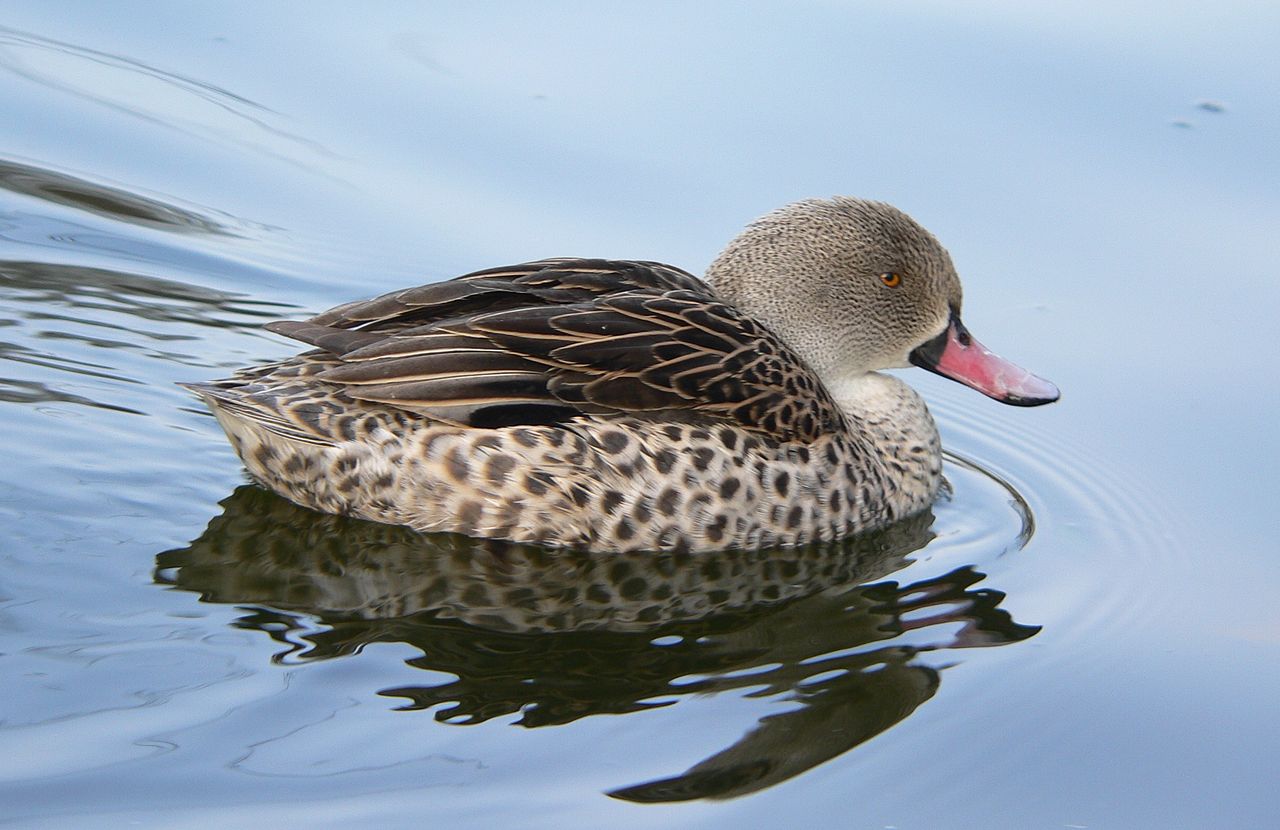
The Cape teal also Cape wigeon or Cape widgeon is a 44–46 cm long dabbling duck of open wetlands in sub-Saharan Africa.
Region
Sub-Saharan Africa
Typical Environment
Found widely across southern and eastern Africa in open, shallow wetlands including brackish lagoons, saltpans, floodplains, and ephemeral pans. It readily uses man-made water bodies such as farm dams and sewage ponds. The species favors open shorelines and sparsely vegetated margins rather than densely reed-choked wetlands. It tolerates saline and alkaline waters and is common in arid and semi-arid regions following rains. Coastal estuaries and sheltered bays are used where freshwater is scarce.
Altitude Range
Sea level to 2500 m
Climate Zone
Subtropical
Ease of Keeping
Beginner friendly: 2/5
Also called the Cape wigeon, this small dabbling duck is notable for its pale, finely speckled plumage and a pink bill marked by a dark central line. It is largely non-migratory but highly nomadic, tracking seasonal rains to temporary pans and floodplains. Both sexes look similar, which can make field sexing difficult away from close views. It often favors saline or alkaline waters where few other ducks feed.


Watercolour made by Georg Forster on James Cook's second voyage to the Pacific Ocean. This painting is the holotype for the species.



Temperament
social and wary in open habitats
Flight Pattern
fast, direct flight with short rapid wingbeats
Social Behavior
Usually seen in pairs or small loose groups, sometimes forming larger flocks on productive pans. Breeding is generally in the dry season or after rains, with nests on the ground concealed in low vegetation near water. Pairs are monogamous for the season and both adults attend the brood. Outside breeding, they loaf on open shores and roost communally.
Migratory Pattern
Resident
Song Description
Relatively quiet; males give soft whistling notes during display, while females utter lower, harsher quacks. Contact calls in flight are brief and subdued compared to larger dabbling ducks.
Plumage
Overall pale grey with dense fine dark speckling (vermiculations) and a slightly paler face; glossy green speculum on the wing edged darker.
Diet
Feeds by dabbling and upending on seeds and leaves of aquatic plants, algae, and pondweeds. Also takes aquatic invertebrates such as insects, crustaceans, and small mollusks, especially in nutrient-rich saline pans. Filter-feeds at the surface and sieves soft mud along shorelines. Diet composition shifts seasonally with water levels and prey availability.
Preferred Environment
Shallow margins of pans, lagoons, and floodplains where it can dabble efficiently. Often forages in open water near exposed mudflats and sparse emergent vegetation. Will exploit man-made waters with gentle, shallow edges.


