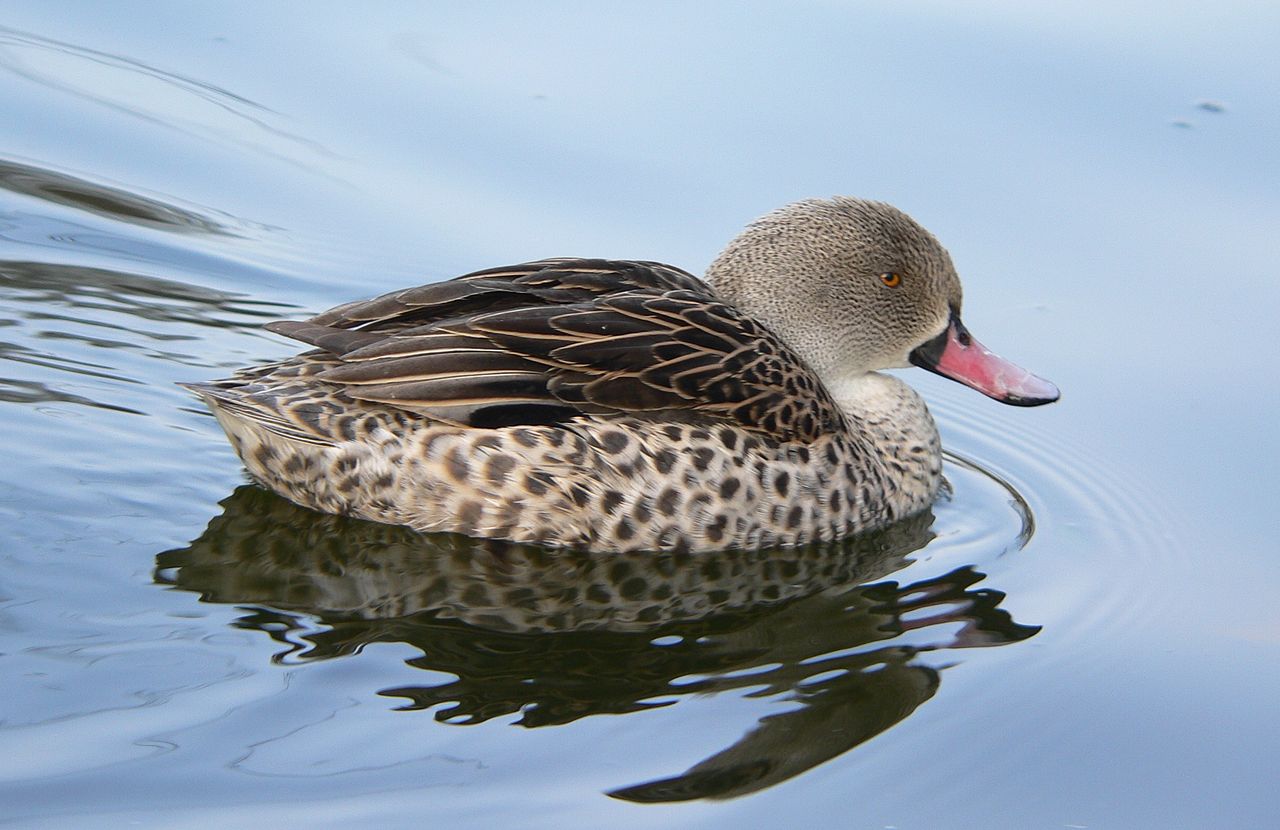
The Cape shoveler or Cape shoveller is a species of dabbling duck of the genus Spatula. It is resident in South Africa, and uncommon further north in Namibia, Botswana, Zimbabwe, southern Angola, Lesotho, Mozambique, and Zambia.
Region
Southern Africa
Typical Environment
Found mainly in South Africa with smaller numbers in Namibia, Botswana, Zimbabwe, southern Angola, Lesotho, Mozambique, and Zambia. Prefers shallow, still or slow-moving freshwater such as marshes, pans, vleis, seasonal floodplains, farm dams, and sewage ponds. Also uses brackish lagoons and estuarine backwaters, especially where emergent vegetation provides cover. Avoids fast-flowing rivers and very deep open lakes. Distribution shifts locally with rainfall as birds move to newly filled wetlands.
Altitude Range
Sea level to 2000 m
Climate Zone
Subtropical
Ease of Keeping
Beginner friendly: 2/5
The Cape shoveler is a specialized filter-feeding duck with a broad spatulate bill lined with fine lamellae to strain small invertebrates and seeds from the water. Males and females are similarly mottled brown, making them less sexually dimorphic than many dabbling ducks; the powder-blue forewing and green speculum are best seen in flight. It is largely confined to southern Africa and often tracks seasonal rains to temporary wetlands. Pairs form in the breeding season, and flocks gather on larger pans outside it.


Temperament
wary but moderately gregarious
Flight Pattern
strong flier with rapid wingbeats
Social Behavior
Forms monogamous pairs during the breeding season, nesting on the ground in dense vegetation near water. Outside breeding, gathers in small to medium flocks on productive wetlands. The female incubates while the male often remains nearby; broods are led to shallow feeding areas soon after hatching.
Migratory Pattern
Resident with local nomadic movements
Song Description
Vocalizations include a low, nasal quack from the male and louder quacks from the female. Flight calls are softer, with occasional grunts and chatter during courtship and feeding.
Plumage
Densely mottled brown body with pale blue upperwing coverts and a green speculum edged whitish; both sexes have a very large spatulate bill.
Diet
Feeds by filtering small aquatic invertebrates, crustaceans, insect larvae, seeds, and plant detritus through its lamellate bill. Sifts water at the surface or just below, often swinging the bill side to side. Will graze lightly on tender aquatic vegetation and glean from mud margins when water is low.
Preferred Environment
Shallow, calm wetlands with abundant plankton and emergent vegetation. Frequently forages along edges of pans, in flooded grass, and at the margins of reedbeds; also uses sewage ponds and farm dams where food is concentrated.