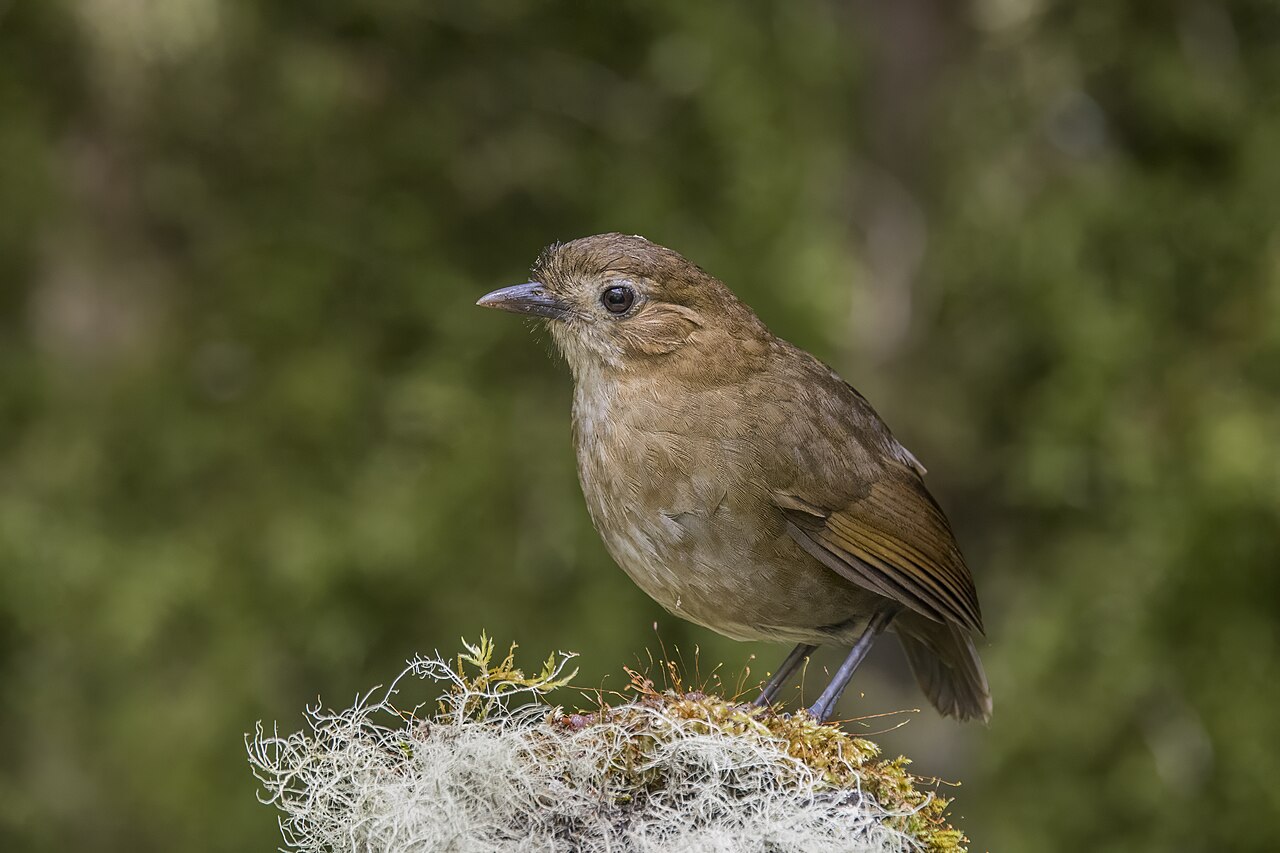
The brown-backed whistler is a species of bird in the family Pachycephalidae endemic to New Guinea. Its natural habitat is subtropical or tropical moist montane forests.
Region
New Guinea Highlands
Typical Environment
Occurs in subtropical to tropical moist montane forests, including mossy mid-elevation and upper montane forest. Favors dense understory and mid-story layers along ridges, forest edges, and along forested streams. It tolerates lightly disturbed secondary growth but is most common in intact forest. Often found in areas with abundant epiphytes and vine tangles, where it forages methodically.
Altitude Range
1200–3000 m
Climate Zone
Highland
Ease of Keeping
Beginner friendly: 1/5
A mid-story specialist of New Guinea’s montane forests, the brown-backed whistler is noted for its clear, flute-like whistles that carry through mossy uplands. It often joins mixed-species flocks, gleaning insects from foliage and bark. Despite its striking voice, it can be unobtrusive and is more often heard than seen.
Temperament
shy and unobtrusive
Flight Pattern
short rapid wingbeats between perches
Social Behavior
Typically found singly, in pairs, or family groups, and frequently associates with mixed-species flocks. Likely monogamous, nesting in a small cup hidden in dense vegetation. Both parents are thought to share incubation and chick-rearing duties.
Migratory Pattern
Resident
Song Description
Clear, melodious whistled phrases delivered at intervals, often from concealed perches. Calls include sharp contact notes when moving with mixed flocks.
Plumage
Warm brown upperparts with a cleaner, paler underbody; subtle grayish-olive tones on the flanks; throat usually whitish to pale gray. Feathers are smooth and plain, giving a neat, uniform look without heavy streaking.
Diet
Primarily feeds on insects and other small arthropods, gleaned from leaves, twigs, and bark. Occasionally pursues short sallies to snatch prey. May take small fruits opportunistically, especially when insect activity is low.
Preferred Environment
Forages in the mid-story to lower canopy of moist montane forest, especially in areas with dense foliage and epiphytes. Often works along forest edges, trails, and ridge lines where prey is more easily exposed.