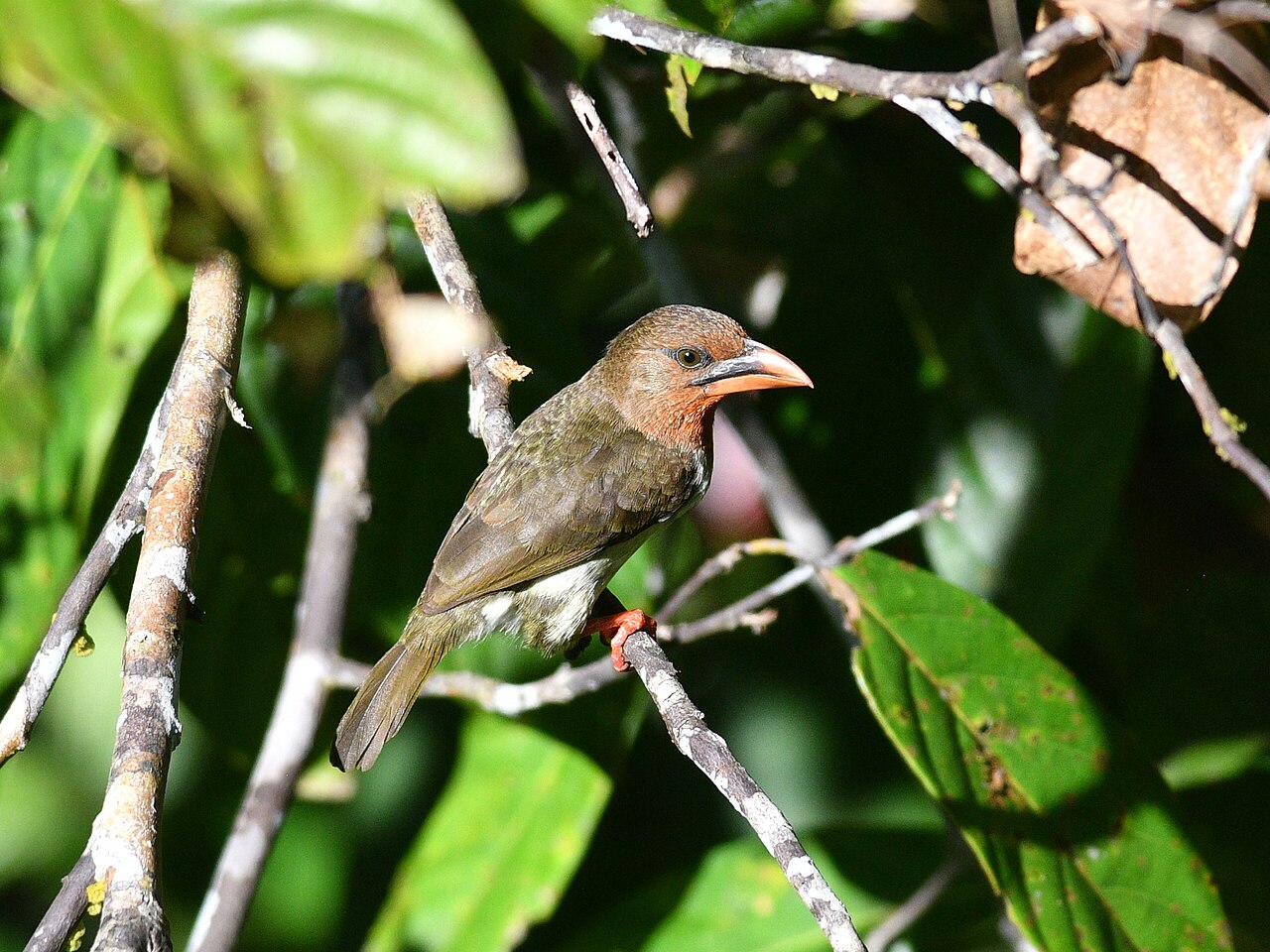
The bronzy hermit is a species of hummingbird in the family Trochilidae. It is found in Colombia, Costa Rica, Ecuador, Honduras, Nicaragua, and Panama.
Region
Central America to northwest South America
Typical Environment
Occurs from Honduras south through Nicaragua, Costa Rica, and Panama into western Colombia and locally northwestern Ecuador. Prefers humid lowland and foothill forests, forest edges, streamside thickets, and secondary growth rich in Heliconia and other long-tubed flowers. Frequently uses plantations, clearings, and gardens where suitable nectar plants are abundant. Often forages in the shaded understory and along edges where blossoms are concentrated. It adapts well to disturbed habitats provided floral resources persist.
Altitude Range
Sea level to 1500 m
Climate Zone
Tropical
Ease of Keeping
Beginner friendly: 1/5
The bronzy hermit is a hummingbird specialized for feeding at tubular flowers, with a long decurved bill that matches Heliconia and ginger blossoms. It is an important pollinator in lowland tropical forests and often follows predictable traplines between nectar sources. Besides nectar, it also takes small insects and spiders for protein. It tolerates semi-open habitats and may visit gardens with suitable flowering plants.


Temperament
solitary and secretive
Flight Pattern
short rapid wingbeats with agile hovering
Social Behavior
Typically a traplining species that forages alone along a repeated route of flowering plants. The female builds a small cup nest suspended from leaves or thin supports using plant down and spider silk, and she alone incubates and cares for the young. Males sing from low to mid-level perches to advertise and defend display spots, while direct territorial defense is focused around rich nectar sources.
Migratory Pattern
Resident
Song Description
Song is a thin, high, tinkling series of repeated notes, delivered persistently from a concealed perch. Calls include sharp tseet and buzzy chips, with a prominent wing hum during close flight.
Plumage
Upperparts bronzy-green with a brownish sheen; underparts dull rufous to brownish with a warm wash. Face shows a dusky mask set off by a pale supercilium and malar stripe typical of hermits. Tail is rufous-brown with a darker subterminal band and pale or whitish tips. Overall appearance is muted and coppery rather than iridescent, with a long decurved bill.
Diet
Feeds primarily on nectar from Heliconia, Costus, and other tubular flowers suited to its curved bill. Supplements its diet with small insects and spiders gleaned from foliage or caught in aerial sallies, providing essential protein. Often follows a regular trapline of favored blooms and may visit feeders where available.
Preferred Environment
Forages in the shaded understory and along forest edges, stream margins, and second growth where nectar plants are dense. Also uses plantations and gardens with abundant flowering heliconias and gingers.