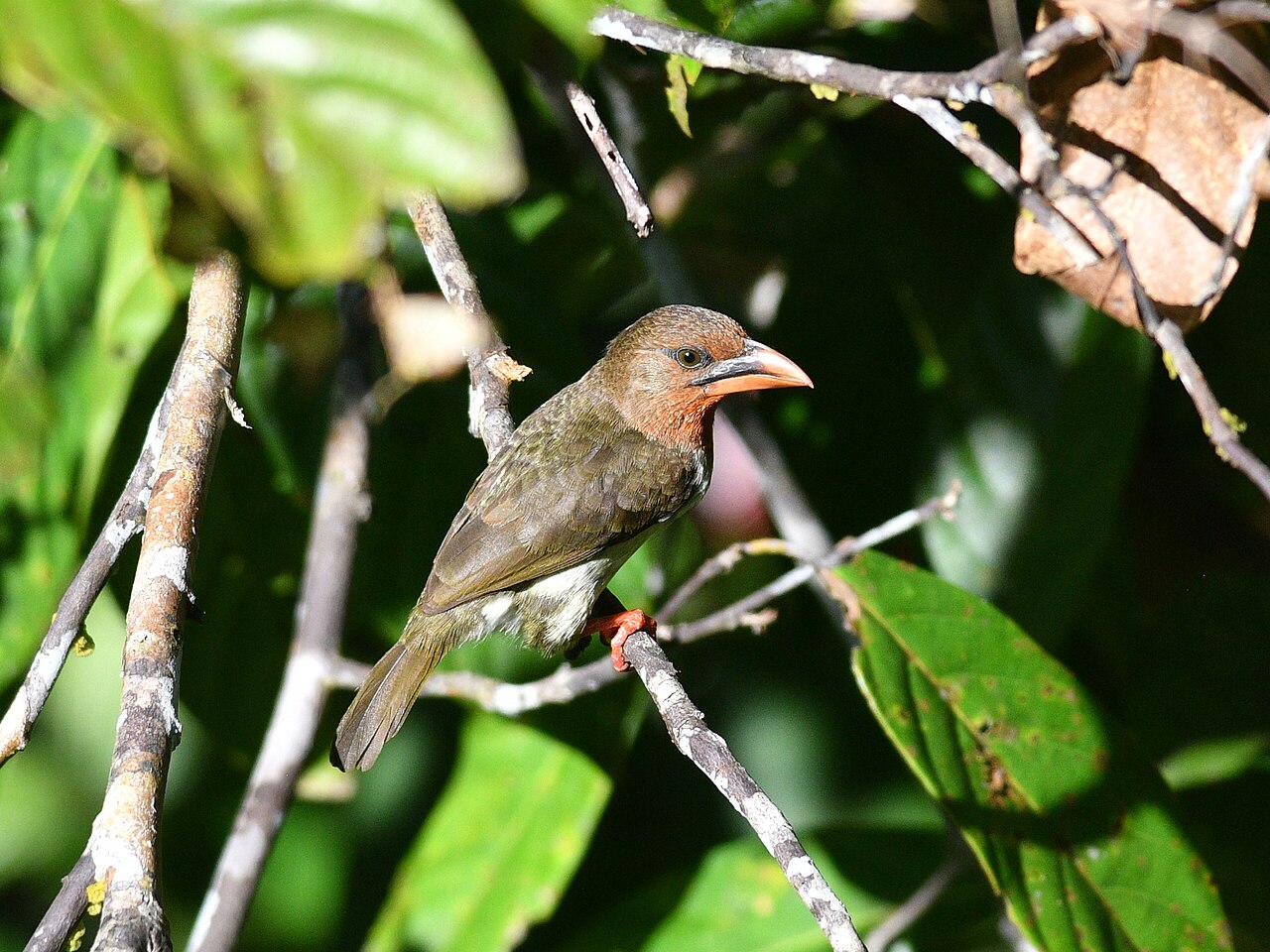
The bronzy jacamar is a species of bird in the family Galbulidae. It occurs in Bolivia, Brazil, Colombia, French Guiana, Guyana, Suriname, and Venezuela.
Region
Amazon Basin and the Guianas
Typical Environment
Found in lowland tropical forests, especially along forest edges, riverbanks, and clearings where open sight lines allow aerial hawking. It uses secondary growth, gallery forests, and edges of terra firme and várzea forest. Often perches a few meters above ground along streams, trails, or forest margins. Occurs across northern Bolivia, much of Brazil north of the Amazon’s southern arc, southern Venezuela, Colombia’s Amazonian lowlands, and the Guianas.
Altitude Range
Sea level to 800 m
Climate Zone
Tropical
Ease of Keeping
Beginner friendly: 1/5
Bronzy jacamars sit motionless on exposed perches and sally out to catch flying insects with a long, straight bill. Their plumage has a metallic bronzy-green sheen that flashes in good light. They often nest by tunneling burrows into sandy or earthen banks along rivers or clearings. By taking wasps and other aerial insects, they help control insect populations in forest-edge habitats.


Bronzy Jacamar / Galbula leucogastra
Temperament
solitary and territorial
Flight Pattern
short rapid wingbeats
Social Behavior
Usually encountered singly or in pairs, sometimes with dependent young. Pairs defend feeding perches and nest sites along edges and waterways. Nests are burrows excavated in sandy or earthen banks, where both sexes participate in digging and incubation.
Migratory Pattern
Resident
Song Description
Gives sharp, high-pitched whistles and thin piping notes from exposed perches. Calls are brief and carry well along river corridors and forest edges, often delivered in short series.
Plumage
Iridescent bronzy-green upperparts with clean, pale underparts and a contrasting white throat and belly; rufous tones often present on flanks and undertail. Feathers are sleek and glossy, giving a metallic sheen in sunlight.
Diet
Primarily hunts flying insects such as butterflies, dragonflies, beetles, bees, and wasps. Captures prey on the wing by sallying from a fixed perch. Often removes stingers or tough wings by striking prey against the perch before swallowing. Feeds opportunistically where insect traffic is high, such as sunny gaps and over water.
Preferred Environment
Perches along forest margins, riverbanks, and clearings with open airspace. Also uses edges of secondary growth and along trails where visibility is good.