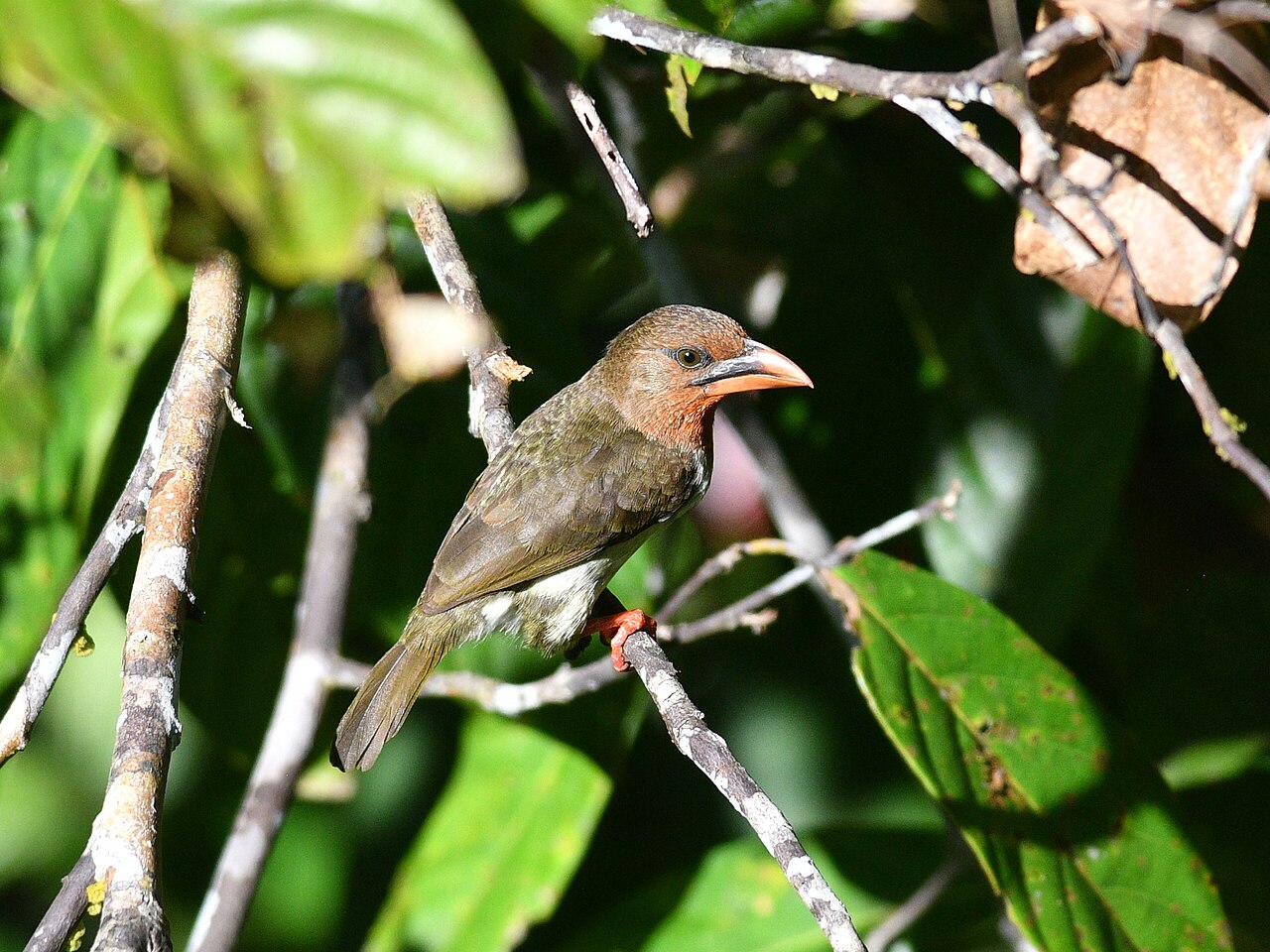
The brown babbler is a species of bird in the family Leiothrichidae. It is predominantly found in West Africa, but ranging from the Gambia to Kenya. The species is common across its range. The species is also known as the Sudan babbler.
Region
West and Central African Sahel–Savanna belt
Typical Environment
Occurs from the Gambia and Senegal east through the Sahel and Sudanian savannas into South Sudan, northern Uganda, and western Kenya. It favors dry woodland, thorn scrub, riparian thickets, and edges of cultivation. Often seen around villages and gardens where dense shrubbery provides cover. Uses low shrubs and the ground layer for foraging, moving between cover in loose, vocal groups.
Altitude Range
0–1800 m
Climate Zone
Tropical
Ease of Keeping
Beginner friendly: 1/5
The brown babbler is a highly social species that forages and moves in noisy parties, often performing communal displays with fanned tails and synchronized calls. Also known as the Sudan babbler, it thrives in semi-arid savanna and scrub, frequently near human settlements. Groups practice cooperative behaviors such as sentinel watching and may assist in nest defense.


Temperament
social and active
Flight Pattern
short rapid wingbeats with brief, low glides; reluctant long-distance flier
Social Behavior
Lives in cohesive groups that forage together and maintain constant contact calls. Nests are built low in dense shrubs; groups defend territories vigorously. Cooperative vigilance is common, with individuals taking turns as sentinels.
Migratory Pattern
Resident
Song Description
A loud, chattering chorus of harsh scolds, rattles, and bubbling notes delivered by multiple group members. Calls often build into synchronized duets and choruses, especially during territorial encounters.
Plumage
Uniform warm-brown to rufous-brown plumage with slightly paler underparts and faint streaking on the throat and breast. Long, graduated tail often held cocked and fanned during displays. Feathers appear soft and somewhat loose, giving a shaggy look when fluffed.
Diet
Feeds primarily on insects and other small invertebrates such as beetles, ants, termites, and spiders. Also takes berries, small fruits, and seeds, particularly in the dry season. Will opportunistically glean from low foliage and probe leaf litter, occasionally capturing small vertebrates.
Preferred Environment
Forages on or near the ground in scrub, thorny thickets, and edges of acacia woodland. Readily uses hedges and gardens around villages where cover is dense and invertebrates are abundant.