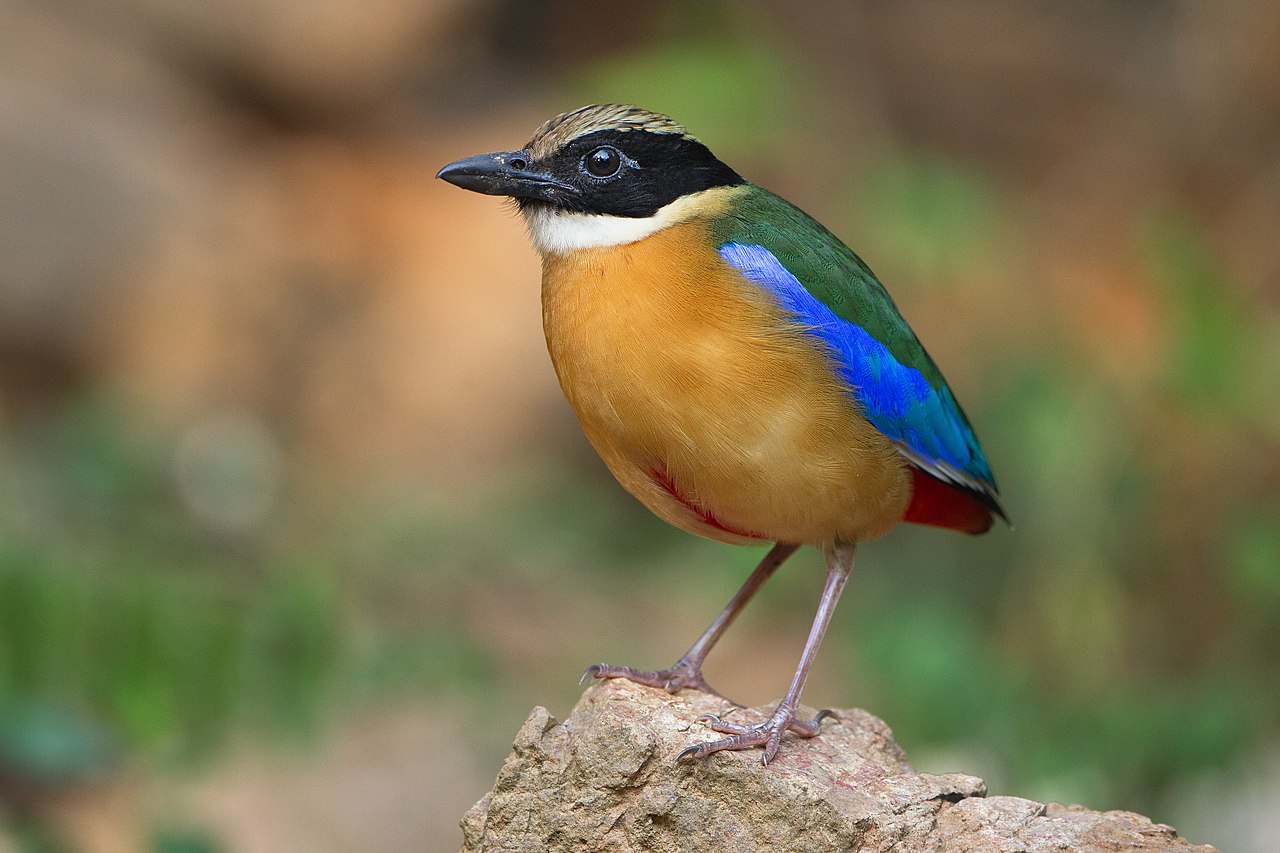
The blue-winged minla, also known as the blue-winged siva, is a species of bird in the family Leiothrichidae.
Region
South and Southeast Asia
Typical Environment
The blue-winged minla ranges from the Himalayan foothills of Nepal, Bhutan, and northeastern India across northern Myanmar and southern China to northern Thailand, Laos, and Vietnam. It inhabits subtropical and montane evergreen broadleaf forests, mixed pine-oak woods, bamboo thickets, and forest edges. The species often follows ridgelines and valleys where dense understory and epiphyte-laden branches provide foraging sites. It is largely sedentary, with some local altitudinal movements following seasonal resource availability.
Altitude Range
800–3000 m
Climate Zone
Subtropical
Ease of Keeping
Beginner friendly: 2/5
Also called the blue-winged siva, this small, active babbler often joins mixed-species flocks in montane forests. It forages acrobatically in the mid to upper canopy, gleaning insects and sipping on small berries. Its vivid blue wing and tail panels make it one of the more striking minlas in its range.

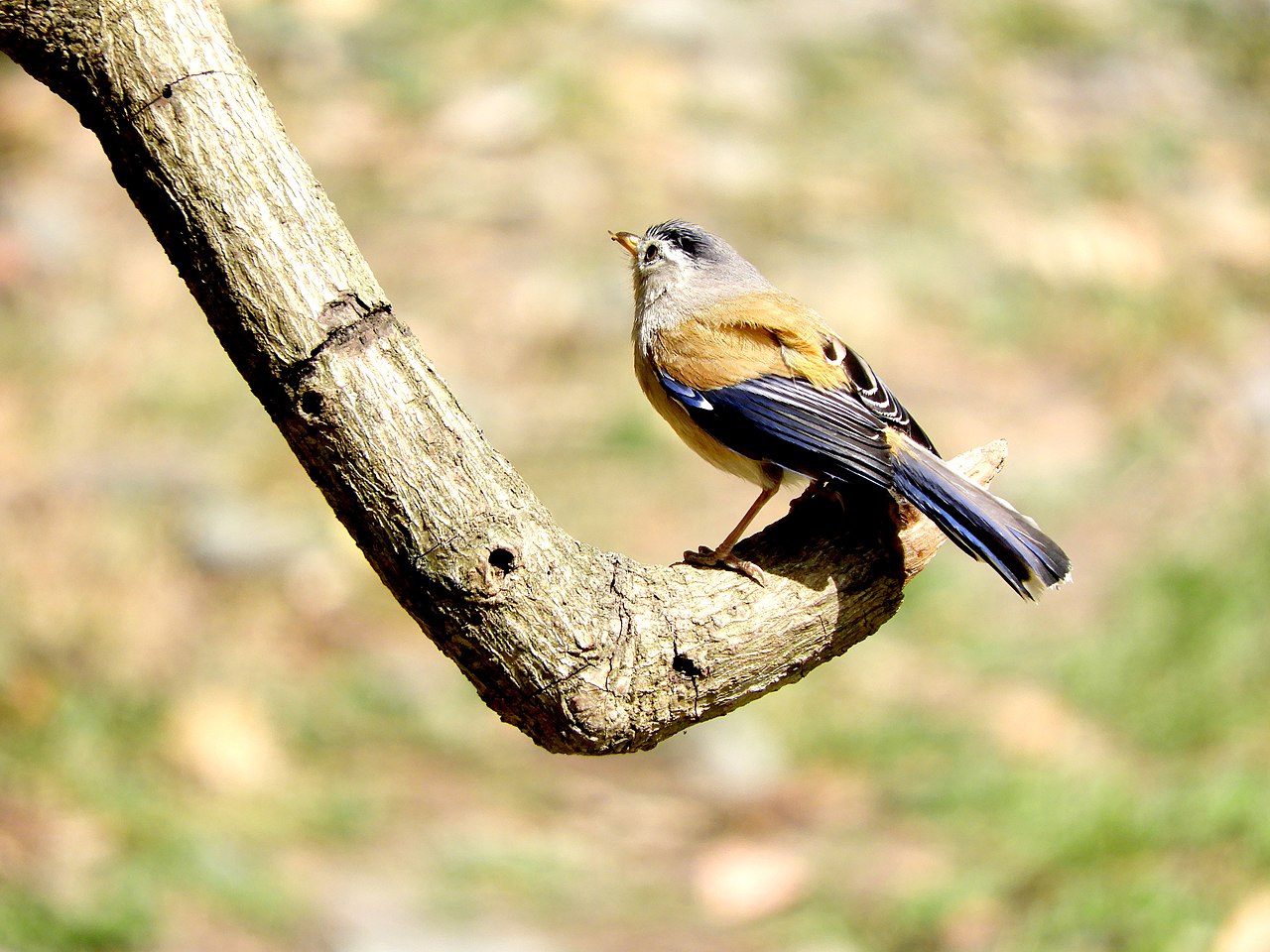
At Sattal, Kumaon, India
Temperament
social and active
Flight Pattern
short rapid wingbeats
Social Behavior
Commonly travels in small, vocal parties and frequently joins mixed-species flocks with yuhinas, fulvettas, and other babblers. Breeding pairs build neat cup nests in dense shrubs or bamboo, and both sexes participate in parental care. Outside the breeding season, loose flocks range widely through forest strata.
Migratory Pattern
Resident
Song Description
A series of thin, high-pitched whistles and rapid trills, often delivered in short phrases. Contact calls are sharp, sibilant tsee notes used to keep flocks together.
Plumage
Sleek, finely textured plumage with olive-brown upperparts, bright blue panels in the wings and tail, and buffy to whitish underparts with warm rufous flanks.
Diet
Feeds primarily on insects and other small arthropods gleaned from leaves, twigs, and mossy branches. It supplements its diet with small berries and soft fruits, especially in the non-breeding season. Occasional nectar sipping and probing among flowers are reported.
Preferred Environment
Most often forages in the mid to upper canopy of evergreen and mixed forests, including along forest edges and in bamboo. Frequently accompanies mixed-species flocks to exploit disturbed or productive microhabitats.