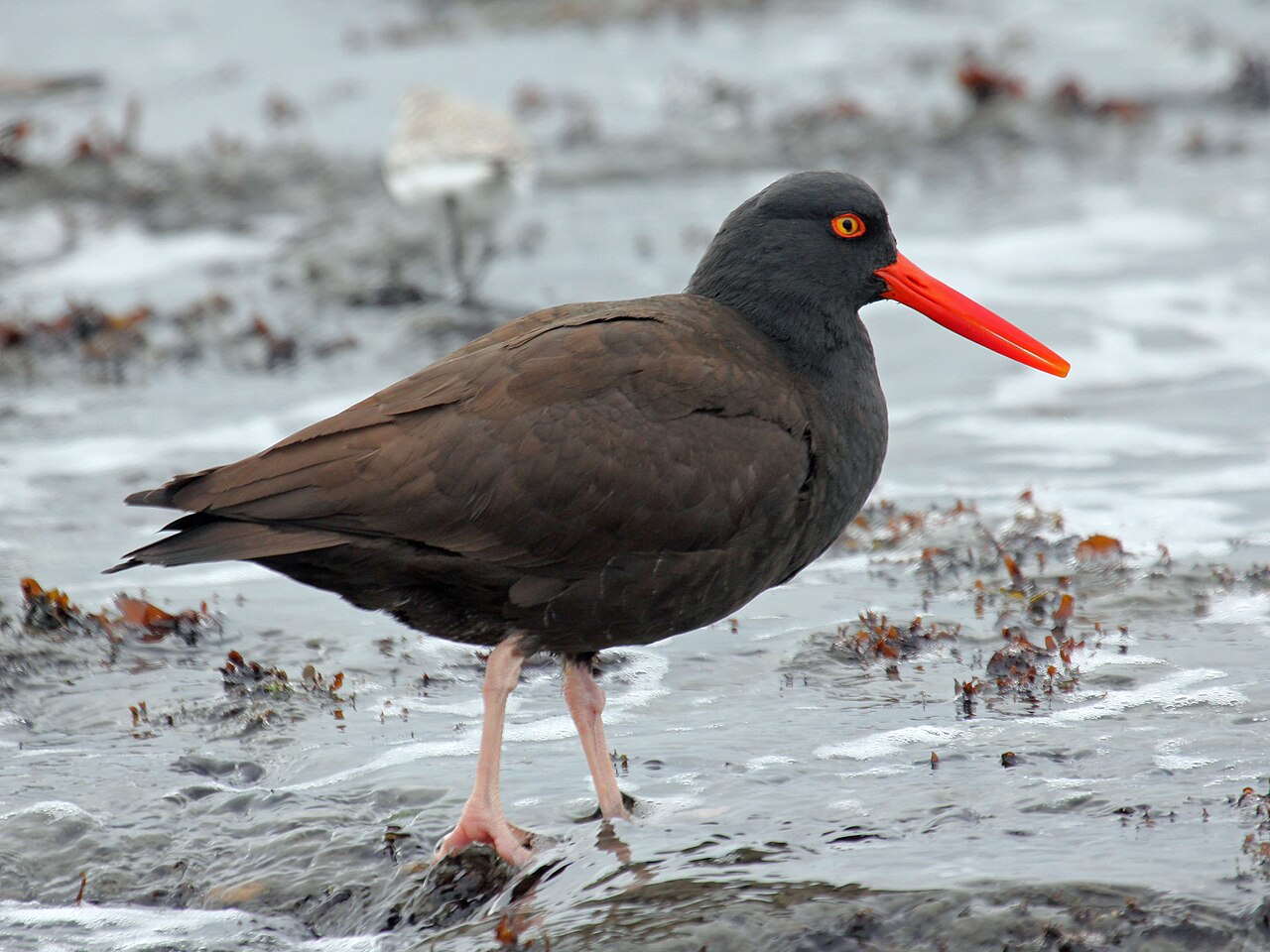
The black monarch is a species of bird in the family Monarchidae. It is found in the New Guinea Highlands. Its natural habitats are subtropical or tropical moist lowland forest and subtropical or tropical moist montane forest.
Region
New Guinea Highlands
Typical Environment
Occurs in subtropical to tropical moist montane forest, including mossy forest and mature secondary growth. It is most often found in the mid-story and canopy along ridges and gullies. The species tolerates forest edges and light disturbance but relies on structurally complex forest. It is recorded across the central cordillera of New Guinea, extending into suitable adjacent foothills.
Altitude Range
600–2400 m
Climate Zone
Highland
Ease of Keeping
Beginner friendly: 1/5
This monarch flycatcher is largely confined to the New Guinea Highlands, where it favors humid forest. Despite its plain name, a distinctive white patch in the underwing (axillaries) often flashes in flight. It forages by sallying from perches to snatch insects and will sometimes join mixed-species flocks. Its population is considered stable across suitable montane habitat.

Temperament
solitary and territorial
Flight Pattern
short rapid wingbeats with brief sallies from perches
Social Behavior
Usually found alone or in pairs, maintaining small territories within montane forest. It frequently joins mixed-species flocks moving through the mid-story. Nesting is presumed to be a small cup placed on a forked branch, with both parents likely attending the young.
Migratory Pattern
Resident
Song Description
Voice is a series of thin, high-pitched whistles and short chips delivered from a mid-story perch. Phrases can be repeated with brief pauses and may include soft scolding notes when agitated.
Plumage
Velvety black overall with a clean, contrasting white axillary/underwing patch that is most obvious in flight; females can show slightly browner tones. Feathers appear smooth and unpatterned, giving a uniform dark look at rest. The plumage is compact and neat, befitting a perch-and-sally insect hunter.
Diet
Feeds primarily on insects such as beetles, flies, moths, and caterpillars, and may also take spiders. It uses perch-and-sally tactics to catch prey in the air or glean from leaves and twigs. Foraging is deliberate, with frequent short flights to snatch prey before returning to the same or nearby perch.
Preferred Environment
Forages in the mid-story and lower canopy of moist montane forest, often along edges, clearings, and forested stream corridors. It also follows mixed-species flocks where prey is stirred up by other birds.