
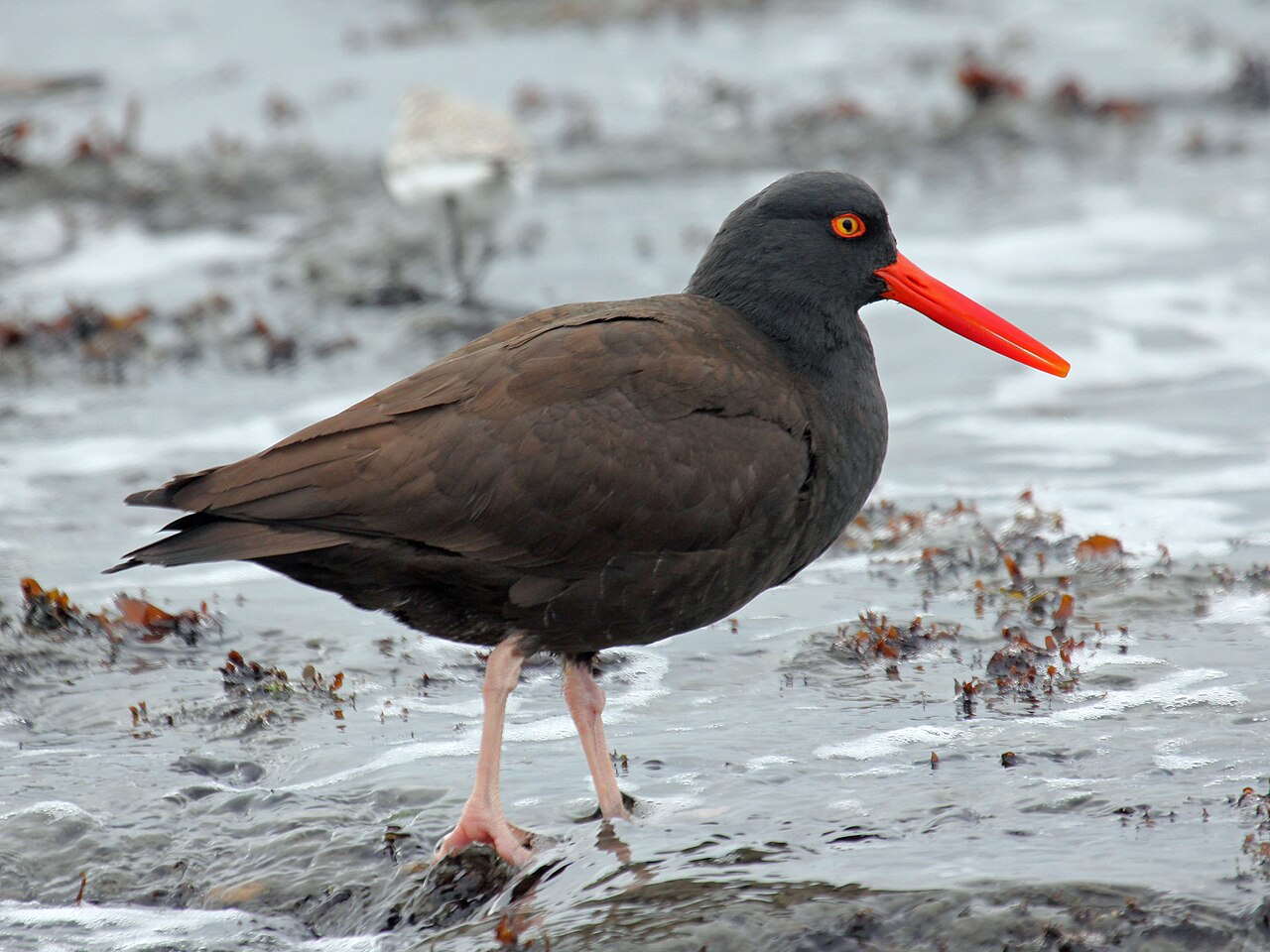
The black oystercatcher is a conspicuous black bird found on the shoreline of western North America, ranging from the Aleutian Islands of Alaska to the coast of the Baja California peninsula.
Region
Pacific Coast of North America
Typical Environment
Found along rocky shorelines from the Aleutian Islands and coastal Alaska south through British Columbia and the U.S. West Coast to Baja California. Prefers outer coasts, wave-swept rocks, reefs, and boulder-strewn beaches, rarely venturing far from the intertidal zone. Nests on islets, headlands, and gravelly or rocky shelves just above the high-tide line. Often uses tidepools and exposed mussel beds during low tides.
Altitude Range
Sea level to 100 m
Climate Zone
Temperate
Ease of Keeping
Beginner friendly: 1/5
Black oystercatchers are near-shore specialists that spend their entire lives on wave-washed coasts, using a robust, chisel-like bill to pry open mussels and limpets. They are considered indicators of rocky intertidal ecosystem health and are vulnerable to oil spills and human disturbance. Pairs form long-term bonds and defend feeding and nesting territories vigorously.


Nest


Chick on Aiktak Island, Alaska
Temperament
solitary and territorial
Flight Pattern
strong flier with rapid wingbeats, usually low over surf
Social Behavior
Typically found in territorial pairs during the breeding season, vigorously defending feeding and nesting areas. Nests are simple scrapes on rock or gravel above the high-tide line, with both parents incubating and tending chicks. Outside the breeding season, small loose flocks may form at rich feeding sites or roosts.
Migratory Pattern
Resident
Song Description
Vocal, with sharp, piping whistles and loud, repeated peep calls that carry over surf. Pairs often engage in excited duets during territorial displays.
Plumage
Uniform sooty-black to charcoal plumage with a slightly browner tone on the upperparts; lacks contrasting wing patches.
Diet
Specializes on marine invertebrates, especially mussels, limpets, chitons, crabs, barnacles, and marine worms. Uses the bill to pry, hammer, or stab to open shells or dislodge prey from rocks. Foraging success is closely tied to tidal cycles, with peak feeding when intertidal zones are exposed.
Preferred Environment
Feeds on exposed rocky benches, reefs, tidepools, and mussel beds in the intertidal zone. Often selects areas with strong wave action that support dense shellfish communities.


