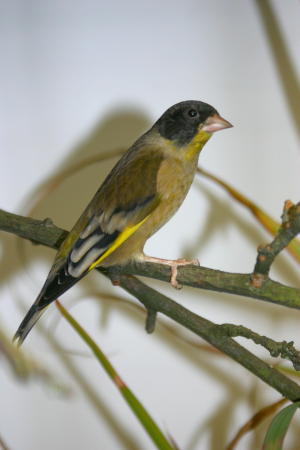
The black-headed cuckooshrike is a species of cuckooshrike found in the Indian Subcontinent and Southeast Asia.
Region
South and Southeast Asia
Typical Environment
Occurs from the Indian Subcontinent through Myanmar, Thailand, Laos, Cambodia, and Vietnam, extending into parts of Malaysia and Indonesia. It inhabits evergreen and mixed deciduous forests, wooded hills, and secondary growth. The species also uses forest edges, riverine woodland, and well-treed plantations and orchards. Most activity is in the canopy and mid-story, where it gleans insects from foliage. It tolerates moderately disturbed habitats provided tree cover remains.
Altitude Range
Sea level to 2000 m
Climate Zone
Tropical
Ease of Keeping
Beginner friendly: 1/5
The black-headed cuckooshrike is a canopy-loving songbird that forages quietly among leaves, often joining mixed-species flocks. Males have a striking jet-black head that contrasts with their grey body, while females are subtler and streaked. Despite the name, cuckooshrikes are neither cuckoos nor shrikes, but their shape and feeding style can resemble both. They adapt well to forest edges and plantations, which helps explain their wide distribution.


Temperament
quiet and wary, canopy-oriented
Flight Pattern
direct flight with short, rapid wingbeats
Social Behavior
Usually seen singly, in pairs, or small family groups, and often joins mixed-species flocks while foraging. Likely monogamous, building a small cup nest high on a horizontal branch. Breeding season varies regionally across its range.
Migratory Pattern
Partial migrant
Song Description
Song is a series of soft, mellow whistles and liquid notes delivered from the canopy. Calls include gentle chups and thin contact whistles, often given while moving through foliage.
Plumage
Male shows a sleek, slaty-grey body with a glossy black head and throat; wings and tail are dark with pale edging and white outer tail feathers. Female is grey-brown above with paler, lightly streaked underparts and a dusky, less distinct head. Both sexes have a neat, smooth appearance with fine feathering suited to foliage gleaning.
Diet
Primarily feeds on insects such as caterpillars, beetles, and other arthropods gleaned from leaves and twigs. It occasionally sallies to catch flying insects and may take small fruits or berries when available. Foraging is deliberate and methodical, often in the mid to upper canopy.
Preferred Environment
Feeds in closed-canopy forest, forest edges, and mature secondary growth. Frequently uses tall trees in plantations, orchards, and wooded gardens where insect prey is abundant.