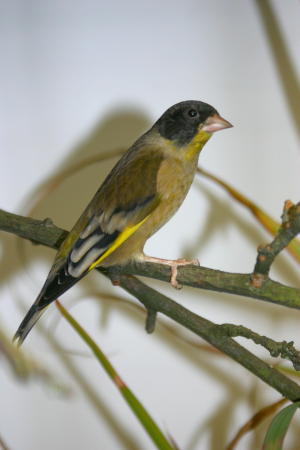
The black-headed gonolek is a species of bird in the family Malaconotidae. It is found in the African countries of Burundi, Cameroon, Central African Republic, Chad, Democratic Republic of the Congo, Eritrea, Ethiopia, Kenya, Nigeria, Rwanda, South Sudan, Sudan, Tanzania, and Uganda.
Region
East and Central Africa
Typical Environment
Occupies dense shrublands, riverine thickets, acacia scrub, and edges of woodland across countries including Burundi, Cameroon, Central African Republic, Chad, Democratic Republic of the Congo, Eritrea, Ethiopia, Kenya, Nigeria, Rwanda, South Sudan, Sudan, Tanzania, and Uganda. It adapts well to secondary growth, gardens with thick hedges, and cultivated mosaics provided there is ample cover. Often found near watercourses and in rank grass with scattered bushes. Prefers areas with tangled understory where it forages low and stays concealed.
Altitude Range
0–2200 m
Climate Zone
Tropical
Ease of Keeping
Beginner friendly: 1/5
The black-headed gonolek is a striking bushshrike known for its bold black-and-scarlet contrast and prominent white wing patch. Pairs are highly territorial and perform antiphonal duets where the male and female sing alternating phrases almost simultaneously. It keeps to dense thickets and is more often heard than seen. Despite its conspicuous colors, its secretive habits help it avoid predators.

Temperament
solitary and territorial
Flight Pattern
short rapid wingbeats, low bounding flights between cover
Social Behavior
Typically found in pairs that maintain year-round territories. Nests are placed low in dense shrubs, with both sexes involved in defending the site. They are secretive, moving quietly through foliage and often remaining within a few meters of cover.
Migratory Pattern
Resident
Song Description
Famous for coordinated male–female duets: loud, ringing whistles and clinking notes given in rapid alternation. Calls include sharp chacks and metallic clinks, often delivered from concealed perches within thickets.
Plumage
Glossy black head, back, and tail contrasting with vivid scarlet to orange-red underparts; large white wing patch conspicuous at rest and in flight.
Diet
Primarily hunts insects such as beetles, grasshoppers, caterpillars, and other arthropods taken from foliage or the ground. Occasionally takes small vertebrates like tiny lizards or frogs and may sample berries when available. Foraging is deliberate, with short dashes to pounce on prey.
Preferred Environment
Feeds within dense bushes, tangled hedgerows, and along thicket edges, rarely venturing into open ground. Often forages a meter or two above the ground, also gleaning from the lower canopy and leaf litter along streams.