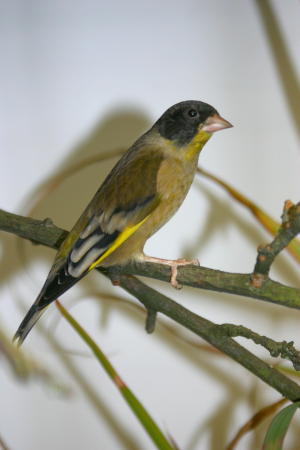
The black-headed canary is a species of finch found in Lesotho, Namibia and South Africa. It is sometimes placed in the genus Alario as Alario alario
Region
Southern Africa
Typical Environment
Occurs in Namibia, South Africa, and Lesotho, favoring open, dry habitats. It frequents the Succulent and Nama Karoo, fynbos edges, stony plains, and lightly grazed farmlands with scattered shrubs. The species also uses fallow fields and roadside verges where seed is abundant. It is generally sedentary but makes local nomadic movements following rainfall and seed availability.
Altitude Range
Sea level to 2500 m
Climate Zone
Arid
Ease of Keeping
Beginner friendly: 2/5
The black-headed canary is a small finch of arid and semi-arid southwestern Africa, where it is a year-round resident. Males have a striking black hood that contrasts with white underparts, while females are brown and streaked. It has been variously classified, sometimes placed in the genus Alario as Alario alario. Flocks often roam locally in response to seeding grasses and shrubs.


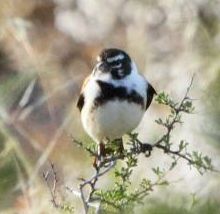
Male Damara canary
Temperament
social and active
Flight Pattern
short rapid wingbeats
Social Behavior
Often seen in pairs during the breeding season and in small to medium flocks at other times. Pairs are presumed monogamous, nesting low in shrubs or small bushes and lining cup nests with fine plant material. Outside breeding, they may join mixed finch flocks to exploit localized food resources.
Migratory Pattern
Resident
Song Description
The male delivers a bright, canary-like series of trills, twitters, and buzzes from a perch or brief display flights. Calls include sharp chips and soft contact notes used to keep flocks together.
Plumage
Male shows a bold black head and throat with clean white underparts and a brown back with pale edging; white outer tail feathers are noticeable in flight. Female and immature birds are brown, finely streaked above and below, lacking the male’s black hood. Both sexes have short, conical bills suited to seed cracking.
Diet
Primarily eats small seeds from grasses and arid-zone shrubs, including many annuals that flush after rain. It also takes buds and green shoots when available, and supplements with small insects, especially during the breeding season to feed nestlings. Foraging is mostly on the ground or low in shrubs, where it husks seeds with its stout bill.
Preferred Environment
Open, sparsely vegetated terrain such as Karoo scrub, fynbos margins, and lightly cultivated fields. Often uses stony flats and roadside verges where seeding plants persist, and may concentrate around water sources in dry periods.