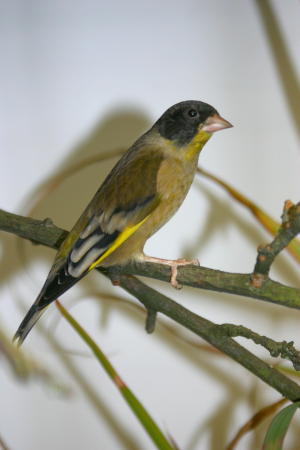
The black-headed bunting is a passerine bird in the bunting family Emberizidae. It breeds in south-east Europe east to Iran and migrates in winter mainly to India, with some individuals moving further into south-east Asia. Like others in its family, it is found in open grassland habitats where they fly in flocks in search of grains and seed. Adult males are well marked with yellow underparts, chestnut back and a black head. Adult females in breeding plumage look like duller males. In other plumages, they can be hard to separate from the closely related red-headed bunting and natural hybridization occurs between the two species in the zone of overlap of their breeding ranges in northern Iran.
Region
Southeast Europe and Western Asia
Typical Environment
Breeds in open country with scattered shrubs, field edges, steppe, and farmlands from the Balkans through Turkey to Iran. In winter it occupies agricultural landscapes, stubble fields, weedy wastelands, and grasslands across much of northern and central India, with some reaching Southeast Asia. It favors areas with seed-rich annuals and cereals and nearby perches for song. Outside the breeding season it often roosts communally in crops or reedbeds.
Altitude Range
0–1800 m
Climate Zone
Temperate
Ease of Keeping
Beginner friendly: 2/5
This bright bunting breeds from southeast Europe to Iran and migrates to the Indian subcontinent for the winter. Adult males show a striking black head, yellow underparts, and chestnut back, while females are duller and more streaked. It can be tricky to distinguish from the closely related red-headed bunting in non-breeding plumages, and the two hybridize in areas of range overlap in northern Iran.


Eggs - MHNT


Temperament
social and active
Flight Pattern
short rapid wingbeats with undulating flight
Social Behavior
Pairs form on the breeding grounds where males sing from shrubs or wires. The nest is a grass-lined cup placed low in bushes or tall herbs, typically with 3–5 eggs. Outside the breeding season they gather in flocks, often mixing with other seed-eating birds and roosting communally.
Migratory Pattern
Seasonal migrant
Song Description
The male’s song is a series of clear, jangling phrases delivered from exposed perches. Calls include sharp tseep and metallic notes used in flock contact and alarm.
Plumage
Males in breeding plumage have bright yellow underparts, a chestnut mantle and back, and a solid black head; wings are brown with pale edging. Females are sandy-brown above with fine streaking and duller yellowish underparts. Non-breeding males resemble females but usually retain some yellow tones and contrast.
Diet
Primarily seeds and grains from grasses, weeds, and cereal crops, taken on the ground or directly from seed heads. During breeding they add insects and other invertebrates, which provide protein for chicks. They also glean weed seeds from fallow fields and field margins.
Preferred Environment
Open agricultural land, stubble, and weedy fields; steppe and semi-open scrub with scattered bushes. In winter they forage in cultivated areas, village outskirts, and edges of wetlands with weedy growth.