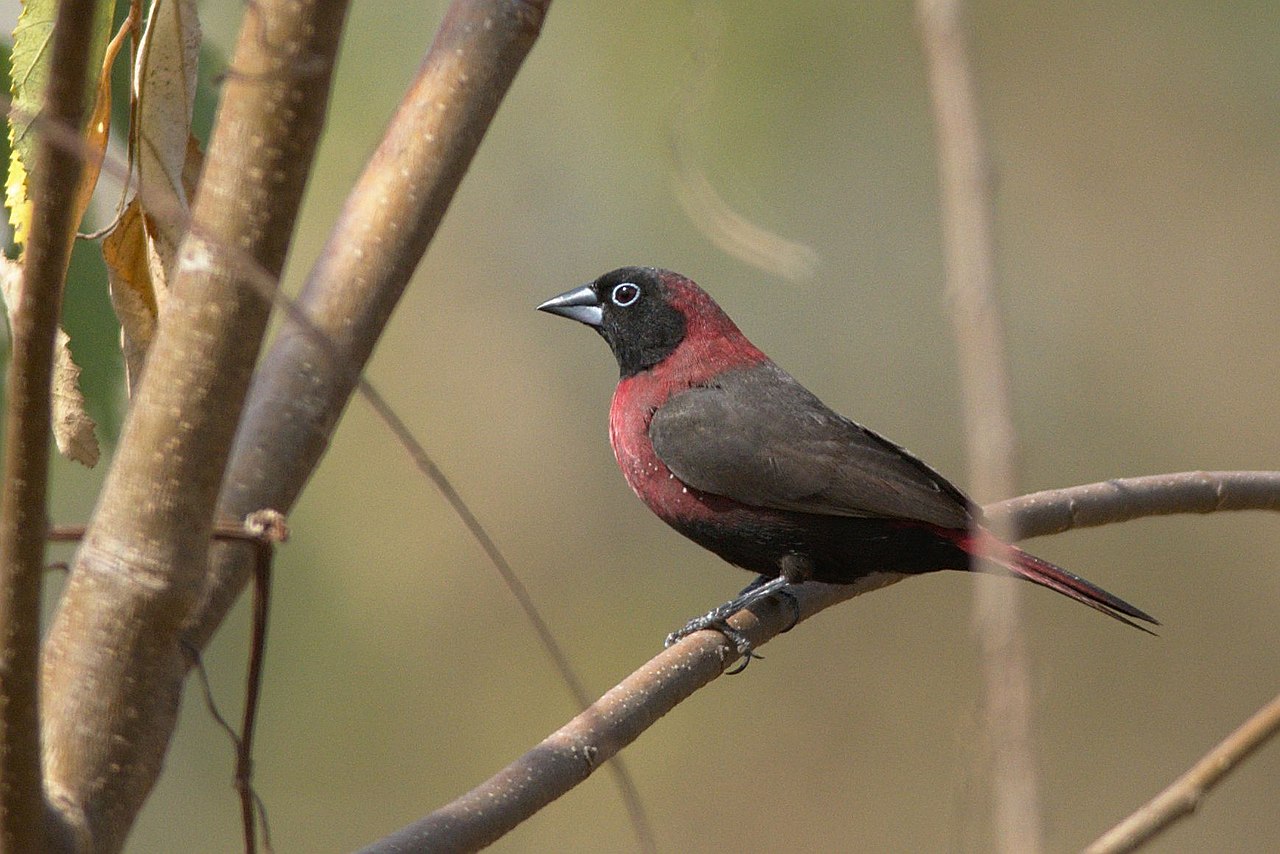
The black-faced canary is a species of finch in the family Fringillidae. It is found in Angola, Burundi, Republic of the Congo, Democratic Republic of the Congo, Gabon, and Zambia. Its natural habitats are subtropical or tropical moist lowland forest and subtropical or tropical moist shrubland.
Region
Central Africa
Typical Environment
Occurs in moist lowland forest edges, secondary growth, and dense shrubland across parts of Angola, Burundi, Republic of the Congo, Democratic Republic of the Congo, Gabon, and Zambia. It favors clearings, riverine thickets, and overgrown plantations where seed-bearing grasses and shrubs are abundant. Often uses ecotones between closed forest and open areas, and adapts well to lightly disturbed habitats. It may also occur in village fringes and along roadsides with suitable cover.
Altitude Range
0–1800 m
Climate Zone
Tropical
Ease of Keeping
Beginner friendly: 2/5
This small forest-edge canary is often confused with the black-throated canary, but it shows a distinct dark facial mask rather than a solid black throat. It favors disturbed habitats and secondary growth, so it can appear after logging or along roads and plantations. Pairs or small groups are frequently seen foraging quietly in low shrubs.

Temperament
social and active
Flight Pattern
short rapid wingbeats with undulating progress
Social Behavior
Typically seen in pairs or small groups, joining mixed finch flocks where food is abundant. Nests are compact cups placed in dense shrubs or small trees. Likely monogamous, with both sexes involved in territory defense near the nest.
Migratory Pattern
Resident
Song Description
A soft, sweet canary-like warble with twitters and trills delivered from exposed perches. Calls include thin tseep notes and rapid chatter during flocking.
Plumage
Olive to yellow-olive upperparts with fine dark streaking; paler underparts with light yellow wash and streaked flanks. Shows a distinct dark facial mask contrasted by a narrow pale supercilium. Wings and tail are dusky with subtle edging.
Diet
Primarily consumes seeds of grasses and weeds, supplemented by small fruits and buds. During breeding, it takes small invertebrates such as insects to meet protein needs. Forages by gleaning from seed heads, low shrubs, and occasionally on the ground.
Preferred Environment
Feeds along forest edges, in secondary thickets, overgrown clearings, and plantation margins where seed-bearing plants are plentiful. Also frequents road verges and village outskirts with weedy growth.