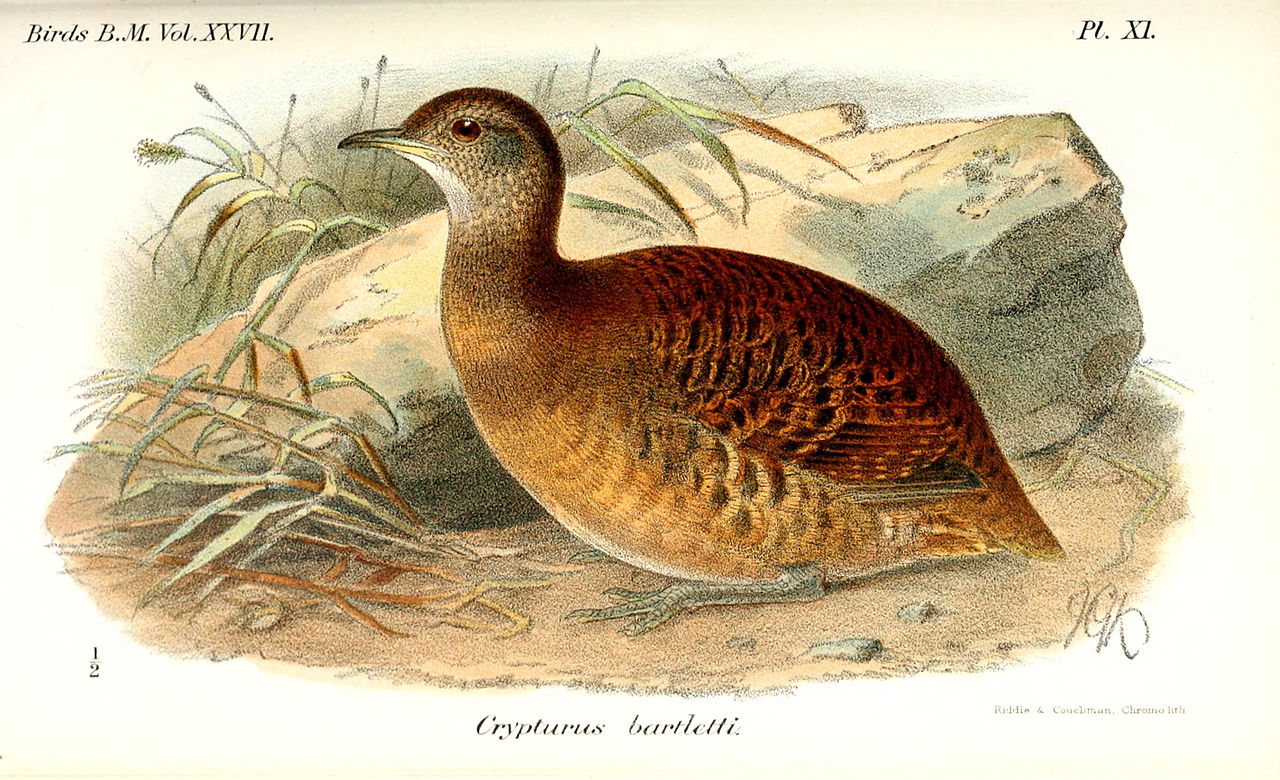
The barred rail is a species of rail found across the Philippines, Sulawesi (Indonesia) and Salawati. The species is common, but shy and difficult to see. The species was formerly sometimes placed in the genus Hypotaenidia.
Region
Philippines and Wallacea
Typical Environment
Occurs on many Philippine islands and into Wallacea, notably Sulawesi and Salawati, inhabiting lowland forests, secondary growth, mangroves, and scrubby edges near water. It also uses rice paddies, overgrown plantations, and riverine thickets. The species favors dense cover where it can move unseen on the ground. It is typically resident throughout its range and adapts well to disturbed habitats provided cover and moisture remain.
Altitude Range
0–1500 m
Climate Zone
Tropical
Ease of Keeping
Beginner friendly: 2/5
The barred rail is a shy, ground-dwelling rail that slips through dense vegetation and is more often heard than seen. It is widespread across the Philippines and parts of Wallacea, including Sulawesi and Salawati. Taxonomy has shifted between Gallirallus and Hypotaenidia in recent decades, but field characters remain consistent: bold barring and a chestnut nape collar.

Temperament
shy and secretive
Flight Pattern
short rapid wingbeats with low, brief flights
Social Behavior
Often seen singly or in pairs; family groups may remain together after fledging. Nests are concealed on or near the ground in dense vegetation, with both parents sharing incubation and chick care. Territorial calls are given at dawn and dusk, especially during breeding.
Migratory Pattern
Resident
Song Description
Gives loud, repetitive kek-kek-kek notes, grating squeals, and chattering calls from cover. Duets between pairs are common, carrying well at twilight and after rain.
Plumage
Dark brown upperparts with fine mottling; grey face and breast merging into bold black-and-white barring on the belly and flanks. A distinct chestnut to rufous collar on the nape contrasts with a paler throat. Feathers appear compact and sleek, aiding movement through dense cover.
Diet
Takes insects, worms, snails, and small crustaceans, along with seeds and fallen fruit. It also consumes small amphibians or lizards when available. Foraging is mostly by probing soft ground, gleaning along edges, and flicking leaf litter.
Preferred Environment
Feeds along wet margins of rice fields, marshes, mangroves, and forest edges, staying close to dense cover. It often forages at path edges and ditches where invertebrates are concentrated.