

Baer's pochard is a diving duck found in eastern Asia. It is a resident bird in North and Central China, and formerly bred in southeast Russia and Northeast China, migrating in winter to southern China, Vietnam, Japan, and India. Baer's pochard is a monotypic species. The holotype was collected in middle Amur.
Region
East Asia
Typical Environment
Breeds primarily on lowland lakes and marshes in northern and central China, with former breeding reported in the Amur region of Russia and Northeast China. In winter it disperses to southern China, northern Vietnam, and occasionally to Japan and India. It favors large, shallow, eutrophic lakes with extensive emergent vegetation such as reeds and sedges. During winter it also uses reservoirs, fishponds, and slow-moving rivers, often roosting on open water and feeding along vegetated margins.
Altitude Range
Sea level to 1000 m
Climate Zone
Temperate
Ease of Keeping
Beginner friendly: 2/5
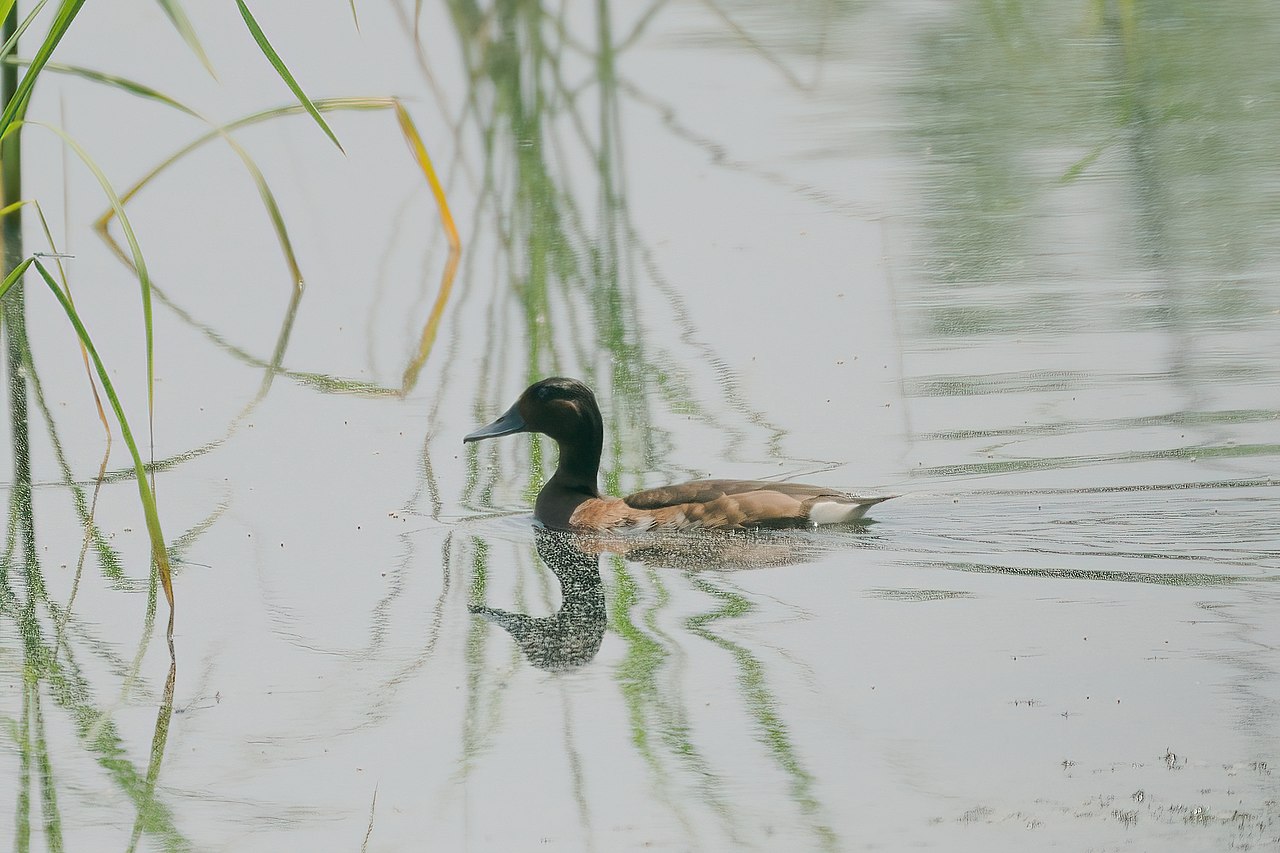
Baer's pochard is a critically endangered diving duck of East Asia whose numbers have collapsed due to wetland loss, hunting, and disturbance. Remnant breeding occurs mainly in northern and central China, with wintering birds dispersing to southern China and parts of Southeast and South Asia. It is monotypic and often confused with Ferruginous Duck, but males show striking white flanks contrasting with a dark head and breast. Conservation programs focus on wetland protection and reducing hunting pressure along key flyways.


Temperament
wary and alert
Flight Pattern
strong flier with rapid wingbeats
Social Behavior
Generally forms small flocks, especially in winter, sometimes associating with other diving ducks. Breeds in single pairs or loose groups; nests are placed in dense emergent vegetation near or over water. Pairs form on wintering grounds and maintain territories around nest sites. Broods are reared in sheltered coves with ample cover.
Migratory Pattern
Seasonal migrant
Song Description
Relatively quiet; males give soft whistles and sputtering notes during display. Females produce low grunts and harsh quacks, especially when alarmed or with young.
Plumage
Male with glossy dark head, dark breast and back, sharply contrasting white flanks and belly; female is browner overall with paler face and less contrast, whitish belly, and dusky flanks.
Diet
Feeds by diving and up-ending on aquatic plants, seeds, and tubers, supplemented with aquatic invertebrates such as mollusks, insect larvae, and crustaceans. Diet composition shifts seasonally, with more animal matter taken during breeding and more plant material in winter. It forages in shallow zones where submerged vegetation is abundant.
Preferred Environment
Shallow, vegetated margins of lakes, oxbows, and fishponds with clear or moderately turbid water. Often feeds along reedbeds and among floating-leaved plants, moving to open water to rest.


