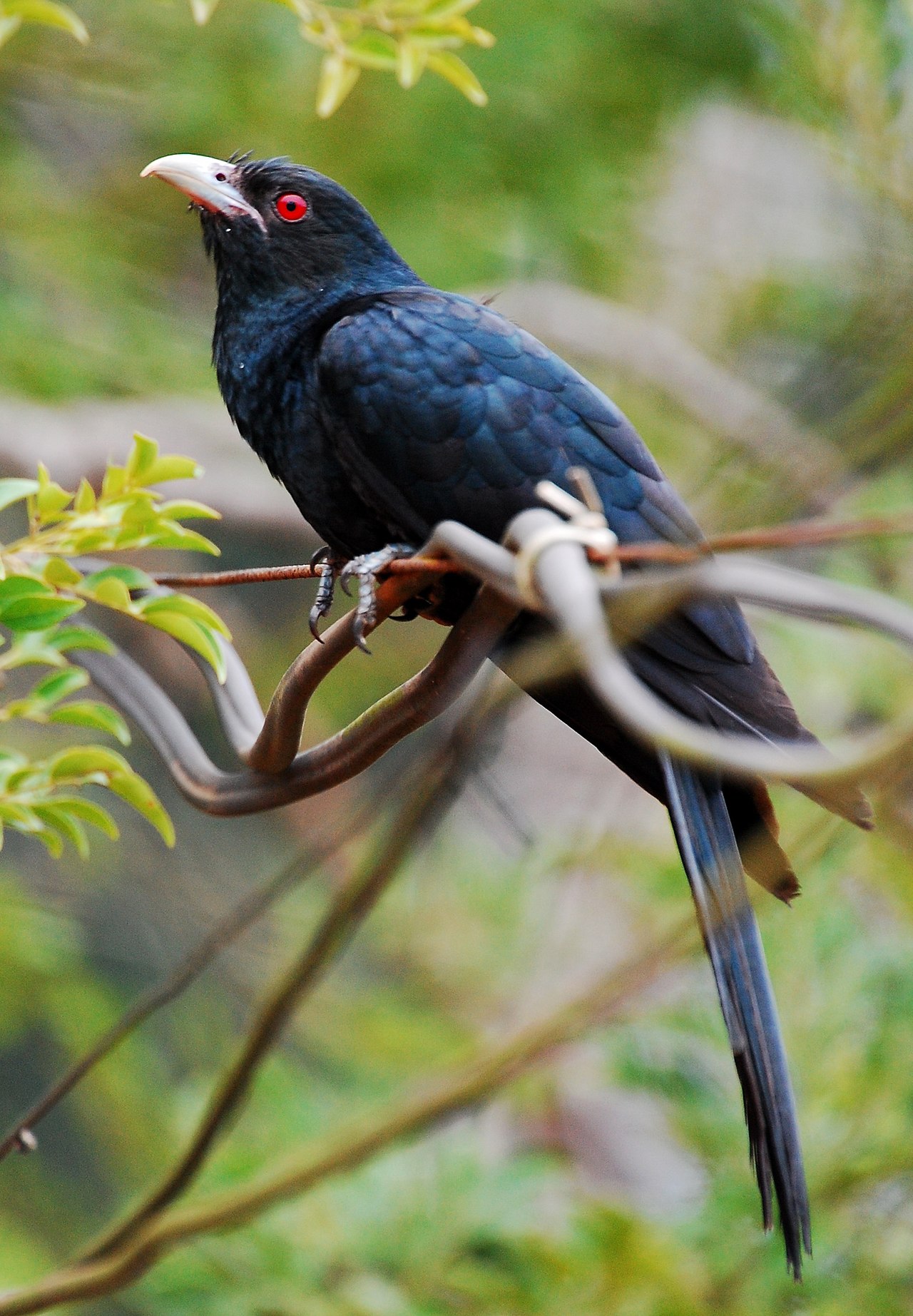
The Asian glossy starling is a species of starling in the family Sturnidae. It is found in Bangladesh, Brunei, India, Indonesia, Malaysia, Myanmar, the Philippines, Singapore, Taiwan (introduced), Cambodia and Thailand. Its natural habitats are subtropical or tropical moist lowland forest and subtropical or tropical mangrove forest. There is also a huge number of this species inhabiting towns and cities, where they take refuge in abandoned buildings and trees. They often move in large groups and are considered one of the noisiest species of birds. In the Philippines, it is known as kulansiyang, galansiyang, or kuling-dagat.
Region
Southeast Asia
Typical Environment
Occurs widely from mainland Southeast Asia through the Malay Archipelago and the Philippines, with some populations introduced locally (e.g., Taiwan). It thrives in tropical moist lowland forests, mangroves, forest edges, and secondary growth. The species readily colonizes human-dominated landscapes, including towns, plantations, and city centers, where it uses cavities in buildings and tall ornamental trees. It often gathers at fruiting figs and other native trees and forms large communal roosts in urban areas.
Altitude Range
Sea level to 1500 m
Climate Zone
Tropical
Ease of Keeping
Beginner friendly: 2/5
The Asian glossy starling is a highly adaptable city dweller as well as a forest bird, often roosting communally in large, noisy flocks on urban trees and buildings. Adults have striking ruby-red eyes and a metallic green-black sheen that can look different depending on the light. They readily exploit fruiting trees and will also hawk insects in mid-air. Juveniles are streaked brown, making them look quite different from the glossy adults.


A. p. panayensis feeding



Temperament
social and active
Flight Pattern
direct, rapid wingbeats with agile turns
Social Behavior
Highly gregarious, often forming large flocks that forage together and gather at communal roosts in the evening. Nests in cavities such as tree holes and crevices in buildings, using leaves and fibers as lining. Pairs are typically monogamous during the breeding season and may nest in loose colonies where sites are abundant.
Migratory Pattern
Resident
Song Description
Vocal and noisy, producing a mix of sharp whistles, chatters, and squeaky notes. Calls are often delivered in rapid sequences, especially at roost sites and during flock movements.
Plumage
Glossy, metallic green-black plumage with a sleek, uniform appearance; juveniles are dull brown with heavy streaking below.
Diet
Consumes a wide variety of fruits (including figs and berries) and supplements this with insects and other small invertebrates. Frequently gleans from foliage and branches, and will sally to catch flying insects. In urban areas, it may take cultivated fruits and occasionally scraps. Seasonal fruiting patterns can strongly influence local flock movements and foraging intensity.
Preferred Environment
Forages in the canopy and mid-story of forests, at forest edges, and in mangroves. In towns and cities, it feeds in parks, roadside trees, gardens, and on fruiting ornamentals. Plantations and secondary growth are also commonly used.