

The Asian openbill or Asian openbill stork is a large wading bird in the stork family Ciconiidae. This distinctive stork is found mainly in the Indian subcontinent and Southeast Asia. It is greyish or white with glossy black wings and tail. Adults have a gap between the arched upper mandible and recurved lower mandible which is thought to be an adaptation that aids in the handling of snails, their main prey. Young birds are born without this gap. Although resident within their range, they make long distance movements in response to weather and food availability.
Region
South and Southeast Asia
Typical Environment
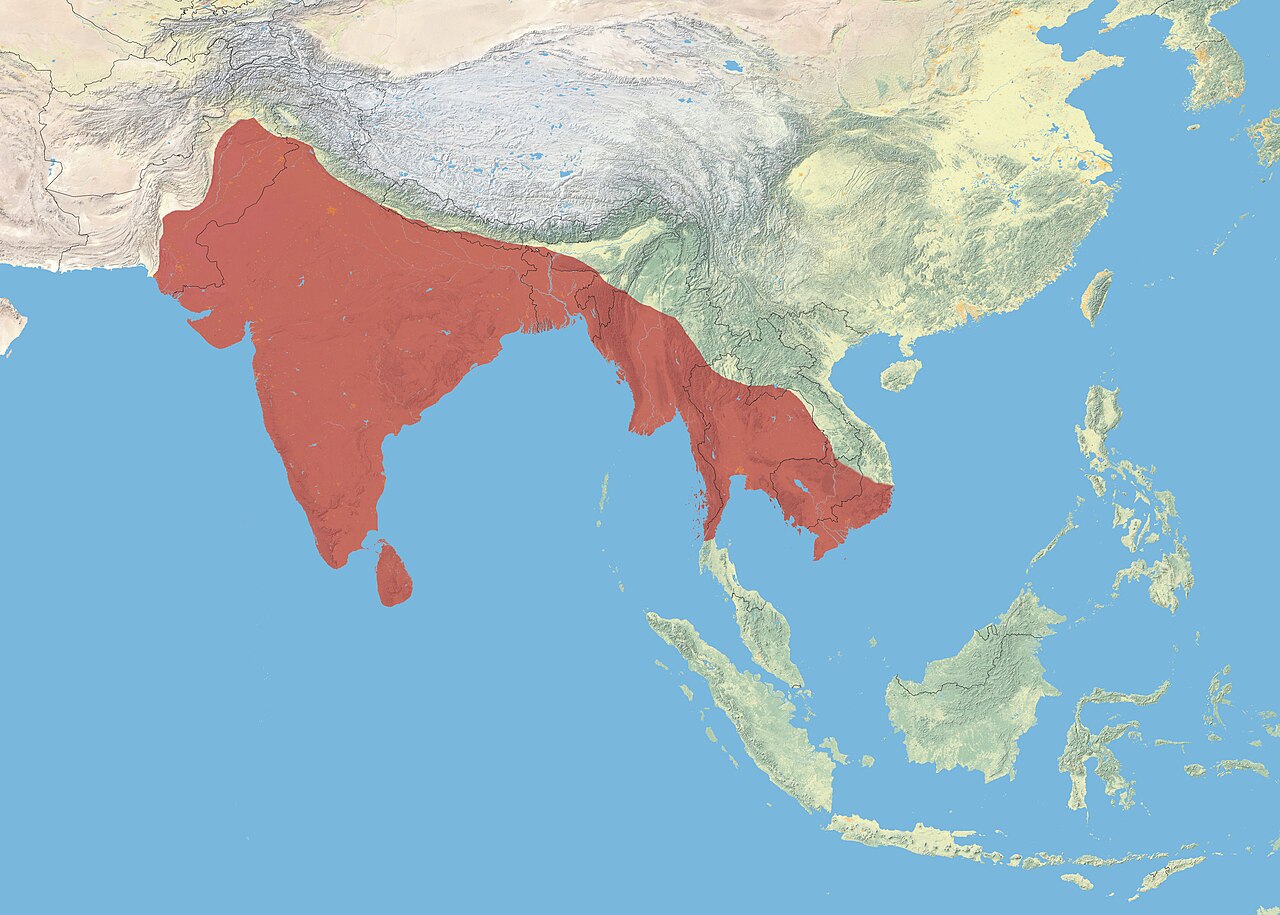
Found across the Indian subcontinent and much of mainland Southeast Asia, from Pakistan and India through Sri Lanka, Nepal, Bangladesh, Myanmar, Thailand, Cambodia, Laos, and Vietnam. It favors wetlands such as marshes, flooded fields, oxbow lakes, river margins, and irrigation canals. Rice-growing landscapes are especially important for feeding, as they support abundant aquatic snails. The species breeds colonially in trees near water, often in villages and temple groves where large trees remain. Seasonal movements track monsoon-driven flooding and food pulses.
Altitude Range
Sea level to 1500 m
Climate Zone
Tropical
Ease of Keeping
Beginner friendly: 1/5
The Asian openbill is a snail specialist; its unique bill develops a natural gap with age that helps extract mollusks from their shells. It often forages in rice paddies and floodplains, and populations can swell locally after monsoon rains. The species nests colonially in tall trees near water and commonly uses thermal soaring to travel long distances in search of food.


1781 illustration by Sheikh Zainuddin


Asian openbill in Thirunavaya Lotus Lake Wetland

Nest colony (India)
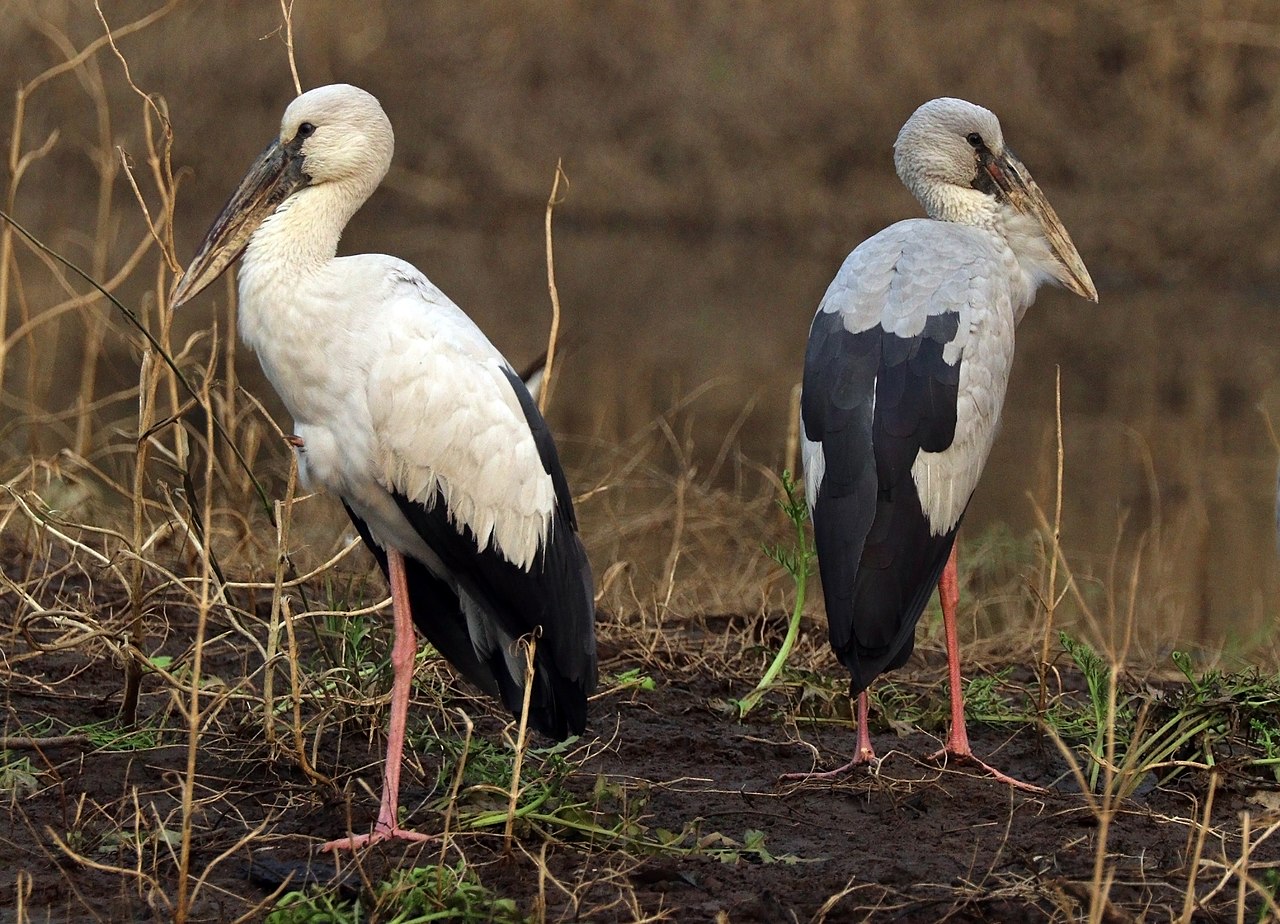
Juvenile on the right. The gap between the mandibles develops with age.

A pair copulating (Nepal)
Temperament
social and gregarious
Flight Pattern
soaring glider with steady flapping between thermals
Social Behavior
Forms large feeding flocks and communal roosts. Breeds colonially, building stick nests high in trees near wetlands; pairs are typically monogamous for the season. Nesting colonies can persist for years at traditional sites, sometimes within villages.
Migratory Pattern
Partial migrant
Song Description
Generally quiet away from colonies, producing only soft grunts. At nests it communicates with bill-clattering and low croaks during displays and territorial interactions.
Plumage
Mostly pale grey to white body with glossy black wings and tail; juveniles appear browner and duller. Feathers are smooth with contrasting dark flight feathers. The bill is thick with a conspicuous gap between the mandibles in adults.
Diet
Specializes on aquatic snails (notably apple snails), which it cracks or pries open using the gaped bill to extract the soft tissues. Also takes mussels, crabs, frogs, large aquatic insects, and occasional small fish. Forages by wading slowly and probing or picking prey from shallow water and mud.
Preferred Environment
Shallow wetlands, rice paddies, floodplains, and canal edges where snails are abundant. Frequently feeds in human-modified agricultural landscapes with standing water.


