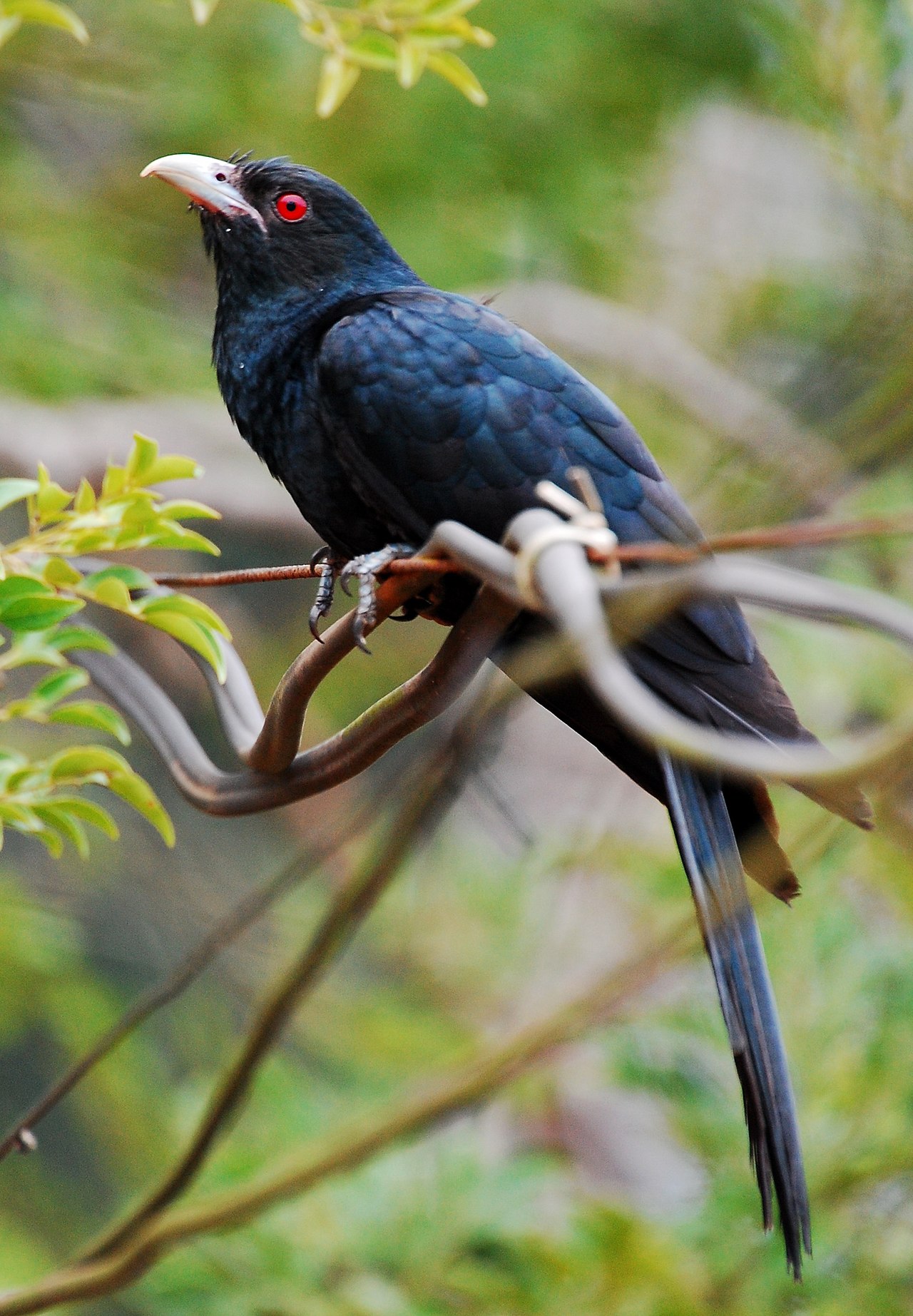
The Asian fairy-bluebird is a medium-sized, arboreal passerine bird. This fairy-bluebird is found in forests across tropical southern Asia, Indochina and the Greater Sundas. Two or three eggs are laid in a small cup nest in a tree. It was described by British ornithologist John Latham in 1790. The only other member of the genus and family is the Philippine fairy-bluebird, I. cyanogastra, which replaces the Asian fairy-bluebird in most of the Philippines. Both species are considered as sacred to the Tagalog people as they are perceived as tigmamanukan omens.
Region
South and Southeast Asia
Typical Environment
Occurs from the Indian Subcontinent and Sri Lanka through the eastern Himalayas, Indochina, and the Greater Sunda Islands, with an outpost in Palawan. Prefers primary and mature secondary evergreen forests but also uses forest edges, fruit-rich plantations, and well-wooded gardens near intact forest. Most activity is in the mid-story to canopy, where it forages among fruiting trees. It is generally sedentary, making local movements following fruit availability.
Altitude Range
Sea level to 1800 m
Climate Zone
Tropical
Ease of Keeping
Beginner friendly: 2/5
Male Asian fairy-bluebirds shimmer with electric blue on the back and shoulders contrasted against velvety black, while females are a softer bluish-green. They are important seed dispersers for many rainforest trees, especially figs. Often joining mixed-species flocks, they tend to stay high in the canopy and can be heard by their mellow, fluty whistles before being seen.


Temperament
arboreal, alert and somewhat shy
Flight Pattern
short rapid wingbeats
Social Behavior
Usually seen singly, in pairs, or small family groups, and frequently joins mixed-species flocks in the canopy. Builds a neat cup nest high in a tree, where the female lays 2–3 eggs. Pairs are presumed monogamous, with both parents feeding the young.
Migratory Pattern
Resident
Song Description
Song consists of mellow, fluty, and liquid whistles, often descending in pitch and carrying far through the forest. Calls include soft chups and clearer, ringing notes given from exposed perches in the canopy.
Plumage
Male glossy black on head, underparts and wings with vivid cobalt-blue mantle, scapulars, rump and upper tail-coverts; female overall duller bluish-green with darker wings and tail. Both sexes have a sleek, smooth feathering with slight iridescence in good light.
Diet
Primarily frugivorous, favoring figs, berries, and other soft fruits. Also takes nectar from blossoms and occasionally supplements its diet with insects, especially when feeding young. Foraging is deliberate and methodical among fruiting crowns, with short sallies between nearby branches.
Preferred Environment
Feeds mainly in the mid-story to canopy of evergreen and semi-evergreen forest. Often visits fruiting Ficus and other fruit-laden trees along forest edges and in mature secondary growth.