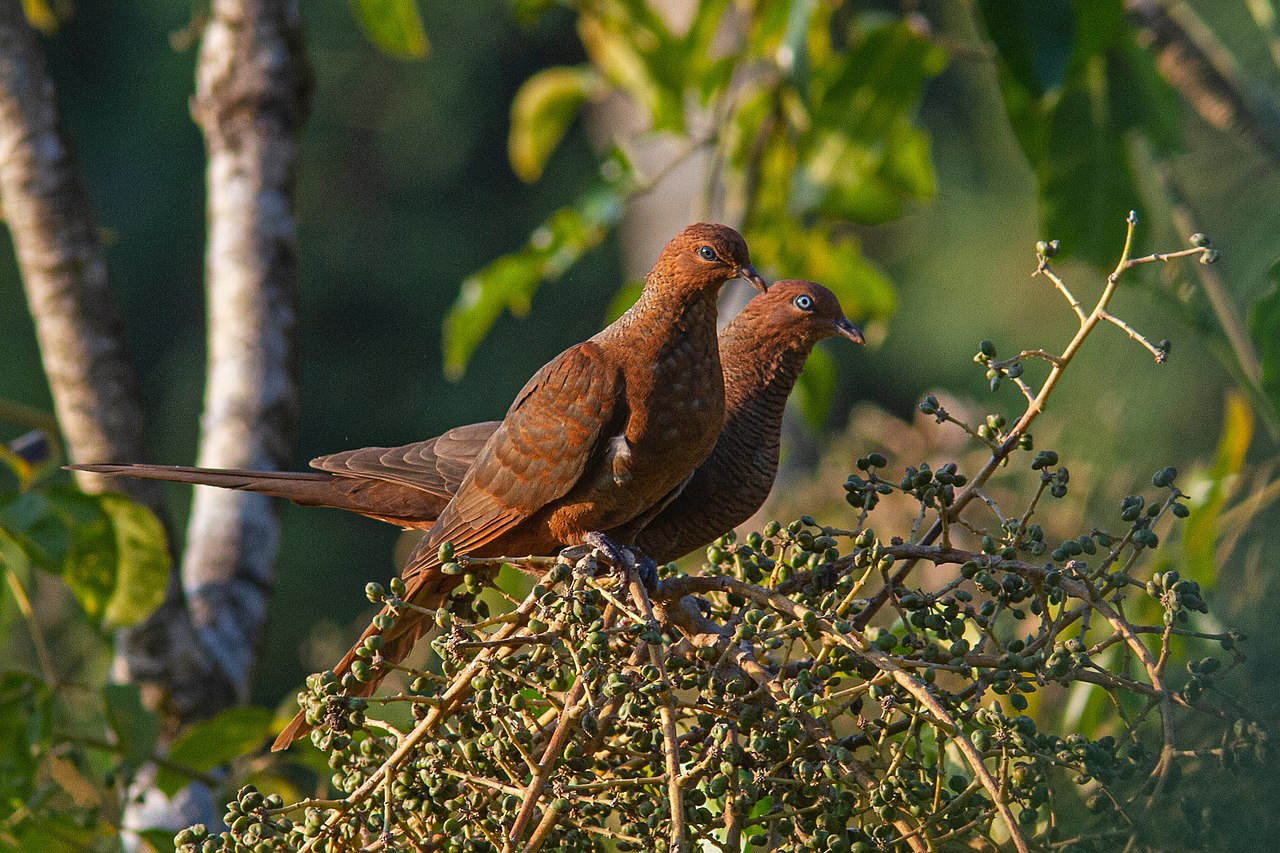
The Andaman bulbul is a member of the bulbul family of passerine birds. It is endemic to the Andaman Islands. It has a mainly olive-yellow plumage and has most of the head olive. It feeds on small fruit and berries, but will also take insects.
Region
Andaman Islands
Typical Environment
The Andaman bulbul is confined to the Andaman Islands in the Bay of Bengal, where it occupies evergreen and semi-evergreen forests, forest edges, secondary growth, and wooded plantations. It readily uses shrubby clearings and village orchards with fruiting trees. It is commonly seen along forest tracks and in mixed habitat mosaics rather than deep interior forest. It will also visit coastal groves and casuarina stands near settlements. Proximity to water is not essential, but it benefits from heterogeneous vegetation structure. Human-modified habitats with ample fruiting plants are frequently used.
Altitude Range
Sea level to 700 m
Climate Zone
Tropical
Ease of Keeping
Beginner friendly: 2/5
This island endemic plays an important role as a seed disperser, frequenting fruiting trees in forests and village gardens. It is often confiding and conspicuous by voice, making it one of the more noticeable songbirds in the Andamans. Though currently not at risk, it could be sensitive to large-scale habitat loss or fragmentation.

Temperament
social and active
Flight Pattern
short rapid wingbeats
Social Behavior
Usually seen in pairs or small family groups and sometimes joins loose mixed flocks at fruiting trees. Nests are cup-shaped structures placed in shrubs or low trees. Pairs are attentive around the nest and can be vocal when disturbed.
Migratory Pattern
Resident
Song Description
A series of clear, ringing whistles interspersed with bubbly warbles. Calls include sharp chups and soft chatter used for contact within pairs and groups.
Plumage
Mainly olive to olive-yellow with yellow-washed underparts and an olive-toned head; plumage looks warm and slightly glossy in good light.
Diet
Primarily eats small fruits and berries, including figs and other native and cultivated species. Supplements its diet with insects such as beetles, caterpillars, and small orthopterans, especially during the breeding season. Occasionally takes nectar and soft plant matter. By swallowing fruits whole and passing the seeds, it aids in plant dispersal.
Preferred Environment
Feeds at mid to upper canopy levels in fruiting trees and at forest edges. Also forages in gardens, plantations, and along roadsides with shrub cover. Will sally short distances to glean insects from foliage.