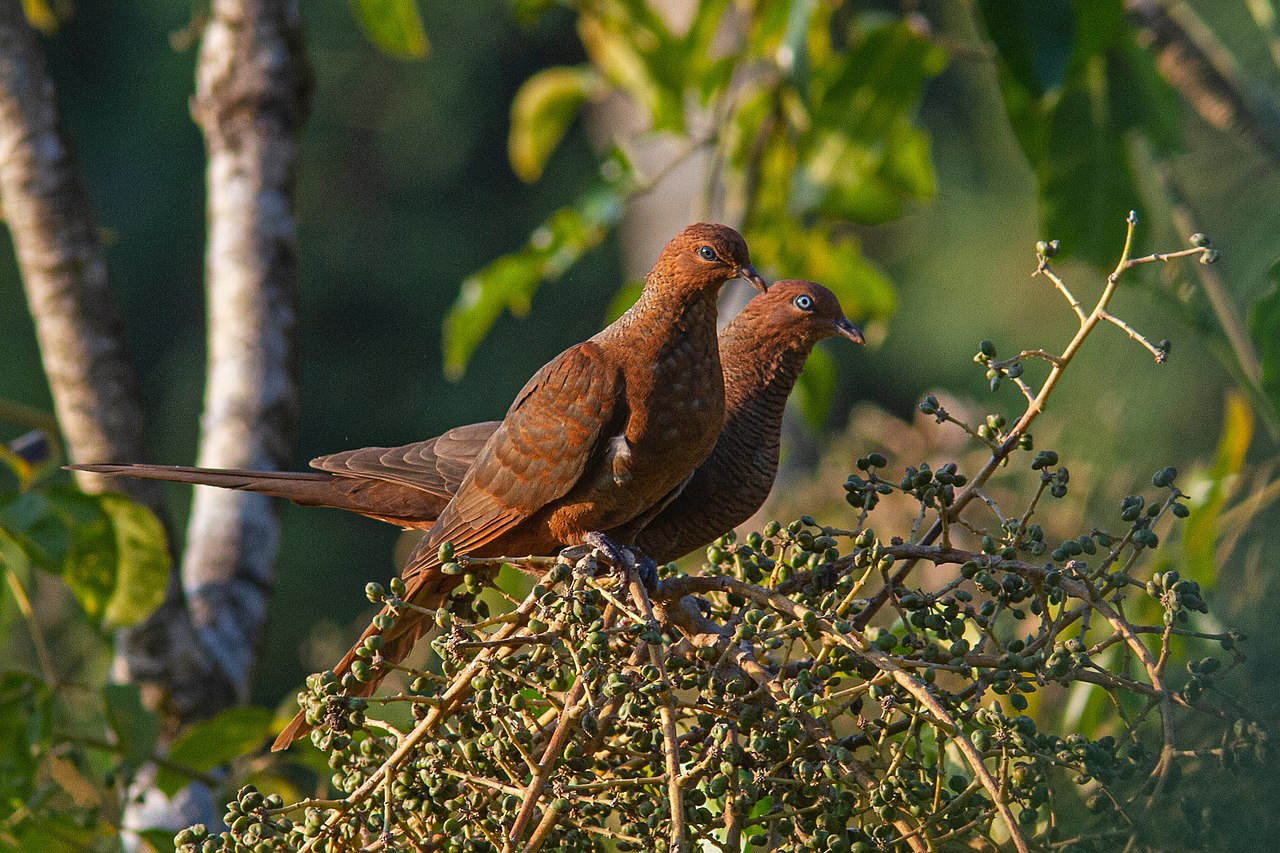
The Andaman crake is a bird species in the family Rallidae. It is endemic to the Andaman Islands of the eastern Indian Ocean.
Region
Andaman Islands, Bay of Bengal
Typical Environment
This species is confined to the larger and smaller islands of the Andaman group, where it inhabits dense lowland and hill forests, forest edges, swamps, and overgrown paddy fields. It keeps to thick ground cover, often near streams, marshy patches, and mangroves. The bird frequently uses shaded forest floors and secondary growth, moving between wet clearings and adjacent thickets. It can persist in modified habitats provided dense cover remains.
Altitude Range
Sea level to 700 m
Climate Zone
Tropical
Ease of Keeping
Beginner friendly: 1/5
Named in honor of Lord Canning, the Andaman crake is a shy, ground-dwelling rail that is more often heard than seen. It is highly secretive, slipping through dense undergrowth and calling mainly at dawn and dusk, especially after rain. Habitat loss and degradation in the Andaman Islands pose the main threats to this island endemic.


Andaman crake from a chromolithograph in The Game Birds of India, Burmah and Ceylon, published in 1890
Temperament
secretive and skulking
Flight Pattern
short rapid wingbeats, low and reluctant
Social Behavior
Typically solitary or in pairs, maintaining territories within dense vegetation. Nests are well-concealed on or near the ground, often close to water. Both sexes are believed to share incubation and chick-rearing duties, with chicks leaving the nest soon after hatching.
Migratory Pattern
Resident
Song Description
Vocalizations are loud, sharp, and repetitive, carrying through forest at dawn and dusk. Calls include ringing notes and series of accelerating keek or ki-ki-ki phrases, often given in duets. It may call more frequently after rainfall.
Plumage
Rich chestnut head and breast with dark brown upperparts; bold black-and-white barring on the flanks and belly; undertail often paler. Feathers appear smooth and close-fitting, aiding a sleek, skulking profile in dense cover.
Diet
An opportunistic omnivore, it forages for insects, earthworms, snails, and small crustaceans along wet edges. It also takes seeds, fallen fruits, and other plant matter when available. Prey is gleaned from leaf litter or probed from soft mud and damp soil, with quick pecks and short digs.
Preferred Environment
Feeds on the shaded forest floor, along stream margins, and in wet thickets. It also uses overgrown paddy fields and secondary scrub where cover remains dense. Foraging is usually under or beside thick vegetation for concealment.