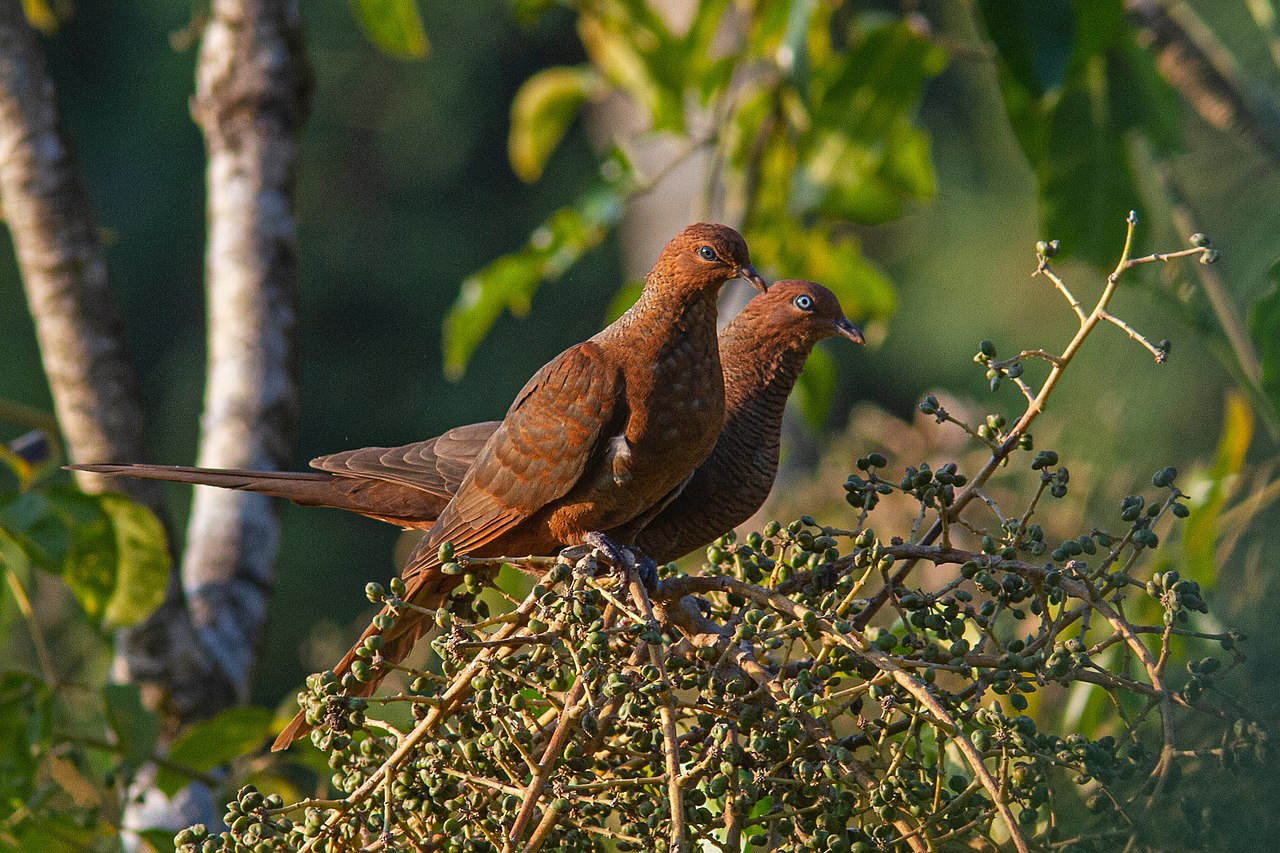
The ancient antwren is a species of tropical bird in the family Thamnophilidae. It is primarily found in terra firme forests of northern Peru and southeastern Ecuador. This species was described in 1998 and named after the American botanist Alwyn Gentry. Habitat loss poses the greatest threat to this species.
Region
Western Amazon Basin (Peru–Ecuador)
Typical Environment
Occurs in terra firme evergreen forests of northern Peru and adjacent southeastern Ecuador. It favors canopy and subcanopy strata of mature, undisturbed forest, and also uses edges of treefall gaps and tall second growth. It is generally absent from seasonally flooded várzea and heavily degraded habitats. The range is patchy, tracking suitable upland forest blocks and interfluvial ridges.
Altitude Range
150–1000 m
Climate Zone
Tropical
Ease of Keeping
Beginner friendly: 1/5
A recently described canopy antwren (1998), it was named in honor of botanist Alwyn Gentry. It forages high in terra firme forest, often in pairs and within mixed-species flocks, which helps it locate insects efficiently. The species is more often detected by its thin, high-pitched duet than seen. Ongoing habitat loss in the western Amazon makes intact forest crucial for its persistence.


Temperament
social and active
Flight Pattern
short rapid wingbeats
Social Behavior
Usually found in pairs that keep contact with soft calls and often join mixed-species canopy flocks. Pairs defend small territories and perform coordinated foraging. Nesting is poorly known but, like other antwrens, likely involves a small suspended cup nest with biparental care.
Migratory Pattern
Resident
Song Description
High, thin, sibilant notes delivered in rapid, antiphonal duets between the pair. Phrases often start with sharp chips and rise into a brief, accelerating trill, carrying far in quiet forest canopies.
Plumage
Small, slim antwren with clean, crisp patterning typical of Herpsilochmus: contrasting wingbars, neatly marked tail corners, and subtle facial markings. Male is mostly gray above with darker crown and a paler, lightly streaked underpart; female tends browner/olive above with buffier underparts.
Diet
Primarily small arthropods such as insects and spiders. Gleans prey from leaves and twigs, picks from clusters of dead foliage, and occasionally sallies short distances to snatch flushed insects. Foraging is quick and deliberate, moving through the canopy in concert with a mate or mixed flock.
Preferred Environment
Canopy and subcanopy of mature terra firme forest, especially along edges of gaps and sunlit crowns where insect activity is higher. Rarely descends to the understory except when following flocks along edges.