

The American white ibis is a species of bird in the ibis family, Threskiornithidae. It is found from the southern half of the US East Coast, along the Gulf Coast states and south through most of the Caribbean coastal regions of Central America. This particular ibis species is a medium-sized wading bird, possessing an overall white plumage with black wing-tips, and having the typical downward-curving bill of the ibises, though of a bright red-orange color, the same hue as its long legs. Males are larger and have longer bills than females. The breeding range runs along the Gulf and Atlantic Coast, and the coasts of Mexico and Central America. Outside the breeding period, the range extends further inland in North America and also includes the Caribbean. It is also found along the northwestern South American coastline in Colombia and Venezuela. Populations in central Venezuela overlap and interbreed with the scarlet ibis. The two have been classified by some authorities as a single species.
Region
Southeastern United States, Caribbean, Central America, and northern South America
Typical Environment
Prefers shallow wetlands including salt and freshwater marshes, estuaries, mangroves, lagoons, and flooded fields. It also frequents tidal flats and the edges of rivers and ponds. In many urban areas it readily uses retention ponds, lawns, and golf courses for foraging. Breeding colonies are typically in trees or mangroves near or over water, often on islands or in swamps.
Altitude Range
Sea level to 1000 m
Climate Zone
Subtropical
Ease of Keeping
Beginner friendly: 2/5
The American white ibis often forms large, noisy colonies and is highly adaptable, feeding in both wild wetlands and human-modified habitats like parks and golf courses. Its decurved bill is packed with nerve endings, allowing it to find prey by touch in murky water. Populations in parts of Venezuela overlap and hybridize with the scarlet ibis. In flight, the black wingtips are a key field mark against the otherwise white body.


in Huntington Beach State Park, South Carolina, United States

E. a. ramobustorum off Boca Chica, Chiriquí, Panama
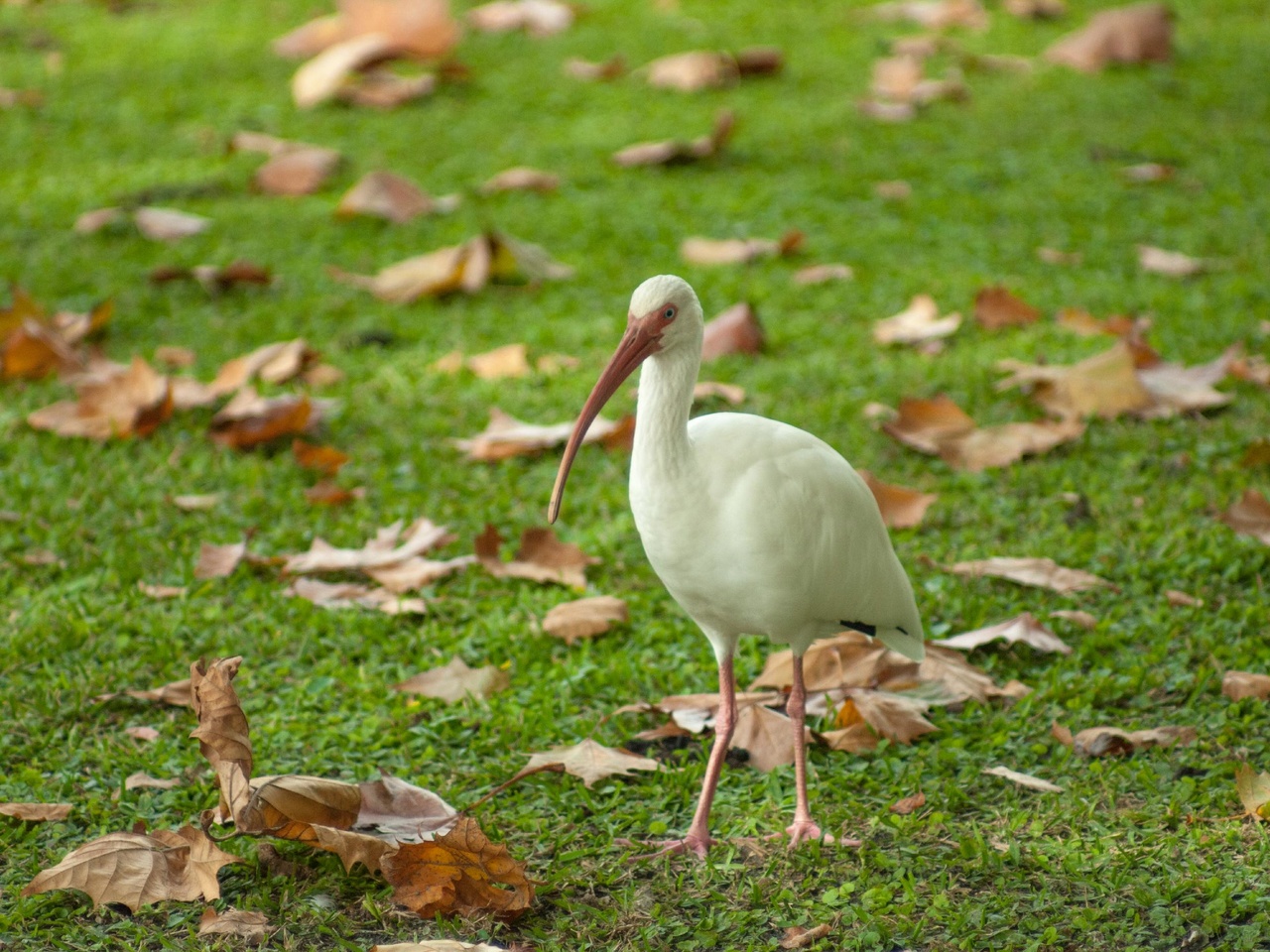
An American white ibis at Riverside Park, Jacksonville, Florida

Adults in shallow water at Merritt Island National Wildlife Refuge near the Atlantic coast of Florida

Adult American white ibis on pavement outside of Orlando, Florida

American white Ibis birds in Dade City, Florida

A White Ibis on a nest in New Jersey

Birds roosting in a tree near St. Johns River, Florida

Juvenile in Everglades National Park. Some of its brown feathers have molted and have been replaced with white feathers.
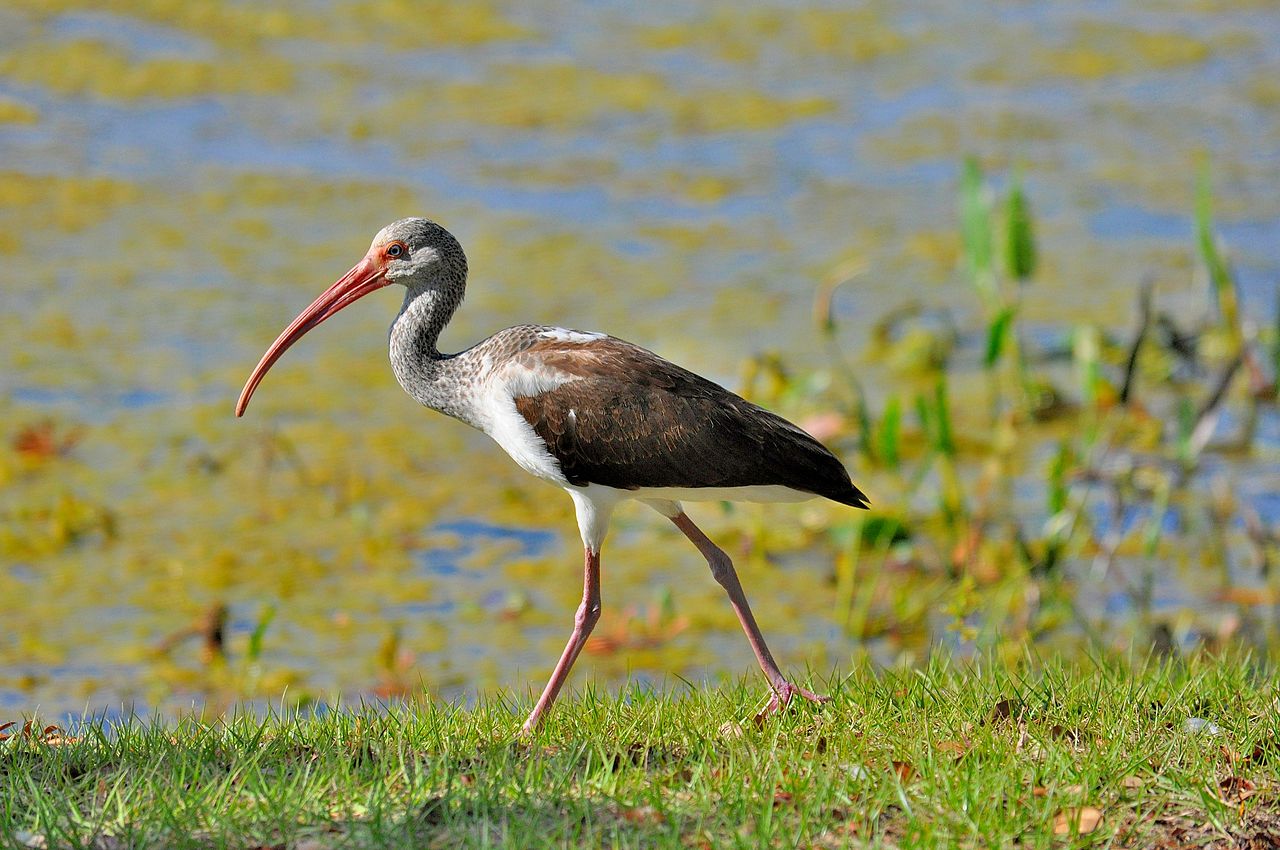
Juvenile in Florida

Adult eating a fish

Adult white ibis foraging for food in a front garden in Port Orange, Florida
Temperament
social and gregarious
Flight Pattern
steady flapping with glides; flies with neck and legs extended
Social Behavior
Forms large foraging flocks and nests colonially, often with other wading birds. Builds platform nests of sticks in trees or mangroves near water. Pairs defend a small territory around the nest but feed communally, sometimes traveling long distances to feeding sites.
Migratory Pattern
Partial migrant
Song Description
Vocalizations are harsh, nasal honks and grunts, often rendered as 'unk' or 'honk' in flight or at colonies. Calls intensify around nest sites and during displays rather than forming musical songs.
Plumage
Mostly white plumage with glossy black primary tips visible in flight; smooth, tight contour feathers suited for wading environments.
Diet
Feeds mainly on aquatic invertebrates such as crayfish, crabs, and aquatic insects, as well as small fish, snails, and amphibians. It probes soft substrates with its sensitive bill to detect prey by touch, often sweeping side to side. In coastal marshes it commonly targets fiddler crabs; in freshwater systems, crayfish are a staple.
Preferred Environment
Forages in very shallow water, muddy edges, and wet lawns, often in loose lines or groups. Takes advantage of receding water levels and disturbed substrates that concentrate prey.


