

The American woodcock, sometimes colloquially referred to as the timberdoodle, mudbat, bogsucker, night partridge, or Labrador twister is a small shorebird species found primarily in the eastern half of North America. Woodcocks spend most of their time on the ground in brushy, young-forest habitats, where the birds' brown, black, and gray plumage provides excellent camouflage.
Region
Eastern North America
Typical Environment
Breeds from the Great Lakes and southern Canada through New England and the Appalachian region, with scattered breeding across the Upper Midwest. Winters mainly in the southeastern United States and along the Gulf Coast. Prefers young, brushy forests, alder and aspen thickets, moist old fields, and forest edges with soft soils. Often forages in damp, worm-rich areas and uses clearcuts or regenerating stands for cover. Migrates at night along broad flyways through the central and eastern U.S.
Altitude Range
0–1500 m
Climate Zone
Temperate
Ease of Keeping
Beginner friendly: 1/5
Also called the timberdoodle, the American woodcock performs a famous dusk and dawn courtship display known as the 'sky dance,' combining nasal 'peent' calls with spiraling flights. Its long bill has a flexible tip that can sense and grasp earthworms underground. Large eyes set high and far back on the head provide an unusually wide field of view, aiding vigilance while feeding on the ground.


Woodcock, with attenuate primaries, natural size, 1891
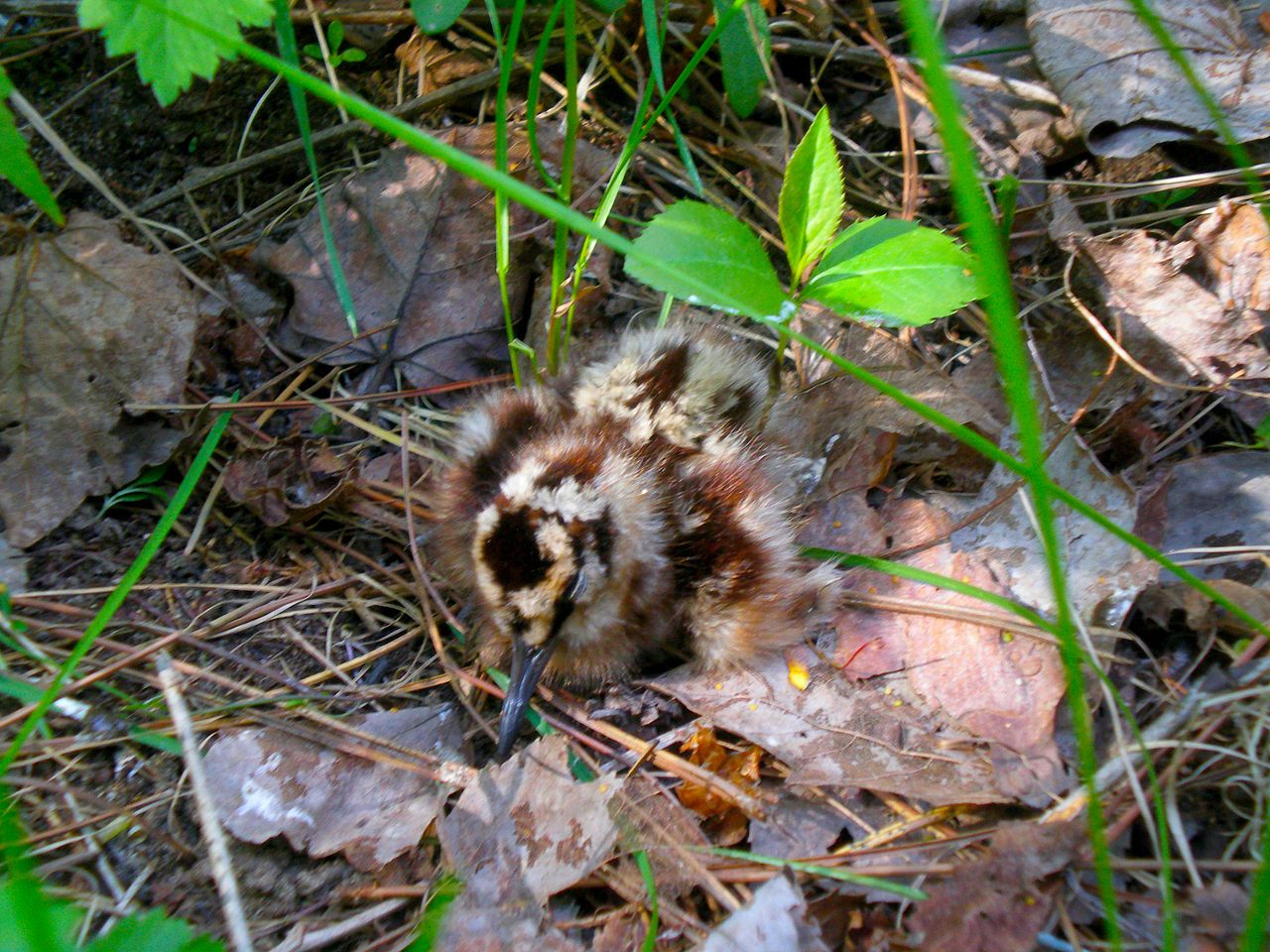
Downy young are already well-camouflaged.
Temperament
solitary and secretive
Flight Pattern
short rapid wingbeats with erratic flush; soaring spirals during display flights
Social Behavior
Males display at traditional singing grounds at dusk and dawn, giving 'peent' calls on the ground before ascending in spirals and fluttering back down. The species is largely solitary outside the breeding season. Females nest on the ground and raise precocial chicks alone, typically from clutches of 3–4 eggs.
Migratory Pattern
Seasonal migrant
Song Description
On display grounds the male gives a nasal 'peent' call and produces a distinctive twittering sound from its outer primaries during flight. Soft chirps and squeaks may be heard during the descent phase of the courtship display.
Plumage
Cryptic, mottled plumage with intricate patterns of brown, black, gray, and buff that blend with leaf litter; barred crown and finely barred flanks.
Diet
Primarily eats earthworms, which it locates by probing soft soil with a sensitive, flexible-tipped bill. Also takes insect larvae, beetles, ants, and other small invertebrates, and occasionally seeds. Foraging involves a rocking gait that may help detect prey underground.
Preferred Environment
Feeds in moist, worm-rich soils in young forests, forest edges, wet thickets, and damp fields. Often uses shaded, regenerating stands and alder swales, shifting to open edges at night.


