

The American white pelican is a large aquatic soaring bird from the order Pelecaniformes. It breeds in interior North America, moving south and to the coasts, as far as Costa Rica, in winter.
Region
North America
Typical Environment
Breeds primarily on isolated islands in large inland lakes and reservoirs across the interior of western and central Canada and the northern Great Plains of the United States. In winter it disperses to coastal lagoons, estuaries, and large inland waters along the Pacific and Gulf coasts, into Mexico and as far south as Central America. Prefers expansive, shallow waters with minimal human disturbance for nesting and feeding. Uses migration corridors along major river systems and prairie wetlands.
Altitude Range
Sea level to 2500 m
Climate Zone
Temperate
Ease of Keeping
Beginner friendly: 1/5
Among the largest North American birds, it has a massive wingspan and striking black-and-white wings visible in flight. Unlike brown pelicans, it does not plunge-dive; instead, groups often cooperate to herd fish into shallow water and scoop them with their pouches. In the breeding season adults develop a temporary fibrous knob (nuptial tubercle) on the upper bill. Colonies nest on remote islands, making them sensitive to disturbance.


Adult nonbreeding in Marin County, California. Note the lack of "horn" and duller bare parts.

American white pelicans gathering at Pelican Island National Wildlife Refuge in Florida. Brown pelicans can also be seen in the center, and at the left and right margins.

With wings spread, showing black remiges
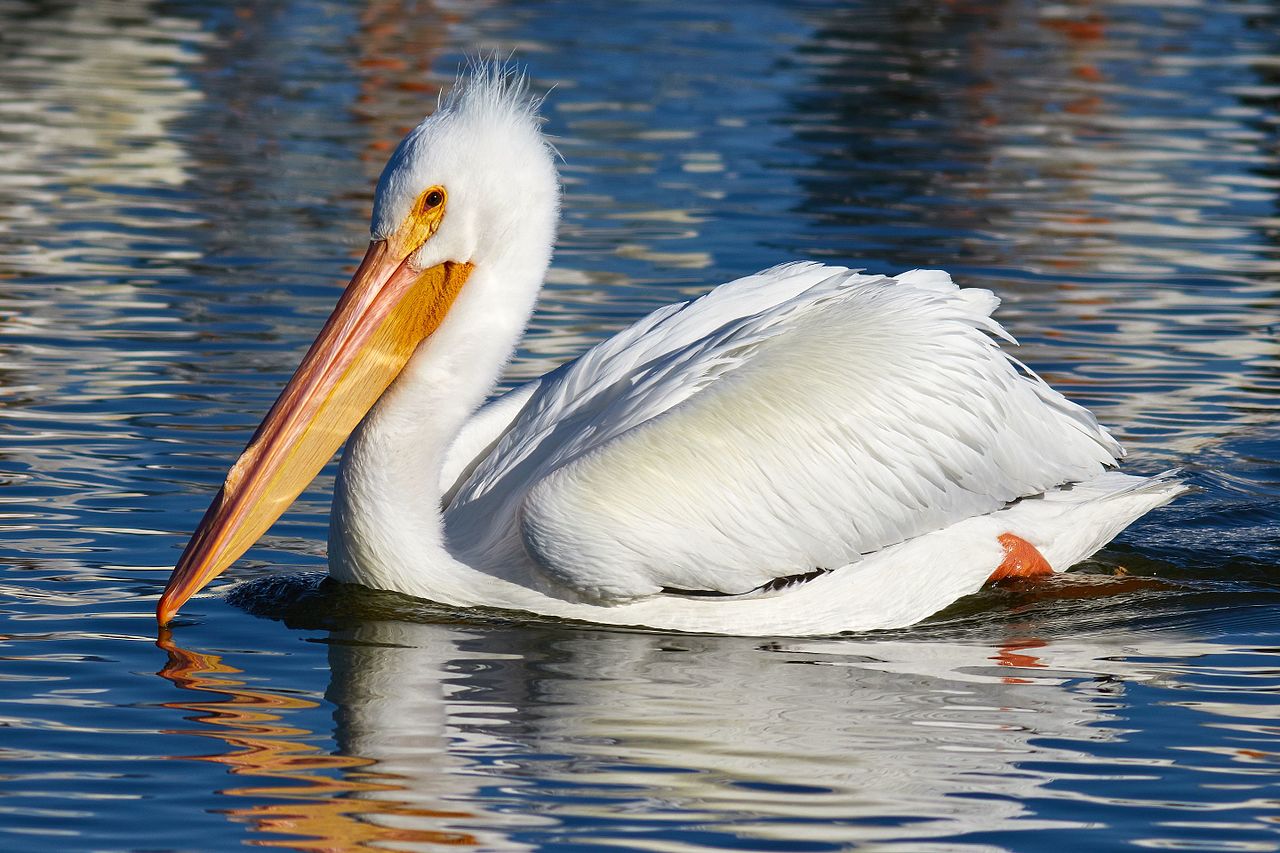
Non-breeding adult wintering in California

Summer at Palo Alto Baylands


Temperament
social and gregarious
Flight Pattern
soaring glider
Social Behavior
Highly colonial, nesting in dense groups on isolated islands with little vegetation. Often feeds cooperatively, forming semicircles to corral fish. Typically monogamous within a season; both sexes incubate and tend the young. Roosts communally on sandbars and shorelines.
Migratory Pattern
Seasonal migrant
Song Description
Generally quiet; adults communicate at colonies with low grunts, croaks, and hisses. Chicks beg with squeals and whistling calls. No true melodious song.
Plumage
Mostly white with contrasting black primary and secondary flight feathers visible in flight; silky, dense body plumage.
Diet
Feeds mainly on small to medium fish, supplementing with amphibians and crustaceans. Forages by swimming and scooping prey with the expandable gular pouch rather than diving. Frequently hunts cooperatively to concentrate schools of fish in shallow water. Opportunistically takes fish at spillways, inlets, and along shorelines where prey is concentrated.
Preferred Environment
Shallow freshwater lakes, marshes, reservoirs, and slow rivers during the breeding season. In winter, uses protected coastal bays, estuaries, and coastal lagoons, as well as large inland reservoirs. Prefers open water adjacent to undisturbed roost sites like sandbars or low islands.


