

The American wigeon, also known as the baldpate, is a species of dabbling duck found in North America. Formerly assigned to Anas, this species is classified with the other wigeons in the dabbling duck genus Mareca. It is the New World counterpart of the Eurasian wigeon.
Region
North America
Typical Environment
Breeds mainly across Alaska, western and central Canada, and parts of the northern United States in prairie potholes, boreal wetlands, and tundra-edge ponds. In winter it moves to the southern United States, Mexico, and the Caribbean, frequenting coastal marshes, estuaries, reservoirs, and flooded agricultural fields. It favors shallow, vegetated waters and nearby open grass for grazing. Occasional vagrants reach Central America and the northern coasts of South America, and rarely Western Europe.
Altitude Range
Sea level to 2500 m
Climate Zone
Temperate
Ease of Keeping
Beginner friendly: 2/5
Also called the baldpate, the male American wigeon shows a striking white crown and green eye stripe. It often grazes like a goose on lawns and wet meadows and is notorious for stealing vegetation from coots at the water surface. Its clear, whistled calls carry far over marshes and are a key clue to its presence.


Male in winter plumage in New Jersey, USA
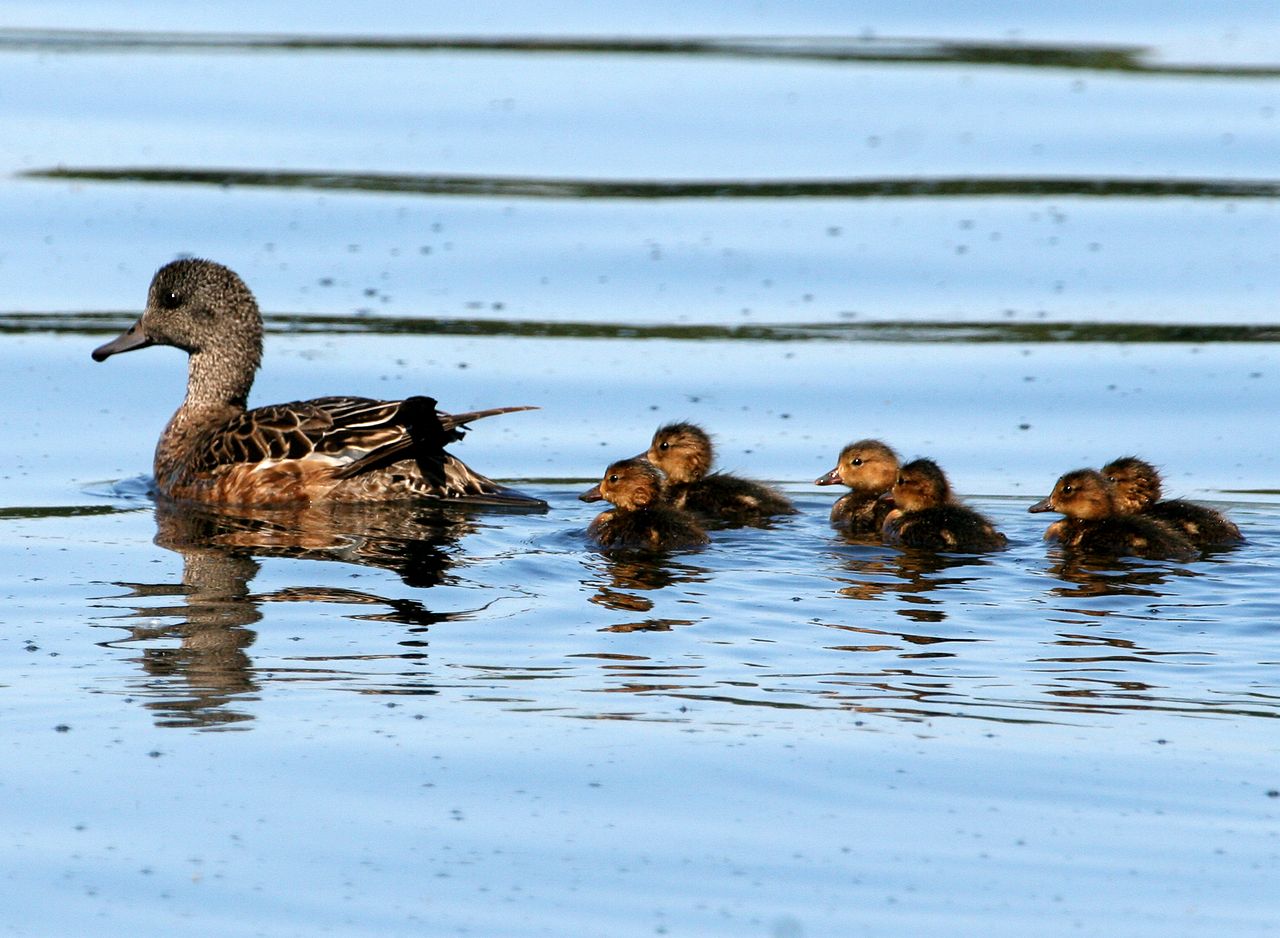
Female and ducklings

Male in flight at the Llano Seco Unit of the Sacramento National Wildlife Refuge Complex, California

Flock in flight at Sacramento National Wildlife Refuge Complex
Temperament
social but wary
Flight Pattern
strong flier with rapid wingbeats
Social Behavior
Forms mixed flocks with other dabbling ducks and often associates with American coots to snatch vegetation they bring to the surface. Pairs form on wintering grounds; nesting occurs on the ground in dense cover near water. The female incubates and tends the brood while the male typically departs during incubation.
Migratory Pattern
Seasonal migrant
Song Description
The male gives clear, whistled whee-whee-whee notes that carry across water. Females produce lower, rough grunts and quacks. Calls are frequent in flight and when birds are flocking on open water.
Plumage
Male has a pinkish-brown body, white crown and forehead, iridescent green eye patch, gray head, and a white shoulder patch on the upperwing; rump and undertail are dark. Female is mottled warm brown with a grayish head and a subtle pale crown, with the same white upperwing patch visible in flight. Both sexes have a blue-gray bill with a black tip and a clean white belly.
Diet
Primarily eats aquatic and terrestrial vegetation such as pondweeds, wigeon grass, sedges, and grasses, plus seeds. It will also take small invertebrates, especially during the breeding season, including insects, snails, and small crustaceans. Known for kleptoparasitism, it often nips vegetation from coots or other divers as they surface. Grazing on short turf is common in wintering areas.
Preferred Environment
Feeds in shallow marshes, lakes, and estuaries with abundant submerged or floating plants, and in wet meadows or agricultural fields nearby. Often forages at edges of vegetation mats and along shorelines, dabbling or tipping up rather than diving. Grazing flocks commonly use open lawns or pasture adjacent to water.


