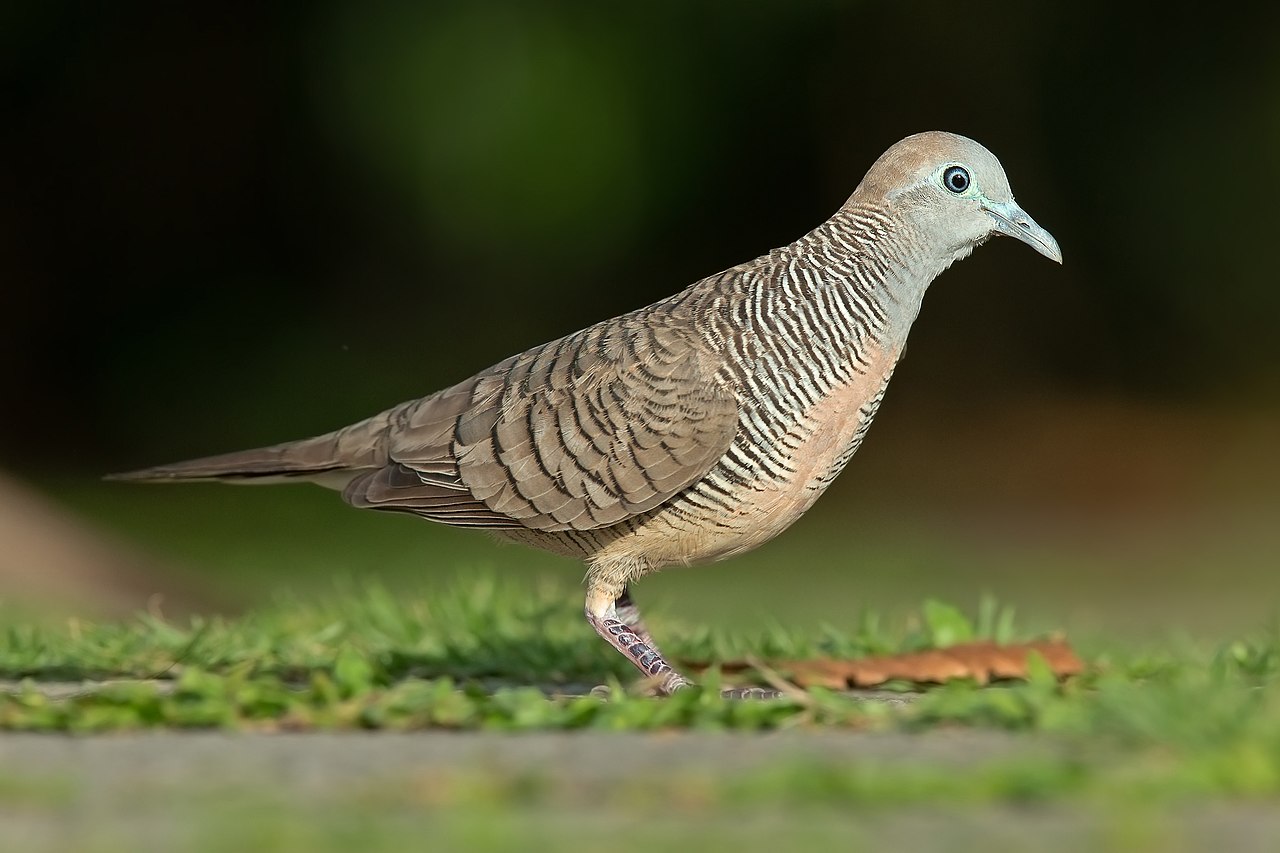
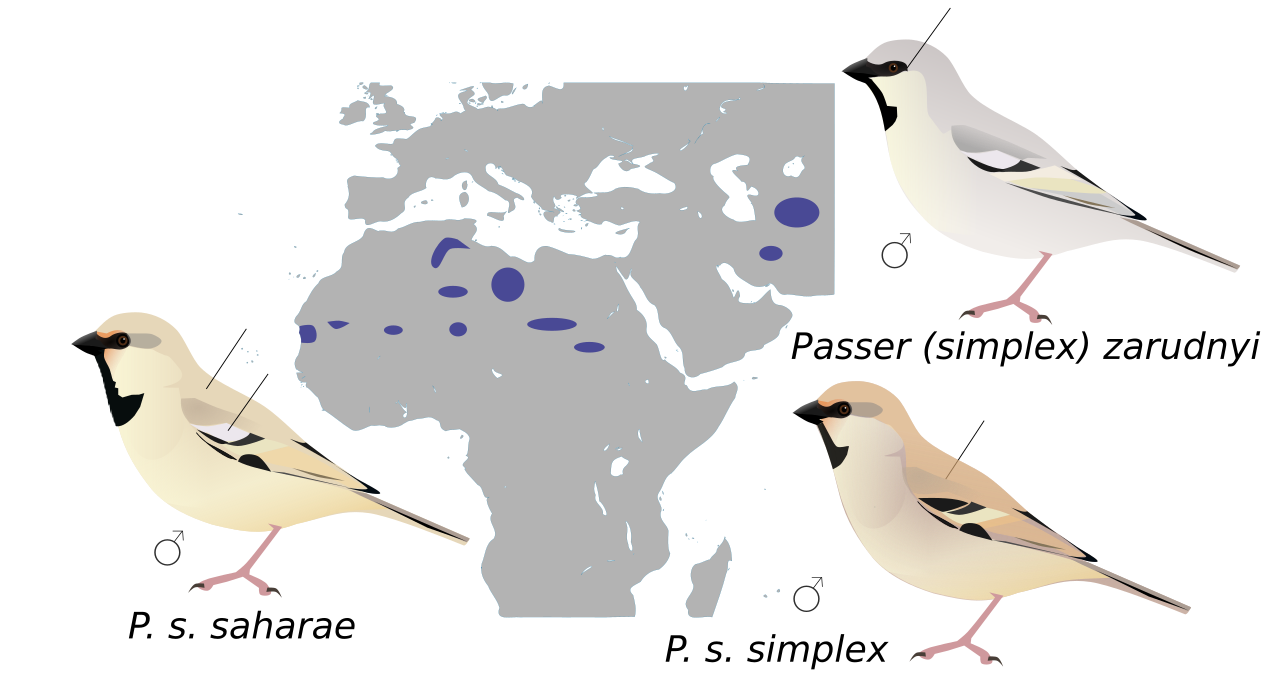
Zarudny's sparrow, also known as the Asian desert sparrow, is a species of bird in the sparrow family Passeridae, which occurs in Uzbekistan, Turkmenistan, and formerly in Iran. This species has historically been classified as a subspecies of the desert sparrow, which is otherwise restricted to Africa. However, the species has a number of differences with the African species, including very similar plumage in adult males and females, which suggests this species is distinct enough to be considered separate, and possibly not most closely related to the African birds. Consequently, Zarudny's sparrow is treated as a separate species by BirdLife International, the IOC World Bird List, and the Handbook of the Birds of the World Alive.
Region
Central Asia
Typical Environment
Occurs in arid and semi-arid deserts of Uzbekistan and Turkmenistan, with historical records from northeastern Iran. It inhabits sandy and gravel deserts dotted with saxaul and tamarisk shrubs, as well as vegetated dunes, wadis, and margins of oases. The species often stays near scattered water sources and low scrub, sometimes approaching small settlements. It avoids dense woodland and high mountains, favoring open, sparsely vegetated terrain.
Altitude Range
0–1200 m
Climate Zone
Arid
Ease of Keeping
Beginner friendly: 2/5
Zarudny's sparrow, also called the Asian desert sparrow, is a small passerine adapted to the deserts of Central Asia. Long treated as a subspecies of the African desert sparrow, it is now widely recognized as a distinct species with notably similar plumage between males and females. It favors sparse saxaul and tamarisk scrub near oases and settlements, where it forages on seeds and seasonal insects.

Temperament
social and wary
Flight Pattern
short rapid wingbeats, low over scrub
Social Behavior
Often found in small loose groups, sometimes near water sources or scattered shrubs. Nests are placed in low shrubs or within cavities and dense clumps, lined with fine plant material and feathers. Pairs are monogamous during the breeding season and defend small nesting areas while foraging communally nearby.
Migratory Pattern
Resident
Song Description
Song is a simple series of soft chirps and short trills delivered from low perches in shrubs. Calls are high-pitched contact notes used to maintain group cohesion in open terrain.
Plumage
Clean, sandy-buff upperparts with pale, even-toned underparts and subtle grayish tones on the head; wings show warm brown coverts with pale fringes. Sexes are very similar, showing limited or no strong contrast compared to African desert sparrow forms. Overall appearance is soft-toned and lightly patterned, aiding camouflage in desert sands.
Diet
Primarily consumes small seeds of desert grasses and forbs, supplemented by buds and green plant material when available. During the breeding season it takes a higher proportion of insects such as ants, beetles, and small caterpillars to feed nestlings. Foraging is mainly on the ground and among low shrubs, picking items individually rather than sallying.
Preferred Environment
Feeds in sparsely vegetated dunes, saxaul and tamarisk scrub, and along the margins of oases and wadis. It often remains close to scattered shrubs that provide both cover and seed sources.