
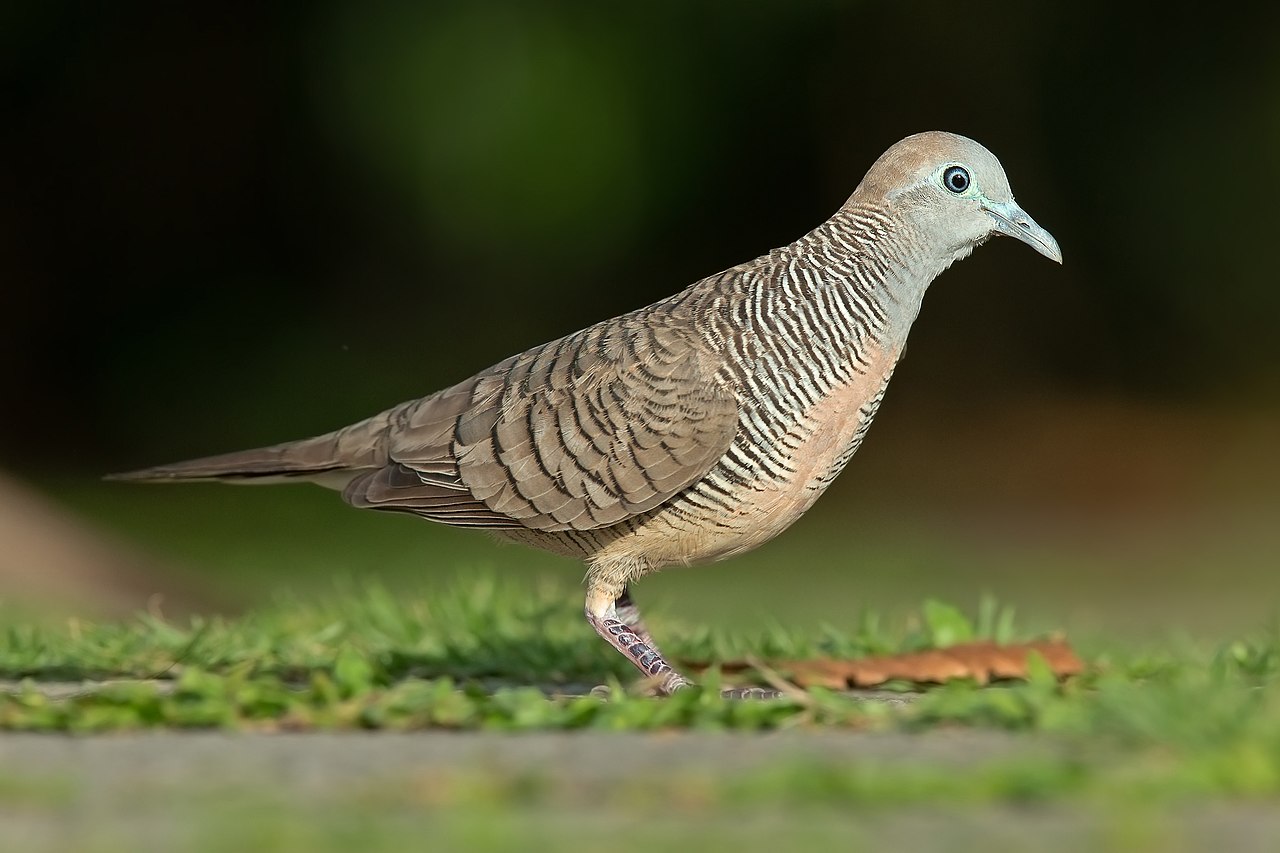
The zebra dove, also known as the barred ground dove, or barred dove, is a species of bird of the dove family, Columbidae, native to Southeast Asia. They are small birds with a long tail, predominantly brownish-grey in colour with black-and-white barring. The species is known for its pleasant, soft, staccato cooing calls.
Region
Southeast Asia and Pacific Islands
Typical Environment
Native to parts of Southeast Asia including Thailand, Peninsular Malaysia, Singapore, and the Greater Sunda Islands, with many introduced populations in places such as Hawaii and other Pacific islands. It favors open habitats, edges of scrub and woodland, agricultural fields, and urban greenspaces. Often seen along roadsides and in gardens where grass seeds are abundant. It adapts well to human-modified environments and can become locally common.
Altitude Range
Sea level to 1200 m
Climate Zone
Tropical
Ease of Keeping
Beginner friendly: 3/5
Zebra doves are small ground-foraging doves noted for their soft, staccato cooing and delicate black-and-white barring. They are often tame around people in parks and urban areas. Pairs are typically monogamous and both parents feed chicks with nutrient-rich crop milk. The species has been widely introduced beyond its native Southeast Asian range.


Zebra dove from Mindanao, Philippines. They are known as kurokutok in reference to their soft cooing calls.

In Maui, Hawaii
Temperament
calm and approachable
Flight Pattern
low, direct flight with rapid wingbeats
Social Behavior
Usually seen singly, in pairs, or small family groups, often foraging on the ground. Monogamous pairs build flimsy twig platforms in low trees, shrubs, or on ledges. Typical clutch is two white eggs, with both adults incubating and feeding the young.
Migratory Pattern
Resident
Song Description
A soft, rhythmic, staccato series of coos that carries surprisingly far. Males vocalize frequently from low perches during pair-bonding and territory advertisement.
Plumage
Fine black-and-white barring across the neck, breast, and flanks over brownish-grey upperparts; underparts pale with barring continuing onto the belly; long, graduated tail.
Diet
Primarily consumes small grass and weed seeds picked from the ground. Also takes fallen grains in agricultural areas and occasionally small invertebrates such as ants or small beetles. Swallows grit to aid digestion.
Preferred Environment
Feeds in open, low-vegetation areas such as lawns, park edges, roadsides, and field margins. Comfortable foraging near human activity where spillage and seeds are common.


