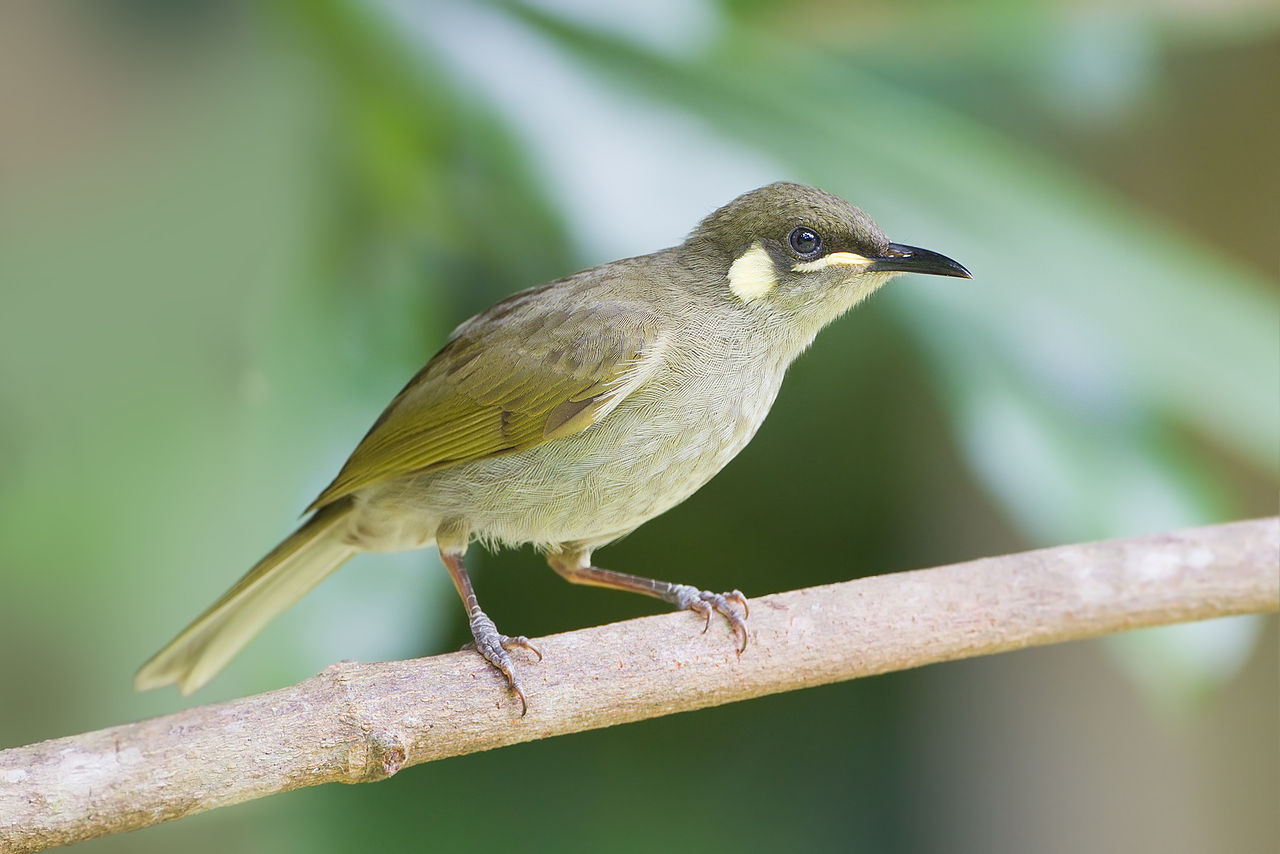
The yellow-spotted barbet is a bird species in the monotypic genus Buccanodon. It belongs to the African barbet family (Lybiidae) which was formerly included in the Capitonidae and sometimes in the Ramphastidae.
Region
West and Central Africa
Typical Environment
Occurs in lowland and foothill tropical rainforests, forest edges, and secondary growth, including along rivers and in gallery forests. It frequents the mid-story to canopy, often near fruiting trees. The species tolerates moderately disturbed habitats and can be found in forest–farm mosaics and cocoa or coffee plantations with remnant trees. It is generally absent from open savannas and very dry habitats.
Altitude Range
Sea level to 1800 m
Climate Zone
Tropical
Ease of Keeping
Beginner friendly: 1/5
This species is the sole member of the genus Buccanodon and belongs to the African barbet family Lybiidae. It is a largely canopy-dwelling forest bird that feeds on fruit and insects, helping disperse seeds. Pairs often duet with rhythmic, repetitive calls that carry far through the forest. Like other barbets, it excavates its own nest cavity in decaying wood.

Temperament
generally shy; pairs are territorial
Flight Pattern
short rapid wingbeats with undulating flight between trees
Social Behavior
Usually seen singly or in pairs, sometimes joining mixed-species flocks when foraging. Pairs are monogamous and excavate nest cavities in soft or decaying wood. Both sexes incubate and feed the young, bringing a mix of insects and soft fruits.
Migratory Pattern
Resident
Song Description
Gives a resonant, repetitive series of notes that can build into a rhythmic duet between pair members. Calls carry well through forest, often delivered from mid to upper canopy perches.
Plumage
Olive-brown to brown upperparts with fine yellow spotting and mottling on the crown, nape, and wing coverts; underparts paler with light spotting and faint streaking. Feathers are dense and slightly fluffy with bristles at the bill base typical of barbets.
Diet
Primarily eats fruit such as figs, berries, and drupes, often swallowing them whole and later regurgitating seeds, aiding seed dispersal. Supplements diet with insects like beetles, ants, and termites, and occasionally other small arthropods. Forages methodically, gleaning from foliage and twigs, and will sally short distances to pluck fruit.
Preferred Environment
Feeds in the mid-story to canopy of mature and secondary forests, especially at fruiting trees. Also visits forest edges and agroforestry systems with shade trees.