
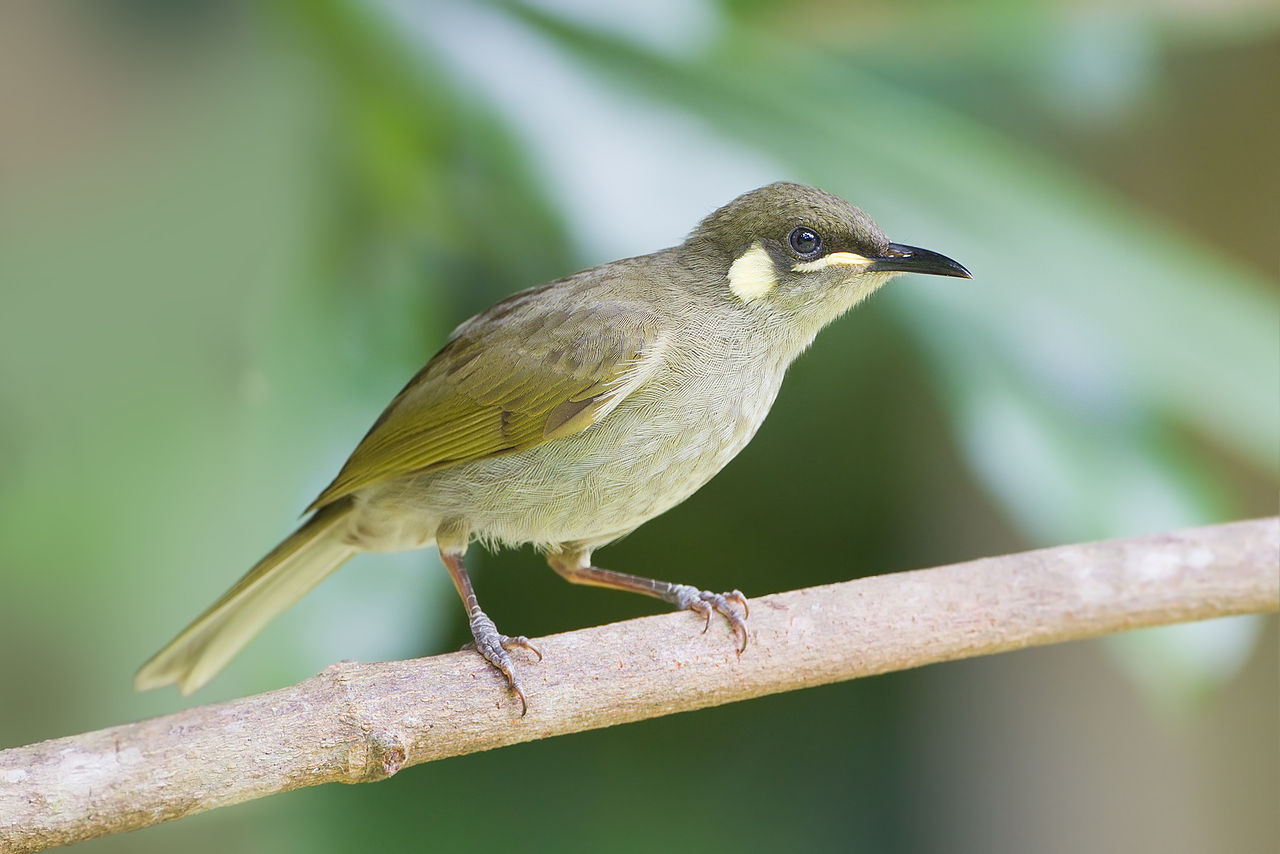
The yellow-spotted honeyeater is a species of bird in the family Meliphagidae. It is also known as the lesser lewin. The bird is endemic to northern Queensland. The bird's common name refers to the yellow patch that members of the species have behind their eyes.
Region
Northeastern Australia
Typical Environment
Occurs in lowland and foothill rainforests, riparian forests, and wetter eucalypt and paperbark woodlands from around Townsville north to Cape York. Frequently uses forest edges, vine thickets, and second-growth, and sometimes visits flowering trees in parks and gardens near rainforest. Prefers dense, moist habitats with abundant flowering and insect resources. It is most common in the Wet Tropics bioregion but ranges into suitable coastal and subcoastal habitats.
Altitude Range
Sea level to 1000 m
Climate Zone
Tropical
Ease of Keeping
Beginner friendly: 1/5
Also known as the lesser Lewin, this honeyeater is endemic to northern Queensland’s Wet Tropics. It forages methodically through foliage for insects and nectar and is an important pollinator of flowering trees. It can be confused with Lewin’s honeyeater but shows a brighter, more discrete yellow spot behind the eye and generally finer throat markings.

Temperament
active and somewhat territorial
Flight Pattern
short rapid wingbeats with brief, direct dashes between perches
Social Behavior
Usually seen singly or in pairs, sometimes in small loose groups at rich food sources. Defends flowering trees and productive foraging sites from other honeyeaters. Builds a small, cup-shaped nest suspended in foliage. Breeding mainly occurs in the warmer, wetter months.
Migratory Pattern
Resident
Song Description
Vocal repertoire includes sharp chattering calls and clear, ringing whistles. Often gives repeated scolding notes when agitated and a series of piping phrases at dawn.
Plumage
Olive-green upperparts with greyer, slightly scalloped throat and breast and paler olive underparts. Feathers are smooth and sleek with subtle throat streaking. The hallmark is a distinct yellow post-ocular spot (ear patch).
Diet
Takes nectar from a variety of native blossoms, including eucalypts, melaleucas, and other rainforest flowers. Regularly gleans insects, spiders, and lerp from leaves and bark, supplementing nectar intake with animal protein. Will also sample small fruits when available.
Preferred Environment
Feeds in mid to upper canopy and along forest edges, moving methodically through foliage. Frequently visits flowering trees and shrubs and may forage lower in riparian thickets and paperbark swamps.


