

The yellow-billed spoonbill is a gregarious wading bird of the ibis and spoonbill family, Threskiornithidae. It is native to Australia, and is a vagrant to New Zealand, Lord Howe Island and Norfolk Island.
Region
Australasia
Typical Environment
The yellow-billed spoonbill is widespread across mainland Australia wherever suitable wetlands occur, from coastal estuaries to interior floodplains. It favors shallow freshwater and brackish habitats including lagoons, billabongs, marshes, rice fields, and sewage ponds. It is irregular and nomadic in arid and semi-arid interiors, appearing after rains when ephemeral wetlands fill. Vagrants occasionally reach Tasmania, Lord Howe Island, Norfolk Island, and New Zealand.
Altitude Range
Sea level to 1200 m
Climate Zone
Other
Ease of Keeping
Beginner friendly: 1/5
This species uses its long spoon-shaped bill to sweep through shallow water, detecting prey by touch with sensitive receptors. It often nests colonially with ibises and other waterbirds in trees or reedbeds over water. After heavy rains it may move widely to exploit newly flooded wetlands. Usually quiet, it may bill-snap or grunt at nests.


Over Murray River, South Australia
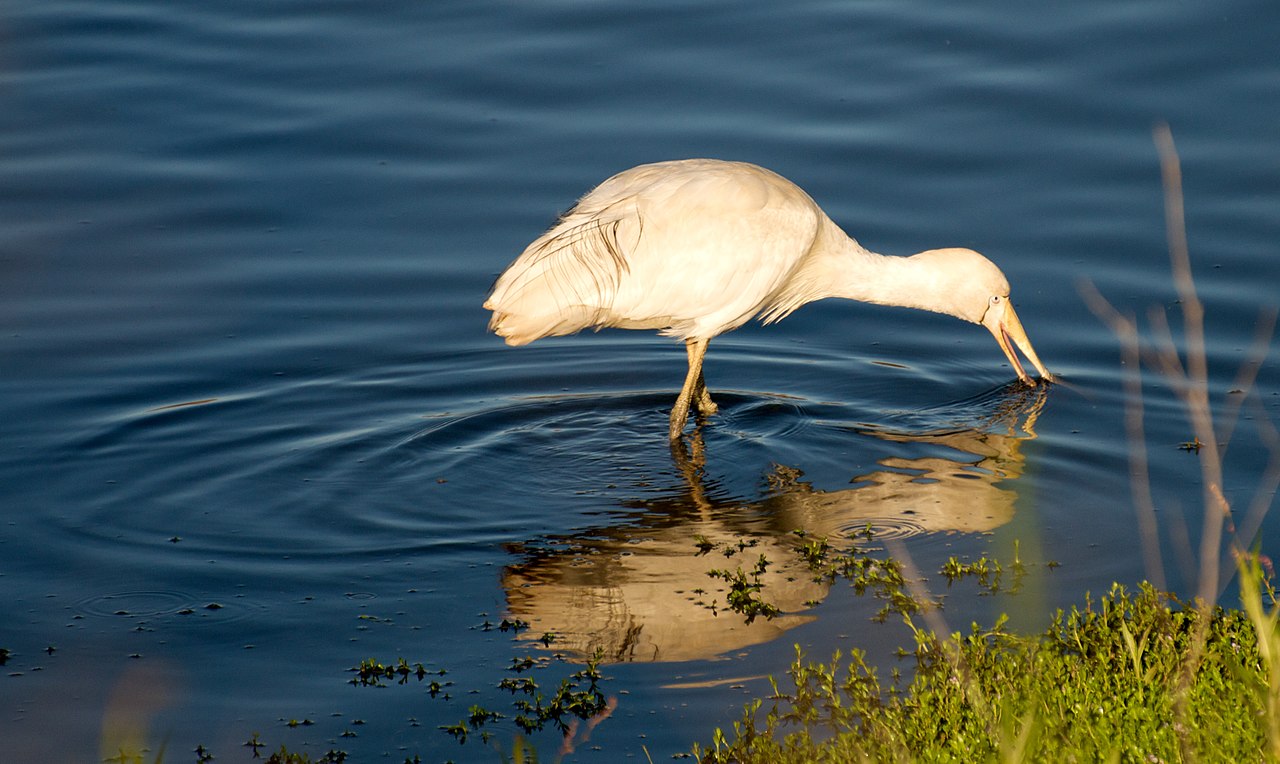
Yellow-billed spoonbill feeding at Lake Monger by sweeping its bill through the water
Temperament
social and gregarious
Flight Pattern
strong flier with steady wingbeats and neck outstretched
Social Behavior
Often seen in small to large flocks, especially at feeding sites and communal roosts. Nests in colonies, frequently alongside ibises and other herons, placing stick nests in trees or tall reeds over water. Pairs form seasonally, and both sexes assist with nest building and chick rearing.
Migratory Pattern
Resident
Song Description
Generally quiet, producing low grunts and croaks around the nest. Bill-clapping displays may occur during courtship or territorial interactions.
Plumage
Mostly smooth, all-white plumage with fine, lacy plumes on the breast and back in breeding season.
Diet
Feeds mainly on small fish, aquatic insects and larvae, crustaceans (including shrimps and yabbies), molluscs, and tadpoles. It sweeps its open bill from side to side through shallow water and snaps shut when it detects movement. Prey is swallowed whole after brief manipulation. It may feed singly or in loose lines with other spoonbills to flush prey.
Preferred Environment
Shallow margins of freshwater and brackish wetlands, floodplains, and slow-flowing backwaters. Also uses artificial water bodies such as farm dams, saltworks, and sewage ponds when natural wetlands are scarce.


