

The yellow-billed stork is a large African stork species in the family Ciconiidae. It is widespread south of the Sahara and also occurs in Madagascar.
Region
Sub-Saharan Africa and Madagascar
Typical Environment
It occupies shallow freshwater habitats including floodplains, marshes, lakeshores, river margins, and seasonal pans, and will also use rice paddies and irrigation canals. The species follows seasonal rains and fluctuating water levels, often concentrating where fish become trapped in drying pools. It nests colonially in trees, usually near or over water. It generally avoids deep or fast-flowing water and heavily forested interiors.
Altitude Range
Sea level to 2000 m
Climate Zone
Tropical
Ease of Keeping
Beginner friendly: 1/5
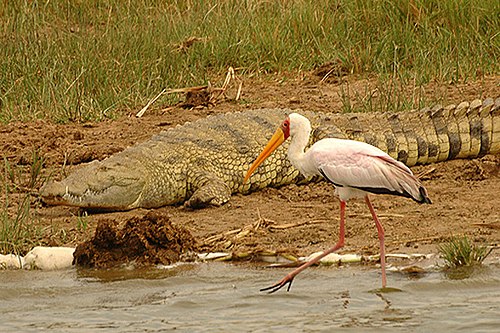
The yellow-billed stork is a large wader of sub-Saharan Africa and Madagascar, easily recognized by its long yellow bill and bare red facial skin. It often feeds in groups on receding pools where fish are concentrated, using a tactile hunting method with its bill partly open in the water. Breeding colonies can be large and noisy due to bill-clattering displays, though the species is otherwise mostly silent.


Vivid colours of breeding plumage, Zambia

Adult in flight, Zambia

Juvenile in flight, Zambia

Flock in a seasonal wetland, Zambia

Mycteria ibis eggs MHNT

Colony of nests in tall trees, Zambia

Stick nests on a tall tree, Zambia




Temperament
social and active
Flight Pattern
soaring glider with strong, steady wingbeats between glides
Social Behavior
Typically forms flocks when feeding and nests in large colonies, often mixed with herons, egrets, and other storks. Pairs are seasonally monogamous and build stick nests in trees over water. They often perform bill-clattering displays at the nest and defend small territories within the colony.
Migratory Pattern
Partial migrant
Song Description
Generally quiet; at breeding sites it produces bill-clattering and soft grunts. Young give begging calls, and adults may utter low croaks during close interactions.
Plumage
Mostly white with glossy black flight feathers and tail; a pinkish wash can develop on the back and breast in breeding season.
Diet
Feeds mainly on small fish, amphibians, aquatic insects, and crustaceans, occasionally taking small reptiles. It uses tactile foraging, sweeping a partly open bill through shallow water and snapping shut when it touches prey. Foot-stirring and probing help flush hidden prey, and feeding success peaks as waters recede and prey becomes concentrated.
Preferred Environment
Shallow, still or slow-moving freshwater such as marsh edges, floodplains, lake shallows, and temporary pans. It also exploits human-made wetlands like rice fields and canals, often foraging alongside herons and egrets.


