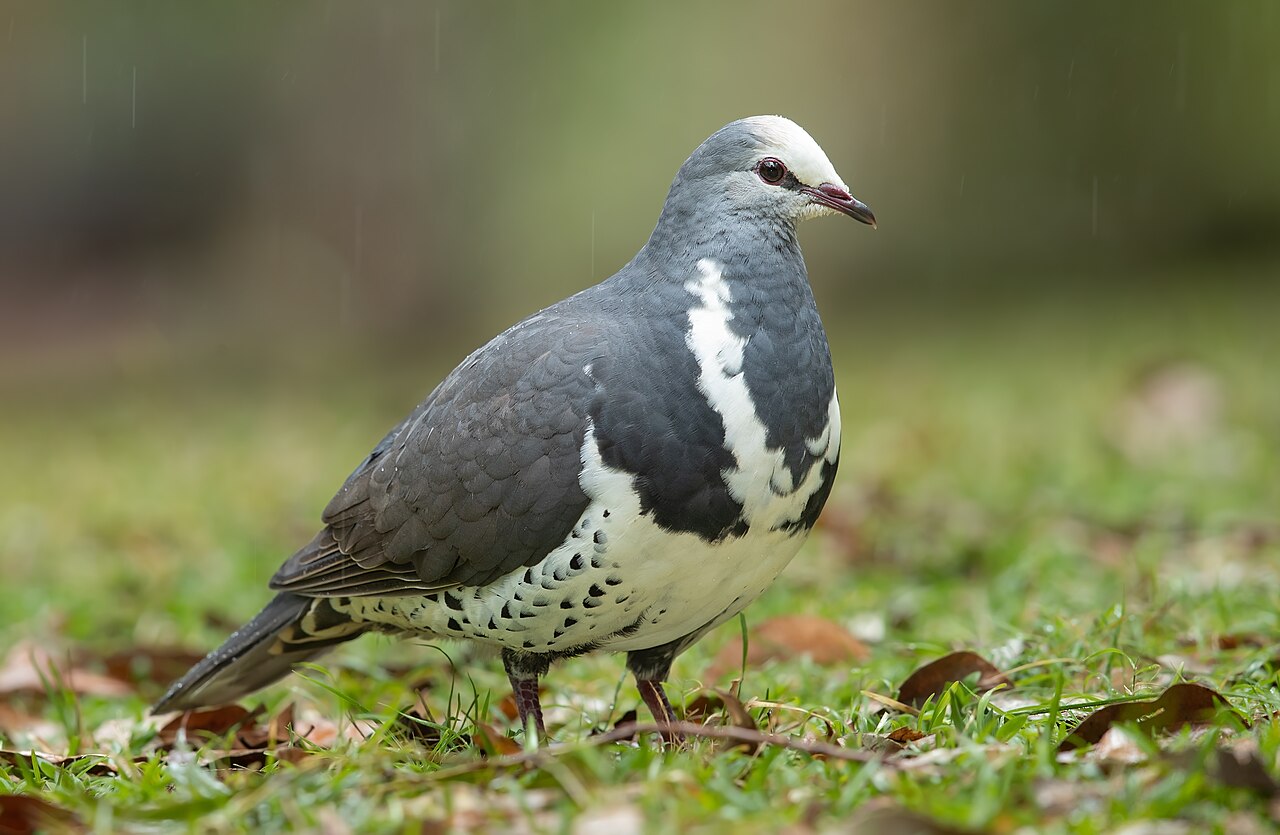
The wompoo fruit dove, also known as wompoo pigeon and "magnificent fruit dove" among others, is one of the larger fruit doves native to New Guinea and eastern Australia.
Region
Australasia
Typical Environment
Found in lowland to foothill rainforests of New Guinea and along the eastern coast of Australia from Cape York Peninsula south into northeastern New South Wales. Prefers mature rainforest, gallery forests, and well-vegetated river margins. It also uses rainforest edges and fruiting trees in adjacent woodlands and occasionally visits parks with suitable canopy fruit. Birds may move locally following seasonal fruiting events.
Altitude Range
Sea level to 1500 m
Climate Zone
Subtropical
Ease of Keeping
Beginner friendly: 2/5
Named for its deep, booming wom-poo call, this large fruit dove is a key seed disperser in Australasian rainforests. It often sits motionless high in the canopy, where its green plumage provides excellent camouflage. When trees are in heavy fruit, it may gather in small flocks and swallow fruits whole, later regurgitating seeds far from the parent tree.


Wompoo pigeon in a garden near Cooktown, Queensland

At Dallas Zoo, USA
Temperament
shy and cryptic
Flight Pattern
short rapid wingbeats with strong, direct dashes through the canopy
Social Behavior
Usually seen singly or in pairs, but small groups form at heavily fruiting trees. Monogamous pairs build a flimsy stick platform high in dense foliage. Typically lays a single white egg, with both parents sharing incubation and chick-rearing duties.
Migratory Pattern
Partial migrant
Song Description
A deep, resonant wom-pooo call that carries through the forest and gives the species its name. Also emits soft coos and grunts when at rest or interacting at fruiting trees.
Plumage
Rich green upperparts with a contrasting deep purple to maroon chest, soft grey head and neck, and bright yellow lower belly. Feathers are smooth and satiny, with rounded wings adapted for forest flight. Underparts show clean color blocks rather than heavy streaking.
Diet
Primarily consumes rainforest fruits, especially figs, laurels, and other soft-fleshed berries, which it swallows whole. Seeds are later regurgitated or passed intact, aiding forest regeneration. It occasionally takes fruits from the midstory or ground if fallen.
Preferred Environment
Feeds high in the canopy of mature rainforest and along riparian corridors with fruiting trees. Often returns repeatedly to productive trees and may range widely when fruit is scarce.