

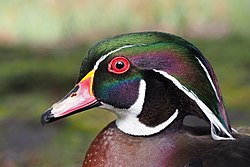
The wood duck or Carolina duck is a partially migratory species of perching duck found in North America. The male is one of the most colorful North American waterfowls.
Region
North America
Typical Environment
Found across much of the United States and southern Canada during the breeding season, especially in wooded swamps, oxbow lakes, beaver ponds, and slow-moving rivers. They winter mainly in the southeastern United States and along the Pacific Coast, with some reaching northern Mexico. Nesting occurs in natural tree cavities and nest boxes close to water. They readily use restored wetlands and riparian corridors and often perch in trees near feeding areas.
Altitude Range
Sea level to 1500 m
Climate Zone
Temperate
Ease of Keeping
Beginner friendly: 2/5
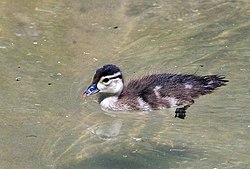
The Wood Duck, also called the Carolina Duck, is a tree-nesting perching duck famed for the drake’s ornate, iridescent plumage. It rebounds strongly from historic declines thanks to wetland protection and widespread use of nest boxes. Ducklings leap from high cavity nests within a day of hatching, landing unharmed and following the hen to water. They are agile fliers, often weaving through forested wetlands.




A male wood duck taking flight

A male wood duck stretching





Temperament
wary and alert
Flight Pattern
quick, agile flight with rapid wingbeats
Social Behavior
Typically forms monogamous pairs each breeding season and nests in cavities or nest boxes near water. Ducklings leave the cavity shortly after hatching and follow the hen to feeding areas. Outside breeding, small groups may gather at rich feeding sites or communal roosts.
Migratory Pattern
Partial migrant
Song Description
Females give a sharp, rising oo-EEK alarm call, especially when flushed from cover. Males produce thin, high whistles and softer calls during courtship. Vocalizations carry well over wooded wetlands.
Plumage
Male shows a glossy green and purple crested head with bold white facial stripes, chestnut breast, finely patterned flanks, and a dark back with iridescence. Female is gray-brown with a subtle crest, mottled breast, and a conspicuous white teardrop eye ring. Both sexes have a blue speculum and broad white undertail markings.
Diet
Feeds on a mix of acorns, seeds, aquatic plants, duckweed, and grains, supplemented with insects, snails, and other small invertebrates. In breeding season, protein-rich invertebrates are especially important, particularly for ducklings. Forages by dabbling, tipping-up in shallow water, and gleaning from the water surface or flooded vegetation. Will also feed on mast such as oak acorns in bottomland forests.
Preferred Environment
Shallow, quiet waters in wooded swamps, beaver ponds, and backwaters with abundant cover. Frequently forages along flooded forest edges, emergent vegetation, and overhanging limbs, sometimes even from logs or low branches.


