
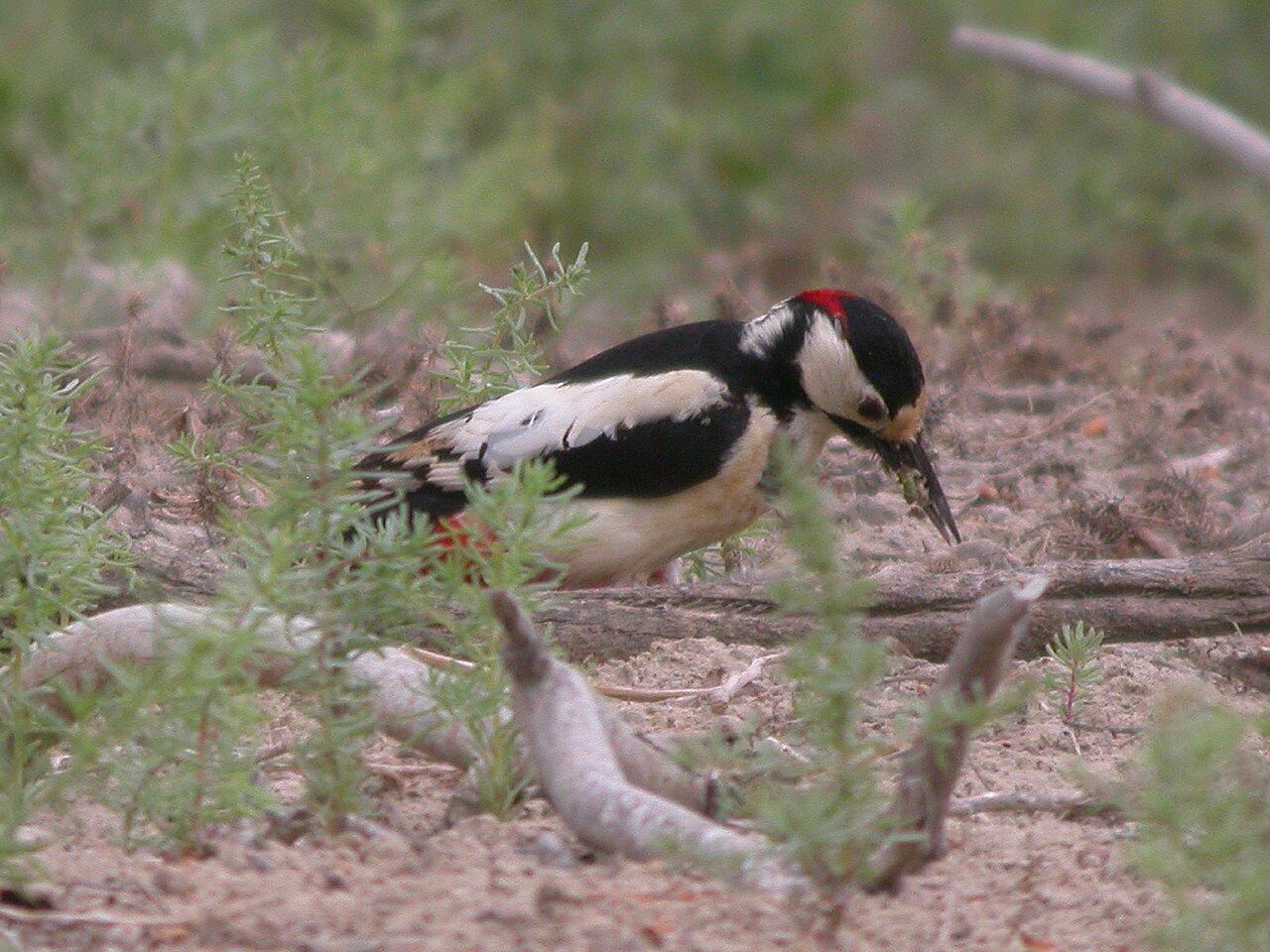
The white-winged woodpecker is a species of bird in the family Picidae. It is found in Afghanistan, China, Iran, Kazakhstan, Kyrgyzstan, Tajikistan, Turkmenistan, Uzbekistan. The white-winged woodpecker's natural habitats are temperate forests and subtropical or tropical moist lowland forests.
Region
Central Asia
Typical Environment
Occurs from northeastern Iran and Afghanistan through Turkmenistan, Uzbekistan, Tajikistan, and southern Kazakhstan to Kyrgyzstan and western China (Xinjiang). It favors river valleys with tugai forests dominated by poplar and willow, as well as shelterbelts, orchards, and groves in agricultural landscapes. It uses mature trees with dead wood for foraging and nesting. In drier regions it remains close to watercourses and oases where tree cover is concentrated.
Altitude Range
100–2000 m
Climate Zone
Continental
Ease of Keeping
Beginner friendly: 1/5
This medium-sized woodpecker is strongly tied to riparian poplar and willow forests (tugai) across Central Asia. Its bold white wing panels make it easy to distinguish in flight, and its rapid drumming carries far along river corridors. It excavates nest cavities in soft, decaying trunks and often adapts to shelterbelts and orchards where mature trees persist.


Temperament
solitary and territorial
Flight Pattern
undulating with quick wingbeats and short glides
Social Behavior
Usually seen singly or in pairs, maintaining territories year-round. Both sexes excavate nest cavities in soft or decaying trunks, typically in poplars or willows near water. Clutches are laid in spring, and both parents share incubation and feeding duties.
Migratory Pattern
Resident
Song Description
Vocalizations include sharp, metallic kik or chik notes and scolding rattles. Drumming is a rapid, even burst used for territorial advertisement and pair communication.
Plumage
Striking black-and-white pattern with extensive white wing panels and white scapulars; underparts pale with some flank barring. The head shows bold facial stripes and a dark crown; males have a small red nape patch. Undertail coverts are reddish, and the back is largely black contrasting with the white shoulder area.
Diet
Feeds mainly on wood-boring beetle larvae, ants, and other insects gleaned from bark and excavated from dead wood. It also takes caterpillars and occasionally seeds or fruit, especially outside the breeding season. Foraging involves probing, pecking, and flaking bark on trunks and larger branches.
Preferred Environment
Most often forages in riparian poplar–willow stands, shelterbelts, and mature orchards. It selects trees with dead limbs and snags, and will work along river edges and fields with scattered trees.


