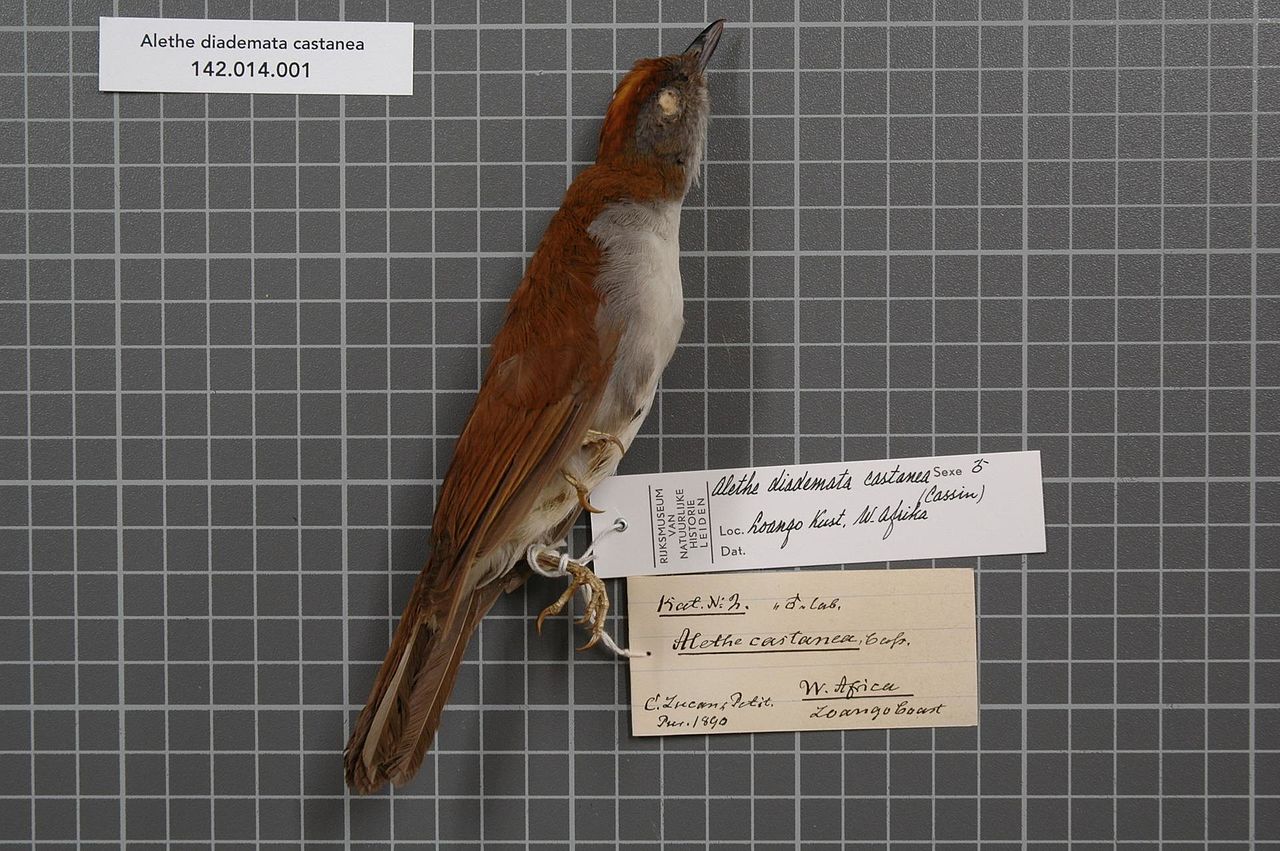
The white-striped forest rail, also white-striped forest crake is a species of bird in the family Sarothruridae. It is endemic to West Papua, Indonesia. Its natural habitat is subtropical or tropical moist montane forests. It is threatened by habitat loss.
Region
Western New Guinea Highlands
Typical Environment
This species inhabits subtropical to tropical moist montane forests, favoring dense understory and mossy, shaded slopes. It uses tangles of vines, bamboo patches, and ferny gullies where it can move unseen along the forest floor. It is often associated with damp microhabitats, including stream edges and seepage zones. Secondary forest and lightly disturbed areas may be used if cover remains thick, but it avoids open or heavily degraded sites.
Altitude Range
1000–2500 m
Climate Zone
Highland
Ease of Keeping
Beginner friendly: 1/5
The white-striped forest rail is a shy, ground-dwelling rail of New Guinea’s montane forests, often detected more by voice than by sight. It forages quietly in the leaf litter, slipping through dense understory where visibility is low. Habitat loss and fragmentation pose risks, but it persists in several remote, rugged areas that remain relatively intact.
Temperament
secretive and wary
Flight Pattern
short rapid wingbeats; reluctant flier
Social Behavior
Usually encountered singly or in pairs, remaining close to dense cover. Breeding is thought to involve well-concealed ground or low, sheltered nests made of leaves and fibers. Pairs maintain small territories and communicate with soft calls, especially at dawn and dusk.
Migratory Pattern
Resident
Song Description
Gives a series of clear, piping whistles and soft clucks from within cover. Vocalizations often carry at dawn and dusk, serving as territorial and contact calls between mates.
Plumage
Compact rail with dark brown to olive-brown upperparts and rufous-tinged wings; underparts show bold white striping or streaking on a dark background, with some fine barring on the flanks. Texture appears sleek but dense, aiding movement through wet foliage.
Diet
Feeds mainly on invertebrates, including insects, larvae, spiders, and small snails taken from leaf litter and rotting wood. It probes and flicks leaves to expose prey, occasionally taking small worms or other soft-bodied creatures. Plant material and small seeds may be taken opportunistically but form a minor component.
Preferred Environment
Forages on the shaded forest floor, especially along damp trails, stream margins, and dense understory tangles. It favors areas with deep leaf litter and abundant fallen branches that harbor invertebrates.