
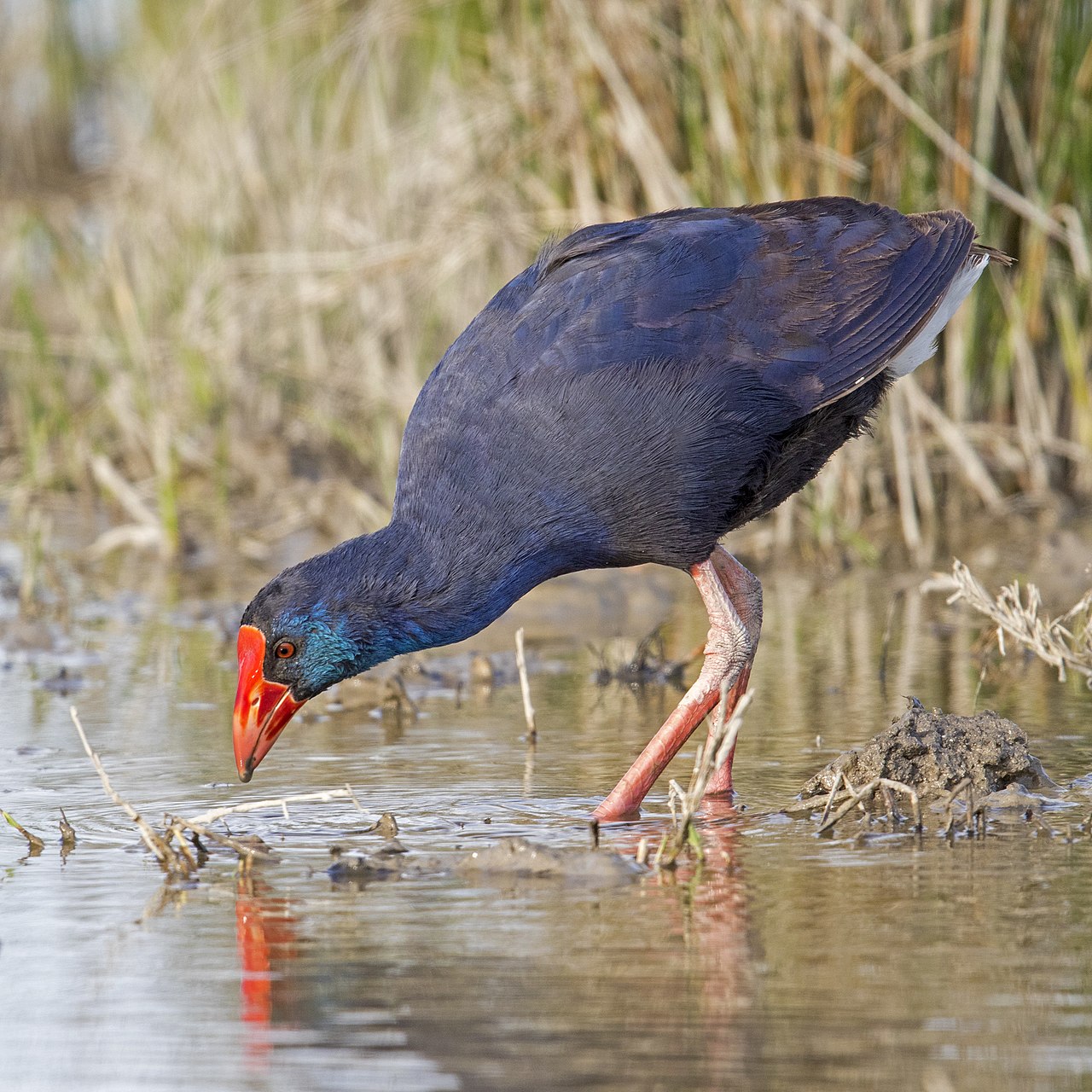
The western swamphen is a species of swamphen in the rail family Rallidae, one of the six species of purple swamphen. This chicken-sized bird, with its large feet, bright plumage and red bill and frontal shield is easily recognisable in its native range. It used to be considered the nominate subspecies of the purple swamphen, but is now recognised as a separate species. The western swamphen is found in wetlands in Spain, Portugal, southeastern France, Italy and northwestern Africa.
Region
Western Mediterranean
Typical Environment
Occurs in wetlands across the Iberian Peninsula, southeastern France, parts of Italy, and northwestern Africa. It favors extensive reedbeds, marshes, lagoons, rice fields, and slow-flowing ditches with emergent vegetation. Birds keep close to cover but will forage along open margins and floating mats. Local dispersal follows water availability and wetland management.
Altitude Range
Sea level to 1000 m
Climate Zone
Temperate
Ease of Keeping
Beginner friendly: 2/5
A striking rail of the Western Mediterranean, the western swamphen has oversized red legs and toes that help it clamber through dense reeds. It was formerly lumped within the purple swamphen complex but is now treated as a distinct species. It often carries food in one foot to the bill and is conspicuous by its white undertail flashes when alarmed.


A pair in Portugal

Egg of western swamphen – MHNT
Temperament
social and active
Flight Pattern
short rapid wingbeats
Social Behavior
Often seen in pairs or small groups with loose colonies in extensive marshes. Nests are bulky platforms of reeds built over water or in dense vegetation. Pairs are strongly territorial in the breeding season, and cooperative breeding with helpers is occasionally observed.
Migratory Pattern
Resident
Song Description
Vocal repertoire includes loud squeals, grunts, and harsh croaks that carry over marshes. Alarm calls are sharp and repeated, while contact notes are lower, conversational clucks.
Plumage
Glossy deep blue to purple body with greenish-tinged upperparts and bright white undertail coverts.
Diet
Feeds mainly on stems, shoots, and roots of reeds, bulrushes, sedges, and grasses, often stripping vegetation with its bill. Also takes seeds, aquatic invertebrates, snails, and occasionally small amphibians or bird eggs. In agricultural areas it may forage in rice and other crops.
Preferred Environment
Forages at the edges of reedbeds, on floating vegetation, and along shallow muddy margins. Frequently pulls plant stems onto platforms or uses its foot to hold food while tearing it with the bill.


