

The western gull is a large white-headed gull that lives on the west coast of North America and the Pacific Ocean. The western gull ranges from British Columbia, Canada, to Baja California, Mexico.
Region
Pacific coast of North America
Typical Environment
Western gulls inhabit the coastline from southern British Columbia through Washington, Oregon, and California to Baja California. They favor rocky shores, sandy beaches, estuaries, and coastal cliffs, and are common around piers, marinas, and harbors. Breeding occurs on offshore islands and headlands with open ground for nesting. They generally remain near the coast year-round, venturing inland mainly to landfills or large waterways. Juveniles disperse more widely along the coast after fledging.
Altitude Range
Sea level to 500 m
Climate Zone
Temperate
Ease of Keeping
Beginner friendly: 1/5
The western gull is a large, white-headed gull of the Pacific coast, often seen on beaches, piers, and offshore islands. It is an assertive scavenger known for kleptoparasitism—stealing food from other birds—and for frequenting harbors and fishing docks. In the Pacific Northwest it commonly hybridizes with the glaucous-winged gull, producing the so-called 'Olympic gull.' Breeding colonies can be highly protective, with adults vigorously defending nests and chicks.


Western Gull in flight over the cliffs of Bodega Head

Pair-bonding behaviour

Over San Francisco Bay
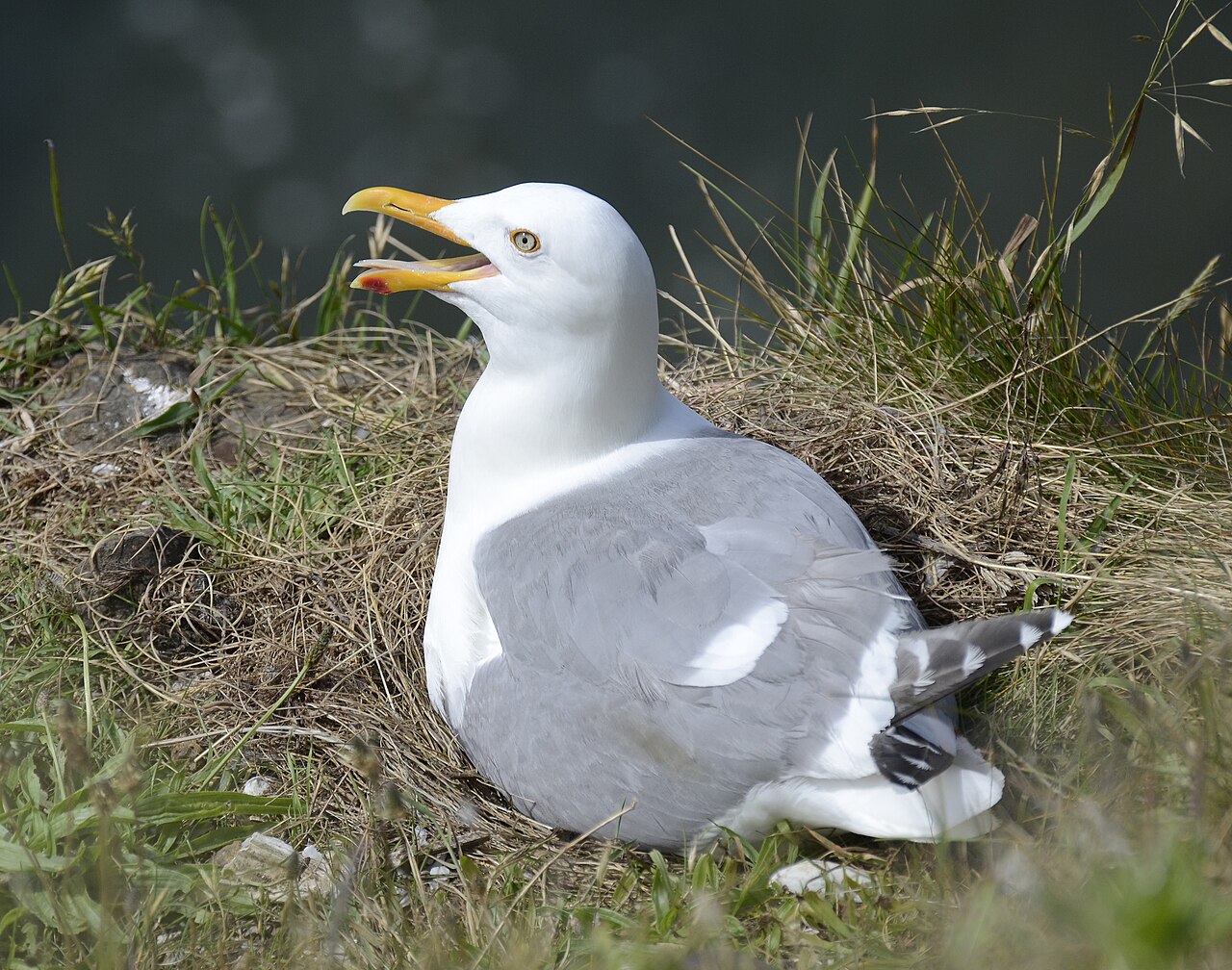
Western gull x Glaucous-winged gull hybrid nesting in Oregon. Note the grey (not black) wingtips and paler mantle compared to a pure Western gull.


Temperament
assertive and opportunistic
Flight Pattern
strong flier with steady wingbeats and occasional soaring
Social Behavior
Western gulls breed colonially on islands and coastal cliffs, forming long-term pair bonds. Nests are shallow scrapes lined with vegetation and debris; both parents incubate and feed the young. Chicks are semi-precocial and fledge after several weeks. Outside the breeding season they loaf and forage in loose flocks, especially around rich food sources.
Migratory Pattern
Resident
Song Description
Vocalizations are loud and raucous, including yelps, laughing calls, and a long braying display call. They also give sharp alarm notes and begging calls from chicks at colonies.
Plumage
Adult with clean white head, neck, and underparts; mantle and upperwings slate-gray with black primaries that show white mirrors. Juveniles are mottled brown, gradually transitioning to adult plumage over several years.
Diet
An opportunistic omnivore, it feeds on fish, crabs, mussels, and other marine invertebrates taken in the intertidal zone or scavenged. It readily consumes carrion, offal from fishing operations, and human refuse. Eggs and chicks of other seabirds may be taken, and it often steals food from conspecifics and other shorebirds. In urban areas it targets unsecured human food.
Preferred Environment
Typically forages along surf lines, tide pools, kelp beds, beaches, and rocky shorelines. It also works docks, piers, harbors, and landfills, and follows boats for discards.


