

The western corella also known as the western long-billed corella, is a species of white cockatoo endemic to south-western Australia.
Region
Southwest Australia
Typical Environment
Occurs in the southwest of Western Australia, especially through the Wheatbelt and adjacent agricultural districts, with remnant populations in woodland mosaics. It favors open eucalypt woodlands, farmlands, pasturelands, and riparian corridors with large hollow‑bearing trees. Birds often commute daily between roost trees and nearby feeding grounds, using farm edges, stubble fields, and grassy verges. Nesting usually occurs in mature marri, jarrah, or river red gum trees with deep hollows. They adapt well to modified landscapes provided large trees remain.
Altitude Range
0–600 m
Climate Zone
Temperate
Ease of Keeping
Beginner friendly: 2/5
Also called the western long-billed corella, it is a white cockatoo endemic to south‑western Australia with a notably elongated bill adapted for digging bulbs and corms. It was once heavily persecuted as an agricultural pest but has rebounded under protection, with two recognized subspecies (Muir’s and Butler’s corellas). These birds form strong pair bonds and nest in large tree hollows, often returning to the same sites annually.

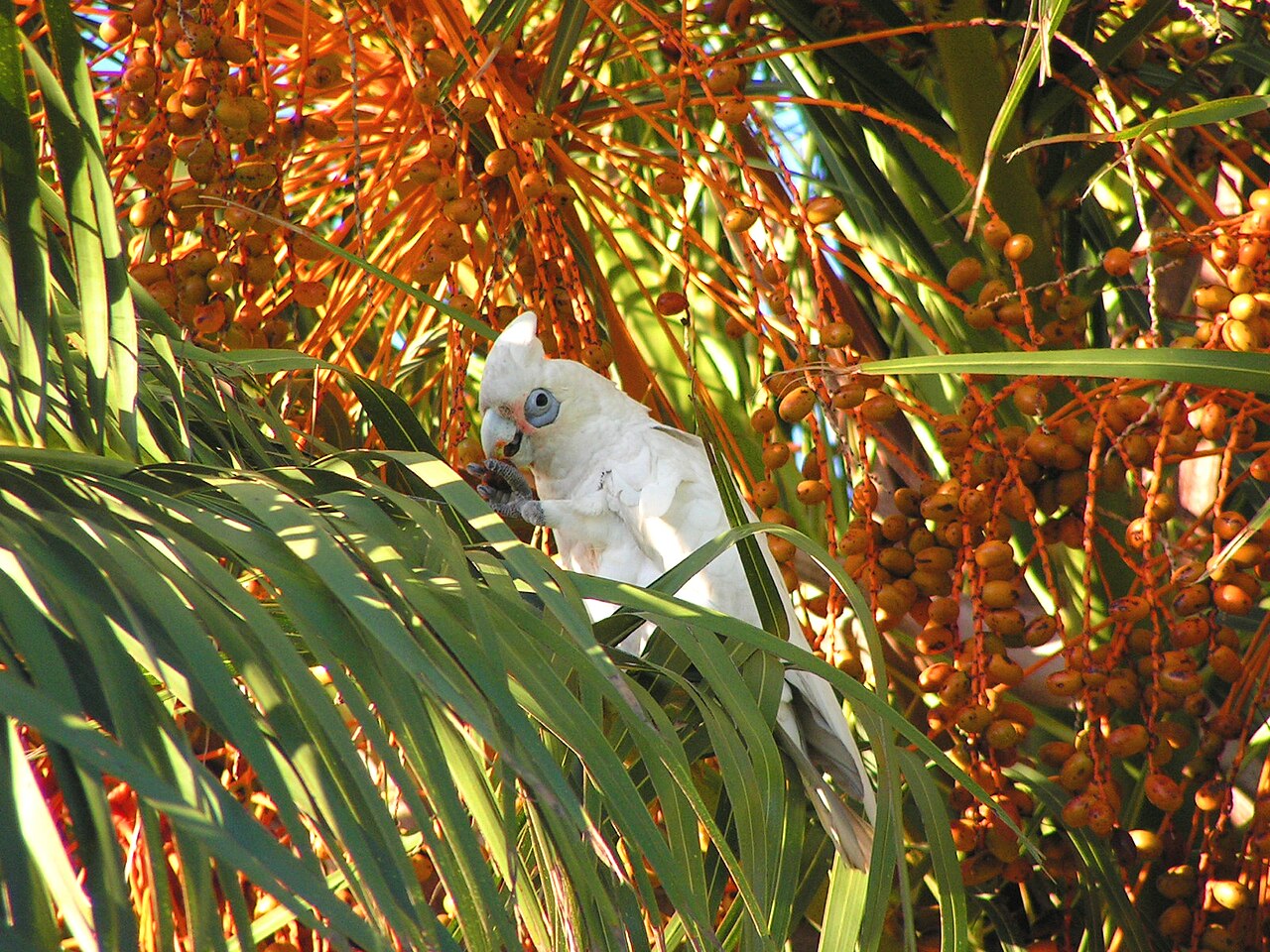
Cacatua pastinator pastinator in Perth, Western Australia
Temperament
social and noisy
Flight Pattern
strong flier with steady, rapid wingbeats
Social Behavior
Typically seen in pairs or flocks, sometimes gathering in larger groups at roosts and feeding sites. Pairs are monogamous and use large tree hollows for nesting, often reusing traditional sites. They exhibit communal roosting and coordinated movements between roosts and feeding areas.
Migratory Pattern
Resident
Song Description
Calls are loud, grating screeches and repeated contact calls that carry over long distances. At close range they produce softer chattering, growls, and croaks during social interactions and at nest sites.
Plumage
Mostly white with a faint salmon-pink wash around the lores and throat, and pale lemon-yellow suffusion on the underwings and undertail. Feathers are smooth and compact, giving a clean, bright appearance. A bluish eye-ring and elongated pale bill are distinctive.
Diet
Feeds primarily on seeds of native grasses and grains, along with bulbs, corms, and roots that it excavates using its long bill. Also takes nuts and fruits when available and may consume insect larvae and invertebrates opportunistically. They often forage on spilled grain and weed seeds, which can bring them into conflict with farmers.
Preferred Environment
Forages mainly on the ground in open pastures, fallow paddocks, and stubble fields, as well as along woodland edges. Uses farm margins, roadsides, and grassy clearings near large roost trees.


